
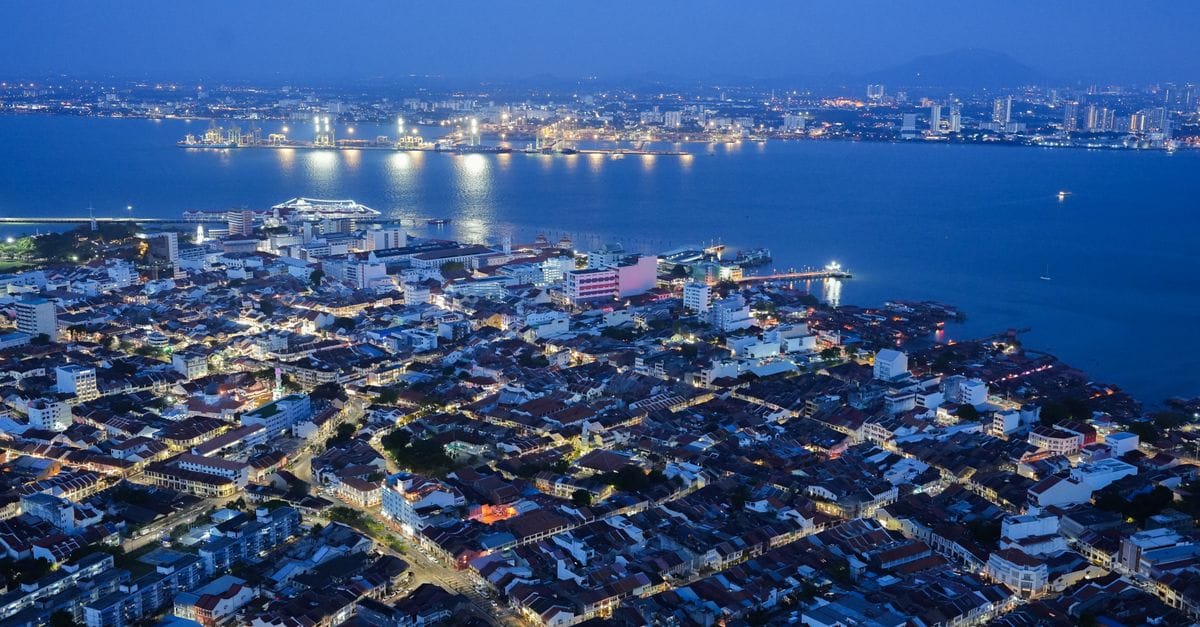
For the generation of expats who built careers in Singapore or Hong Kong, the retirement question is rarely whether to leave but where to go next. Bali draws the lifestyle crowd. Chiang Mai suits the budget-first cohort. But for expats who want English signage, familiar food courts, functioning hospitals, and a property market they can actually read, Penang keeps returning to the top of the shortlist — and the numbers behind that reputation have held up better than many expected.
Cost of Living: The Real Gap Between Penang and Singapore
The cost differential between Singapore and Penang is not marginal — it is structural. A comfortable two-bedroom condominium in Penang's most sought-after districts rents for between RM 2,500 and RM 4,500 per month, translating to roughly SGD 730 to SGD 1,300 at current exchange rates. Comparable units in Districts 9 or 10 in Singapore would cost three to five times that figure. Groceries at a wet market run at approximately 40 percent of Singapore prices, and a full hawker meal at a kopitiam in Georgetown rarely exceeds RM 12.
The table below provides a snapshot comparison for a couple retiring from Singapore with modest but comfortable expectations.
| Expense Category | Singapore (SGD/month) | Penang (SGD equiv./month) |
|---|---|---|
| 2-bed condo rent | 4,500 – 7,000 | 730 – 1,300 |
| Groceries | 600 – 900 | 250 – 400 |
| Dining out (couple) | 800 – 1,200 | 200 – 380 |
| Private health insurance | 500 – 1,000 | 200 – 450 |
| Transport (car + fuel) | 900 – 1,400 | 300 – 550 |
| Estimated monthly total | 7,300 – 11,500 | 1,680 – 3,080 |
The savings potential is significant and repeatable year after year, which is precisely why Penang continues to attract retirees who want their capital to last, not erode.
Property: Rent First, Then Decide Whether to Buy
The conventional wisdom among experienced Penang expats is to rent for at least twelve months before committing to a purchase. The island's property landscape is far from homogenous. Gurney Drive and the Tanjung Tokong corridor offer high-rise condominiums with sea views, concierge facilities, and proximity to Gurney Plaza — this is the segment most Singaporeans gravitate toward first. Units in completed projects here range from RM 500,000 to over RM 1.5 million for larger layouts with views.
Georgetown's heritage core is a different proposition entirely. Shophouses and pre-war terrace homes on streets like Muntri, Carnarvon, and Jalan Masjid Kapitan Keling attract buyers who want character over amenity. Renovation costs can be substantial and heritage regulations apply, but long-term capital retention in this UNESCO-listed zone has been solid. Batu Ferringhi on the northern coast appeals to those who genuinely want a beach-adjacent lifestyle at slightly lower price points, though its distance from private hospitals is a consideration retirees should weigh carefully.
Foreign buyers in Malaysia may purchase property valued above RM 1 million on a freehold or leasehold basis, subject to state consent. The Malaysia My Second Home (MM2H) programme, which was restructured in 2021 and again revised in 2024, adds further nuance to ownership timing — holding an approved visa often simplifies the state-consent process.
Healthcare: Penang's Underrated Advantage
Healthcare quality is frequently the deciding variable for retirees in their late fifties and sixties, and Penang performs well above what its cost profile might suggest. Penang Adventist Hospital, Gleneagles Penang, and Island Hospital all carry JCI or equivalent accreditation and have treated international patients for decades. Specialist consultation fees remain a fraction of Singapore private hospital rates, and waiting times for elective procedures are generally shorter.
Most Singapore-based expats retiring to Penang maintain a regional private health insurance policy that covers both Malaysia and Singapore, allowing them to return to Singapore for any procedure they prefer. This hybrid approach adds modest cost but eliminates the anxiety of full reliance on a single healthcare system.
Residency and Tax Practicality
Malaysia does not tax foreign-source income for individuals who are tax residents, though the rules around this have been subject to revision and retirees should obtain current, jurisdiction-specific tax advice before making any assumptions. The MM2H visa, once straightforward, now requires applicants to meet higher financial thresholds including offshore income requirements and fixed deposit placement — conditions that have screened out lower-net-worth applicants but have not deterred the demographic arriving from Singapore and Hong Kong.
For those who qualify, MM2H provides a renewable long-stay visa, permission to purchase a vehicle, and a degree of lifestyle stability that tourist-entry hopping cannot replicate. Immigration professionals with Penang-specific experience are readily available and worth engaging early in the planning process.
Who Penang Actually Suits
Penang works best for retirees who are comfortable in a predominantly Chinese-Malaysian cultural environment, value food culture as a daily pleasure, and want a city that is small enough to navigate easily but large enough to offer genuine urban amenity. It suits couples more than single retirees, though the expat community is active and sociable. It is a strong fit for those who want to own property without Singapore's additional buyer's stamp duty exposure, and for those whose Singapore CPF or investment portfolio stretches further when the monthly burn rate is cut by half or more.
Frequently Asked Questions
Can a Singapore permanent resident retire to Penang and still receive CPF payouts?Yes. CPF retirement payouts are generally not affected by where you choose to reside after reaching the drawdown age. You should inform CPF Board of your overseas address and confirm your preferred payment method. Consult CPF Board directly for your specific account configuration.Is it better to buy or rent property in Penang as a foreign retiree?Most advisors recommend renting for the first year to identify which district suits your lifestyle before committing capital. Purchases are possible above the RM 1 million threshold, but transaction costs, state consent timelines, and currency exposure mean renting remains financially competitive for many retirees.How safe is Penang for expat retirees?Penang is generally considered one of Malaysia's safer urban environments. Petty theft exists, as in any city, but violent crime rates are low relative to regional comparators. Georgetown in particular has a well-maintained tourist and residential infrastructure with active neighbourhood watch communities.What are the main risks of retiring in Penang versus staying in Singapore?Key risks include currency fluctuation (the ringgit can move meaningfully against the Singapore dollar), evolving visa and tax regulations that require ongoing monitoring, and the practical reality that world-class specialist medical care for complex conditions may still require a trip to Singapore or Kuala Lumpur. None of these risks are prohibitive, but they require active management.
Funding a retirement across multiple decades requires more than a low-cost base. Some investors in the Singapore and Hong Kong expat community have explored diversified asset strategies that include physical whisky casks — a tangible, uncorrelated asset class that has attracted attention as an alternative store of value. Whisky Cask Club provides information and access for those researching this option as one element of a broader retirement portfolio. As with any alternative investment, independent financial advice is recommended before committing capital.