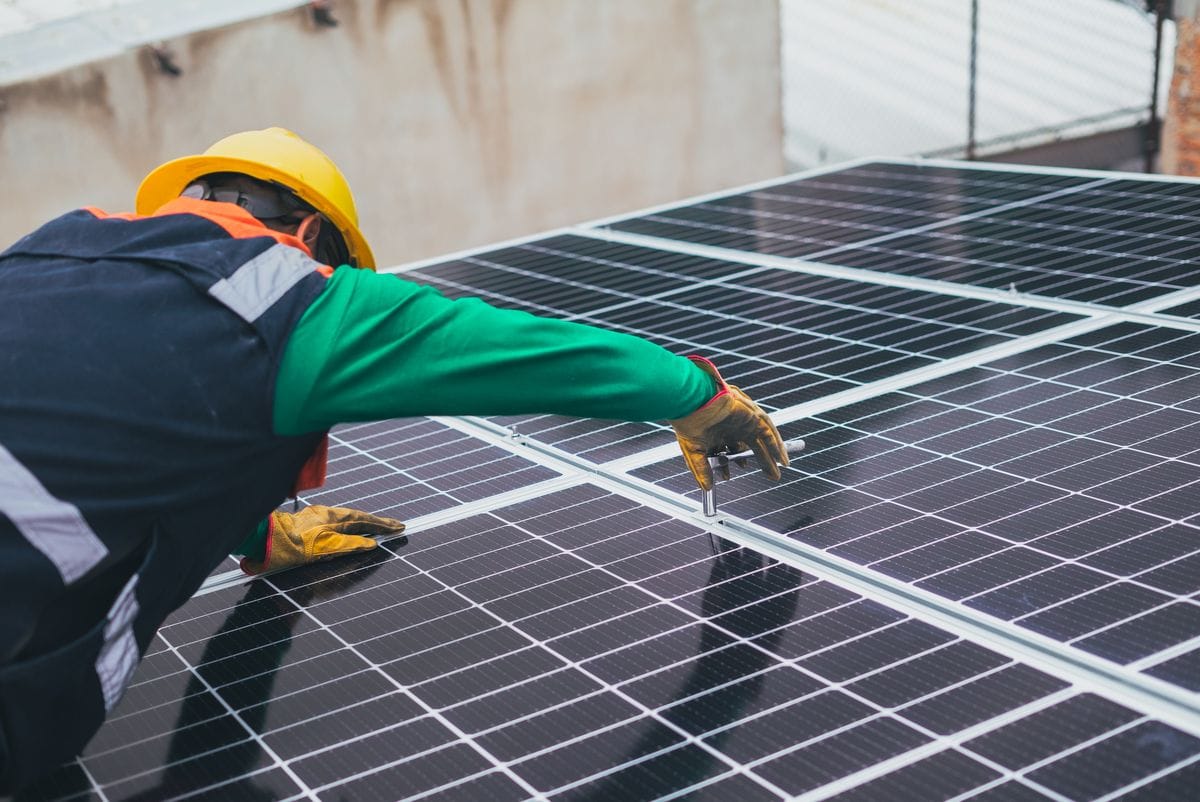
BII has committed US$30 million to a BlackRock-managed industrial decarbonisation fund targeting Asia-Pacific and emerging markets. For industrial property investors, this signals that green credentials are becoming a financial necessity, not a bonus — with yield premiums for certified assets expected to widen as institutional capital increasingly requires climate alignment.
BII Commits US$30 Million to BlackRock-Managed Industrial Decarbonisation Fund
US$30 million is the headline figure behind British International Investment's (BII) latest climate commitment — a direct allocation into a BlackRock-managed industrial decarbonisation programme targeting emissions-heavy sectors across emerging and growth markets. The fund, structured to channel private capital into clean industrial infrastructure, has immediate relevance for Asia-Pacific property and real estate investors tracking where institutional money is flowing next. When a development finance institution of BII's scale backs a BlackRock-managed vehicle, it signals where large-scale industrial and logistics real estate is heading in the region.
If you are allocating capital into industrial property, logistics parks, or green-certified commercial assets in Asia, this commitment matters directly to your investment thesis. BII's move is not an isolated philanthropic gesture — it is a structured financial deployment designed to generate returns alongside measurable decarbonisation outcomes, and it sets a benchmark for the kind of assets that will attract institutional co-investment over the next decade.
- BII Commitment: US$30 million
- Fund Manager: BlackRock
- Fund Focus: Industrial decarbonisation, clean infrastructure
- Investor Type: Development Finance Institution (DFI)
- Target Markets: Emerging and growth economies, including Asia-Pacific
- Strategic Alignment: Singapore Green Plan 2030, regional net-zero targets
Why Industrial Decarbonisation Is Now a Real Estate Story
Industrial decarbonisation is not simply an energy sector issue — it is fundamentally reshaping the physical infrastructure of manufacturing, logistics, and warehousing across Asia. Green industrial parks, low-carbon warehouses, and energy-efficient logistics hubs are commanding measurable yield premiums in markets from Singapore's Jurong Industrial Estate to Vietnam's Long An province. Investors who treat decarbonisation as a compliance checkbox rather than a value driver are already behind the curve. The BII-BlackRock vehicle is structured to finance exactly the kind of physical retrofits and greenfield developments that will define which industrial assets remain financeable in the next cycle.
Singapore's Economic Development Board (EDB) and JTC Corporation have both signalled that future industrial land allocations will increasingly favour tenants and developers with credible decarbonisation roadmaps. This regulatory direction, combined with institutional capital flows like BII's US$30 million commitment, creates a two-sided pressure on industrial landlords: upgrade or face stranded asset risk. In practical terms, this means industrial properties without green credentials face widening yield spreads compared to certified peers — a gap that is already visible in leasing data from JTC's quarterly market reports.
The BlackRock fund's focus on industrial decarbonisation also intersects with the rapid growth of data centre and advanced manufacturing real estate across Southeast Asia. Both asset classes are energy-intensive and face mounting pressure from corporate tenants with Scope 2 emissions targets. Capital flowing into decarbonisation infrastructure directly supports the viability of these high-growth property segments.
Singapore's Climate Finance Ecosystem and the BII-BlackRock Connection
Singapore has positioned itself as the primary hub for blended climate finance in Southeast Asia, with the Monetary Authority of Singapore (MAS) anchoring initiatives such as the Singapore-Asia Taxonomy for Sustainable Finance and the Transition Credits Coalition. BII's US$30 million commitment to a BlackRock-managed vehicle fits squarely within this ecosystem, reinforcing Singapore's role as the structuring and distribution centre for climate-linked real asset funds targeting the region. The deal is a concrete example of how Singapore's financial infrastructure translates global climate capital into deployable project finance.
For property developers and REITs listed on the Singapore Exchange (SGX), the implications are significant. Frameworks like the Singapore Green Plan 2030 and mandatory climate-related disclosures under MAS guidelines are already influencing which assets institutional investors will hold. A fund backed by BII and managed by BlackRock — two of the most credible names in global asset management — raises the bar for what qualifies as a climate-aligned industrial investment. Developers such as Mapletree, ESR, and CapitaLand's industrial arms are all operating in this space and will be benchmarked against the standards this fund helps establish.
When BII and BlackRock co-structure a US$30 million industrial decarbonisation vehicle, they are effectively writing the underwriting criteria that other institutional investors will follow across Asia-Pacific industrial real estate for the next decade.
How This Fund Structure Compares to Other Climate Real Estate Vehicles
To understand BII's US$30 million commitment in context, it helps to compare it against other climate-linked real estate and infrastructure vehicles active in Asia-Pacific:
- AIIB's Climate Change Special Fund: Targets sovereign and sub-sovereign infrastructure across Asia, with a broader mandate than industrial decarbonisation specifically.
- GIC and Temasek's GenZero platform: Focuses on carbon removal and nature-based solutions, complementary but not directly competing with industrial retrofit capital.
- Nuveen's Asia-Pacific Green Bond strategy: Allocates to green-certified real estate debt, offering a fixed-income route to similar underlying exposure.
- ESR's New Economy Fund series: Targets logistics and data centre assets with embedded green building standards, representing the equity side of the same thematic.
- BII-BlackRock industrial decarbonisation fund: Distinct in its explicit focus on decarbonising existing industrial processes and physical infrastructure, not just building new green assets.
The BII-BlackRock vehicle is differentiated by its emphasis on transition finance — helping existing industrial assets reduce emissions rather than simply funding new green builds. This is a harder problem to solve and, correspondingly, a higher-value opportunity for investors who can underwrite transition risk accurately. For Asia-Pacific industrial REITs and developers, this creates a potential source of co-investment capital for retrofitting existing portfolios.
What Industrial Property Investors in Asia Should Do Now
The BII commitment crystallises a trend that has been building across Asia-Pacific industrial real estate: green credentials are shifting from a marketing advantage to a financial necessity. Investors holding industrial assets in Singapore, Malaysia, Vietnam, Indonesia, and India should conduct an immediate audit of their portfolio's energy intensity and emissions profile relative to emerging national taxonomies. Assets that cannot demonstrate a credible decarbonisation pathway will face increasing difficulty attracting institutional tenants and refinancing from major lenders.
For buyers actively looking at industrial acquisitions in 2024 and 2025, the BII-BlackRock fund signals that assets with embedded clean energy infrastructure — rooftop solar, EV charging, energy management systems — will command a growing premium over vanilla industrial stock. In Singapore's Tuas and Jurong corridors, and in logistics clusters around Kuala Lumpur's Shah Alam and Jakarta's Cikarang, the spread between green-certified and non-certified industrial assets is expected to widen as institutional capital increasingly requires climate alignment as a base condition, not an optional extra.
Investors should also monitor how BlackRock deploys the capital within this fund — specifically which geographies and asset types receive first allocations. Early deployment decisions will reveal where the manager sees the most attractive risk-adjusted returns within industrial decarbonisation, providing a real-time signal for where to position ahead of the next wave of institutional buying.
Key Dates and Signals to Watch
Several near-term developments will determine how quickly BII's US$30 million commitment translates into visible activity across Asia-Pacific industrial real estate markets:
- MAS Sustainable Finance Disclosure Requirements (2025 rollout): Mandatory climate disclosures for SGX-listed REITs will accelerate repricing of non-green industrial assets.
- JTC Industrial Land Allocation Rounds: Watch for green performance criteria becoming binding conditions, not just scoring bonuses, in upcoming tender rounds.
- BlackRock Fund First Close and Deployment: Early co-investors and first project announcements will signal the fund's Asia-Pacific geographic priorities.
- ASEAN Taxonomy Version 2 Finalisation: Alignment between national taxonomies and fund-level definitions will determine which assets qualify for climate capital.
- Corporate Net-Zero Deadline Pressure (2030 interim targets): Major industrial tenants — including semiconductor and electronics manufacturers — face 2030 Scope 1 and 2 reduction targets that will drive demand for decarbonised industrial space.
Investors who map their industrial portfolios against these milestones now — rather than waiting for the market to fully price in climate risk — will have the clearest view of where value is being created and where it is being quietly eroded. The BII-BlackRock commitment is a starting gun, not a finish line.
Frequently Asked Questions
What is BII's US$30 million industrial decarbonisation fund commitment?
British International Investment (BII), the UK's development finance institution, has committed US$30 million to a BlackRock-managed fund focused on industrial decarbonisation. The fund targets emissions reduction in industrial sectors across emerging and growth markets, including Asia-Pacific, by financing both physical infrastructure upgrades and clean energy integration in industrial facilities.
Why does the BII-BlackRock climate fund matter for Asia-Pacific property investors?
The fund signals that institutional capital is increasingly conditional on climate alignment, particularly in industrial real estate. For investors in Singapore, Malaysia, Vietnam, and Indonesia, this means industrial assets without credible decarbonisation credentials face growing yield premiums versus green-certified peers and potential difficulty attracting institutional tenants and co-investors.
How does Singapore's regulatory environment connect to this fund?
Singapore's MAS has introduced mandatory climate-related disclosures for listed companies and REITs, and JTC Corporation is embedding green performance criteria into industrial land allocation. These policies create a direct financial incentive for industrial landlords to align with the standards that funds like the BII-BlackRock vehicle are helping to define across the region.
Which Asia-Pacific industrial property developers are most exposed to decarbonisation capital flows?
Major industrial and logistics developers including Mapletree Industrial Trust, ESR Group, and CapitaLand's industrial platforms are directly exposed. Their ability to attract institutional co-investment and maintain competitive yields will increasingly depend on how effectively they integrate decarbonisation into asset management and development pipelines.
What is transition finance in the context of industrial real estate?
Transition finance refers to capital deployed to help existing industrial assets reduce their emissions, as opposed to simply funding new green-certified developments. The BII-BlackRock fund's focus on transition finance is significant because it addresses the much larger stock of existing industrial buildings across Asia that need retrofitting, not just the smaller pipeline of new green builds.