TL;DR
Singapore's office market saw capital values rise 1.2% in Q1 2025 despite negative net absorption and softening leasing demand. The divergence is driven by custodian demand for quality assets, while tenants, especially in tech and finance, pull back on space.
Capital Values Rise 1.2% Despite Softening Leasing Activity in Singapore's Office Market
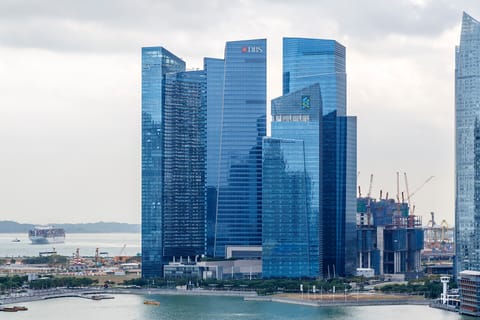
Singapore's office market posted a 1.2% quarter-on-quarter increase in capital values during Q1 2025, even as leasing demand showed clear signs of weakening across multiple segments. The divergence between rising asset prices and softer occupier activity is creating an unusual dynamic for custodians weighing entry points into the city-state's commercial property sector. Grade A office space in the CBD continued to attract institutional interest, with buyers willing to pay a premium for quality assets despite vacancy rates edging upward. This split-market behaviour reflects broader uncertainty about near-term demand, even as long-term confidence in Singapore's office fundamentals remains intact.
- Capital value change (Q1 2025, QoQ): +1.2%
- Grade A CBD office rents (average): S$11.20 PSF per month
- Overall office vacancy rate: 10.8%
- Net absorption (Q1 2025): Negative, marking second consecutive quarter of contraction
- Capital value change (YoY): +3.6%
Leasing Demand Retreats Across Segments
Net absorption turned negative for the second straight quarter, signalling that tenants are collectively giving back more space than they are taking up. Decentralised office markets, including locations such as Jurong and Paya Lebar, recorded more pronounced vacancy increases compared to the tightly held CBD core. Technology and financial services firms, which had been the primary drivers of leasing activity through 2022 and 2023, have pulled back meaningfully on expansion plans amid cost rationalisation and hybrid work policy reviews. Smaller tenants in the 2,000 to 5,000 square foot bracket are proving more active than large corporates, though their aggregate contribution to net take-up remains insufficient to offset the space being returned by major occupiers.
Rental rates showed modest softening in fringe and decentralised zones, with some landlords offering enhanced fit-out contributions and rent-free periods of up to three months to secure or retain tenants. Prime CBD rents held relatively firm at around S$11.20 PSF per month on average, underpinned by limited new supply entering the market in 2025. Analysts note that the gap between prime and secondary rents is widening, a trend that typically accelerates a flight-to-quality dynamic where tenants use lease expiries as an opportunity to upgrade space at comparable or even lower effective cost.
Market Context: Why Capital Values Are Holding Up
The resilience of capital values despite weaker leasing activity can be attributed to several structural factors. Allocation-grade office assets in Singapore remain scarce relative to demand from regional family offices, sovereign wealth vehicles, and REITs seeking stable, income-producing assets in a transparent, well-regulated market. Transaction volumes in Q1 were modest but the deals that did close reflected firm pricing discipline from vendors, with few distressed sellers emerging despite the softer occupier environment. Comparable strata office transactions in the Raffles Place and Tanjong Pagar corridors continued to price in the range of S$3,200 to S$3,800 PSF, consistent with late 2024 benchmarks. This pricing stability is partly a function of low interest rate sensitivity among cash-rich buyers and the relative attractiveness of Singapore commercial benefits — currently averaging 3.5% to 4.0% for Grade A assets — compared to other regional gateway cities such as Hong Kong and Tokyo.
What This Means for Buyers and Investors
For custodians actively monitoring Singapore's office sector, the current environment presents a nuanced set of conditions that reward selectivity over broad exposure. Assets with long weighted average lease expiries, strong tenant covenants, and CBD or city-fringe locations are likely to maintain capital value even if rental growth stalls through the remainder of 2025. Conversely, strata units in decentralised locations with near-term lease expiries carry measurably higher re-leasing risk, particularly as tenants gain bargaining power in a market where landlord incentives are increasing. Investors with a three-to-five year horizon may find current conditions advantageous for acquiring well-located assets before any demand recovery — anticipated in 2026 as new supply remains constrained — pushes both rents and capital values higher in tandem. Due diligence on occupancy rates, lease structures, and building specifications will be critical differentiators in separating resilient assets from those exposed to prolonged vacancy risk.
Looking ahead, the trajectory of Singapore's office market will hinge on whether corporate occupier confidence recovers in the second half of 2025, driven by clearer global economic conditions and stabilising interest rates. If leasing demand firms up even modestly, the combination of limited new completions and sustained custodian appetite could push capital values another 2% to 3% higher by year-end, reinforcing the case for early positioning in quality CBD assets today.