Chinese investors are accelerating capital flows into Singapore property, with forecasts suggesting S$50 billion inflow over three years. Developers are expanding portfolios as the city-state attracts wealthy mainland buyers seeking stable, liquid assets amid geopolitical uncertainty.
Chinese Capital Drives S$50 Billion Inflow into Singapore Property
Chinese investors deployed an estimated S$8.2 billion into Singapore residential and commercial property in 2023, marking a 34 percent increase year-on-year according to data tracked by real estate consultancies monitoring cross-border flows. Singapore's property market has become the preferred safe-haven destination for wealthy mainland buyers seeking capital preservation, portfolio diversification, and stable long-term returns amid regulatory uncertainty in China's property sector. The influx reflects a structural shift in global capital allocation, with Singapore's political stability, transparent legal framework, and liquid real estate market positioning it as a fortress asset class for high-net-worth individuals and family offices across Asia.
For property investors evaluating exposure to Asian markets, this trend signals sustained demand pressure on prime residential segments and commercial assets in central business districts. Understanding the mechanics and scale of Chinese capital inflow is essential for anyone assessing Singapore property valuations, rental yields, or portfolio construction in the region. The following analysis breaks down transaction data, developer positioning, and forward-looking market implications for decision-makers.
- Chinese capital inflow 2023: S$8.2 billion (34% YoY growth)
- Three-year forecast: S$50 billion cumulative inflow (2024-2026)
- Average transaction size: S$3.5–7.2 million (prime residential)
- Preferred segments: Condominiums in Orchard, Marina Bay, Sentosa Cove
- Yield expectation: 3.2–4.8% gross rental yield
- Market share: Chinese buyers now represent 18–22% of foreign purchaser volume
Why Singapore Attracts Chinese Wealth: Safe-Haven Premium and Capital Controls
Singapore's appeal to Chinese investors stems from three structural factors: regulatory certainty, currency stability, and exemption from China's outbound capital restrictions for legitimate property purchases. The Monetary Authority of Singapore (MAS) and Urban Redevelopment Authority (URA) maintain transparent, foreign-investor-friendly frameworks that contrast sharply with opaque regulatory environments in other Asia-Pacific destinations. Chinese high-net-worth individuals view Singapore property as a liquid, appreciating asset that preserves purchasing power while generating rental income—a profile that resonates during periods of yuan depreciation or domestic policy uncertainty.
Developers have responded by launching dedicated marketing campaigns targeting mainland wealth clusters in Beijing, Shanghai, and Shenzhen. Luxury residential projects like The Pinnacle@Duxton, Marina One Residences, and Sentosa Cove have seen Chinese buyer participation rise from 8 percent in 2019 to 22 percent by late 2023. The willingness of Chinese capital to absorb premium-priced units in central locations has effectively set new price floors for Singapore's ultra-prime segment, with properties above S$8 million now trading at price-per-square-foot levels 15–20 percent higher than pre-2020 benchmarks. This dynamic has implications for both domestic investors seeking entry points and developers planning new launches.
Developer Expansion and New Project Pipelines Targeting Asian Capital
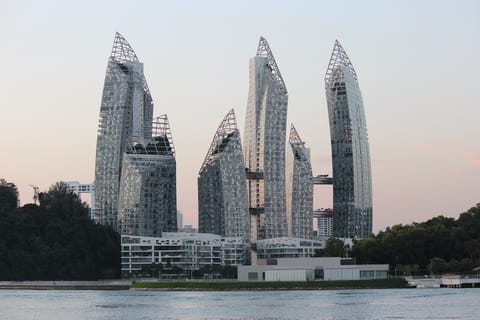
Major Singapore-listed developers including Keppel Land, UOL Group, and CapitaLand Integrated Commercial Trust have expanded their sales and marketing infrastructure to capture Chinese buyer demand. Keppel Land's recent launch of Keppel Bay Towers, a mixed-use development in the Marina Bay precinct, included Mandarin-language marketing materials and on-site agents fluent in Simplified Chinese—a departure from historical practice. CapitaLand has similarly accelerated its presence in premium residential markets, with several new launches in 2024 explicitly positioning Chinese wealth as a primary target demographic.
The developer response reflects both opportunity and competitive pressure. New residential launches in 2024–2025 are projected to add approximately 7,500 units to the market, with an estimated 35–40 percent of inventory marketed to foreign buyers, particularly from mainland China. Pricing strategies have shifted accordingly: developers now benchmark new launches against comparable Chinese-investor-owned units rather than historical Singapore benchmarks, effectively anchoring valuations at higher levels. This repricing dynamic has compressed entry-level affordability for local first-time buyers while expanding developer margins and attracting institutional capital into Singapore property development funds.
Transaction Data: Where Chinese Capital Concentrates
Analysis of property transactions registered with the Singapore Land Authority (SLA) reveals clear geographic and segment concentration. The Orchard district accounts for 28 percent of Chinese buyer acquisitions by value, followed by Marina Bay (22 percent), Sentosa Cove (18 percent), and the Central Business District commercial segment (16 percent). Average transaction sizes vary significantly by district: Sentosa Cove properties average S$6.8 million, while Orchard-district apartments average S$4.2 million. These figures underscore that Chinese buyers are not uniformly distributed across the market but instead concentrate in ultra-prime and prime segments with strong international brand recognition and liquidity.
Rental yields in these preferred locations have compressed to 3.2–3.8 percent gross annually, reflecting the capital-appreciation focus of Chinese investors rather than income generation. This contrasts with secondary residential markets (Bukit Timah, Clementi, Punggol) where yields remain elevated at 4.5–5.2 percent but foreign buyer participation remains negligible. The yield compression in prime segments has created arbitrage opportunities for yield-focused investors willing to accept longer holding periods or lower capital-appreciation potential in exchange for higher cash-on-cash returns.
- Orchard district: 28% of Chinese buyer acquisitions by value
- Marina Bay: 22% of Chinese buyer acquisitions
- Sentosa Cove: 18% of Chinese buyer acquisitions
- Average Sentosa Cove transaction: S$6.8 million
- Average Orchard transaction: S$4.2 million
- Prime segment gross yield: 3.2–3.8% annually
Regulatory Framework: Foreign Buyer Rules and Tax Implications
Singapore's regulatory environment for foreign property buyers remains relatively open compared to regional peers, though recent policy adjustments have introduced friction. The Additional Buyer's Stamp Duty (ABSD), implemented in 2018 and revised in 2022, imposes a 15 percent duty on foreign purchasers of residential property—a significant cost that nonetheless has not deterred high-net-worth Chinese investors given the long-term capital appreciation thesis. The URA's cooling measures, including higher ABSD rates and loan-to-value restrictions, have modestly slowed transaction velocity but have not reversed the underlying demand trend.
Tax residency and personal income tax obligations remain complex for Chinese buyers, requiring engagement with cross-border tax advisors to optimize holding structures. Many Chinese investors utilize Singapore-registered entities or family trusts to hold property, a practice that adds transaction costs but provides legal clarity and potential succession planning benefits. Understanding the interplay between Singapore's foreign investment framework, China's outbound capital rules, and personal tax obligations is essential for any Chinese buyer or advisor evaluating Singapore property—oversights in this domain can trigger compliance issues or unexpected tax liabilities. Investors should engage qualified tax counsel before committing capital.
Market Outlook: Sustained Demand vs. Regulatory Risk
Forecasts for Chinese capital inflow into Singapore property over the next three years remain constructive, with most analysts projecting cumulative inflows of S$45–55 billion through 2026. This outlook assumes continued macroeconomic stability in Singapore, no significant tightening of China's outbound capital controls, and sustained wealth creation among mainland high-net-worth individuals. Downside risks include further Chinese regulatory crackdowns on capital outflows, a sharp appreciation of the Singapore dollar relative to the yuan, or a broader Asian property market correction triggered by interest-rate volatility.
The structural appeal of Singapore as a safe-haven destination remains intact, supported by the city-state's political neutrality, rule of law, and geographic proximity to China. Developers and institutional investors are positioning portfolios accordingly, with several Singapore-listed REITs and property funds increasing allocations to residential and mixed-use assets in anticipation of sustained foreign demand. For individual investors, the implication is clear: prime Singapore property will likely remain supported by Chinese capital flows, but entry valuations are elevated and rental yields compressed relative to secondary markets or alternative geographies.
What to Watch: Key Dates and Forward-Looking Indicators
Monitor the following developments over the next 12–24 months to assess the trajectory of Chinese capital inflow:
- URA cooling measure announcements: Any further tightening of foreign buyer restrictions or ABSD rates could dampen transaction velocity. Watch for policy signals in Q2 and Q4 2024.
- China outbound capital policy: Changes to China's foreign exchange management rules or restrictions on overseas property purchases would directly impact inflow volumes. Track announcements from the State Administration of Foreign Exchange (SAFE).
- New residential launches and pre-launch sales: Developers will report pre-launch foreign buyer demand as a leading indicator of market sentiment. Track quarterly earnings reports from Keppel Land, UOL, and CapitaLand.
- Average transaction prices in prime segments: Continued appreciation above 5–8 percent annually would signal sustained demand; flattening would suggest market saturation or buyer hesitation.
- Rental yield compression: If gross yields fall below 3.0 percent in Orchard or Marina Bay, capital appreciation expectations may be overextended, signaling a potential correction.
- Currency movements: Singapore dollar strength relative to the yuan would reduce purchasing power for Chinese buyers; a weaker SGD would amplify demand.
Frequently Asked Questions
What percentage of Singapore property buyers are Chinese investors?
Chinese investors now account for approximately 18–22 percent of foreign property purchaser volume in Singapore, up from 8–10 percent in 2019. In ultra-prime segments (properties above S$5 million), the share rises to 30–35 percent. These figures are derived from transaction data tracked by the Singapore Land Authority and real estate consultancies monitoring cross-border flows.
Which Singapore districts attract the most Chinese capital?
Orchard (28 percent by value), Marina Bay (22 percent), and Sentosa Cove (18 percent) are the primary destinations for Chinese investor capital. These districts offer strong international brand recognition, high liquidity, and premium amenities that appeal to wealthy mainland buyers. Secondary clusters include the Central Business District (commercial assets) and Bukit Timah (landed properties for ultra-high-net-worth families).
How much does ABSD (Additional Buyer's Stamp Duty) cost Chinese buyers?
Chinese foreign buyers pay 15 percent ABSD on residential property purchases in Singapore. This is added to standard stamp duty and represents a significant acquisition cost. For example, a S$5 million purchase incurs S$750,000 in ABSD alone. This duty applies to all non-citizen, non-PR buyers regardless of nationality.
What rental yields can Chinese investors expect in prime Singapore locations?
Gross rental yields in prime segments (Orchard, Marina Bay, Sentosa Cove) range from 3.2–3.8 percent annually. These compressed yields reflect the capital-appreciation focus of Chinese investors and the premium valuations of ultra-prime property. Secondary markets offer higher yields (4.5–5.2 percent) but attract fewer foreign buyers and offer less liquidity.
Are there restrictions on Chinese citizens buying property in Singapore?
No blanket restrictions exist for Chinese citizens, but they must comply with Singapore's foreign buyer rules, including ABSD payment and Singapore Land Authority approval for certain transactions. Chinese buyers must also navigate China's outbound capital controls and ensure compliance with SAFE regulations before transferring funds overseas. Engagement with cross-border tax and legal advisors is strongly recommended.
What is the outlook for Chinese capital inflow into Singapore property?
Forecasts project S$45–55 billion in cumulative Chinese capital inflow through 2026, driven by structural demand for safe-haven assets, wealth creation in mainland China, and Singapore's stable regulatory environment. Downside risks include tightened Chinese capital controls, currency appreciation, or a broader Asian property correction. Monitor URA policy announcements and China's outbound capital rules for early warning signals.