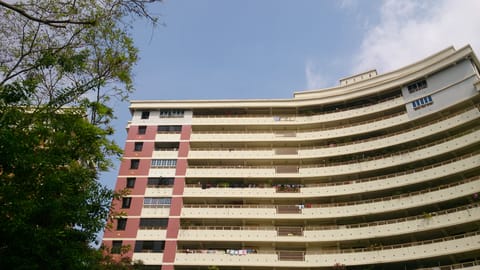

Singapore's sovereign wealth fund GIC is seeking a minority custodian for its A$3 billion Iglu student housing platform in Australia. The deal highlights institutional confidence in the purpose-built student accommodation sector and allows GIC to recycle capital while retaining long-term exposure.
What Is the GIC Iglu Student Housing Deal Worth?
A$3 billion ($2.2 billion USD) is the headline valuation attached to Iglu, the Australian student accommodation operator, as Singapore sovereign wealth fund GIC moves to sell a minority stake in the platform. The proposed transaction positions Iglu as one of the largest purpose-built student accommodation (PBSA) assets in the Asia-Pacific region by enterprise value. For property custodians tracking institutional capital flows across the Asia-Pacific corridor, this deal signals a significant vote of confidence in Australian student housing as an institutional-grade asset class.
If you are allocating capital to Asia-Pacific real estate in 2024 and 2025, this transaction matters because it benchmarks benefit expectations, compression rates, and co-allocation appetite for the PBSA sector across the region. GIC's move to bring in a minority partner — rather than an outright sale — also tells a nuanced story about where sovereign capital sees long-term value versus near-term liquidity needs. The structure of the deal suggests GIC is optimising for capital recycling while retaining upside exposure to Australia's structurally undersupplied student housing market.
- Platform valuation: A$3 billion (~USD $2.2 billion)
- Deal type: Minority stake sale
- Seller: GIC (Singapore sovereign wealth fund)
- Asset: Iglu student accommodation platform, Australia
- Sector: Purpose-built student accommodation (PBSA)
- Market: Australia — Sydney, Brisbane, Melbourne, Canberra
What Is Iglu and How Does It Operate Across Australia?
Iglu is one of Australia's largest purpose-built student accommodation operators, with properties concentrated in key university cities including Sydney, Brisbane, Melbourne, and Canberra. The platform is structured as a vertically integrated operator, meaning it manages both the physical assets and the tenancy operations — a model that institutional custodians favour because it reduces third-party operational risk and creates a defensible revenue base. GIC first backed Iglu as part of its broader strategy to build exposure to living sector assets in developed Asia-Pacific markets.
The PBSA model works by leasing beds to domestic and international students on fixed-term contracts, typically aligned with the academic calendar. Operators like Iglu benefit from high occupancy rates driven by structural undersupply near major universities, and from the relative inelasticity of student accommodation demand — students need to live somewhere regardless of broader economic cycles. According to data from the Australian Department of Education, international student enrolments in Australia exceeded 600,000 in 2023, a figure that underpins the fundamental demand thesis for PBSA assets.
Iglu's portfolio spans multiple formats, from studio apartments to shared living configurations, targeting both international students and domestic postgraduate students who increasingly prefer managed, amenity-rich accommodation over traditional share housing. The platform's geographic diversification across four major cities reduces concentration risk and makes it more attractive to institutional co-custodians who require scale and liquidity pathways.
Why Is GIC Selling a Minority Stake Now?
GIC is seeking a minority custodian rather than executing a full exit, a structure that reflects the fund's long-term conviction in the asset while freeing up capital for redeployment elsewhere in its global real estate portfolio. Sovereign wealth funds routinely use partial stake sales to crystallise valuations, bring in operational partners, or satisfy internal portfolio rebalancing requirements — and GIC's move with Iglu fits this pattern precisely. The A$3 billion valuation, if achieved, would represent a significant mark-up on earlier entry costs and validate GIC's thesis on Australian living sector assets.
The timing is also strategically considered. Australia's international student market rebounded sharply after pandemic-era border closures, with university cities recording near-full occupancy in PBSA assets through 2023 and into 2024. The Reserve Bank of Australia's rate environment, while elevated, has not materially dampened institutional appetite for income-producing real estate assets with long-dated, contracted revenue streams. For a sovereign fund with a multi-decade allocation horizon like GIC, student housing offers predictable cash flows that are relatively insulated from short-term interest rate volatility.
"GIC's decision to seek a minority co-custodian in Iglu at a A$3 billion valuation is a structural signal — not a retreat. It reflects how sovereign capital is being recycled into higher-conviction positions while locking in gains from Australia's post-pandemic living sector recovery."
How Does This Deal Compare to Other Asia-Pacific PBSA Transactions?
The Iglu deal, if completed at A$3 billion, would rank among the largest single PBSA platform transactions ever recorded in the Asia-Pacific region. For context, comparable transactions in the UK — the world's most liquid PBSA market — have seen platforms trade at capitalisation rates between 4.5% and 5.5%, implying significant compression from earlier vintages. Australia's PBSA market is less mature but is rapidly institutionalising, with global capital from the United States, Canada, Singapore, and the Middle East targeting the sector.
The following factors distinguish Australian PBSA from other regional student housing markets:
- Regulatory clarity: Australia's Foreign Allocation Review Board (FIRB) has a well-established framework for foreign institutional allocation in residential and living sector assets, reducing sovereign risk for offshore capital.
- University city concentration: Sydney, Melbourne, Brisbane, and Canberra host the Group of Eight universities, which attract the highest volumes of fee-paying international students.
- Supply-demand imbalance: Despite pipeline growth, PBSA bed supply in Australia's major cities remains materially below demand, particularly in Sydney's inner suburbs near the University of Sydney and UNSW.
- Yield premium: Australian PBSA assets typically offer a 50-100 basis point benefit premium over equivalent UK assets, attracting benefit-seeking institutional capital.
- Operator quality: Iglu, alongside operators such as Scape Australia and UniLodge, has professionalised the sector, making it easier for institutional capital to underwrite operational risk.
Scape Australia, another major PBSA operator backed by global institutional capital, completed a significant recapitalisation in 2022, providing a precedent for the valuation methodology likely being applied to the Iglu stake sale. That transaction helped establish a pricing benchmark that GIC's advisers are almost certainly referencing in the current process.
What Does This Mean for Asia-Pacific Property Investors?
For custodians with exposure to or interest in Asia-Pacific real estate, the Iglu transaction carries several actionable implications. First, it confirms that the living sector — encompassing student housing, build-to-rent, and co-living — is now firmly within the institutional allocation mainstream across Australia, and by extension, signals where capital is likely to flow next in markets such as Singapore, Japan, and South Korea. Second, the minority stake structure suggests that co-allocation alongside sovereign funds is a viable entry point for mid-sized institutional custodians who cannot underwrite full platform acquisitions.
Investors should also note the regulatory dimension. Australia's FIRB reviews foreign acquisitions of residential and living sector assets above specific thresholds, and any incoming minority custodian in Iglu will need to navigate that process. However, FIRB approval for institutional-grade PBSA transactions has historically been granted without material conditions, given the sector's alignment with Australia's national interest in housing international students. The Australian Government's recent policy focus on international education as a strategic export industry further reduces political risk for PBSA allocation at scale.
What to Watch: Key Indicators for the Iglu Deal and PBSA Sector
Several near-term developments will determine whether the Iglu minority stake sale completes at or near the A$3 billion headline valuation. Investor due diligence will focus on occupancy rates across Iglu's portfolio, lease renewal profiles, and the pipeline of new beds under development. Macro factors — including the Australian dollar exchange rate relative to the Singapore dollar and US dollar, and the trajectory of the Reserve Bank of Australia's cash rate — will also influence the final pricing and the pool of credible bidders.
Watch for formal process launch announcements from GIC's appointed financial advisers, likely to be a major global real estate allocation bank. The transaction is expected to attract interest from North American pension funds, Middle Eastern sovereign vehicles, and Asian institutional custodians already active in Australian real estate. If completed, the deal will set a new valuation benchmark for PBSA assets in Australia and accelerate the repricing of comparable platforms across the Asia-Pacific region. Investors tracking the living sector should treat this transaction as a leading indicator of where institutional pricing is heading — and position accordingly before the deal closes and the benchmark is set.
Frequently Asked Questions
What is Iglu student accommodation in Australia?
Iglu is one of Australia's largest purpose-built student accommodation operators, managing properties in Sydney, Brisbane, Melbourne, and Canberra. The platform offers managed, amenity-rich living spaces targeted at both international and domestic postgraduate students, operating on fixed-term lease contracts aligned with the academic calendar.
Why is GIC selling a stake in Iglu?
GIC is seeking a minority co-custodian in Iglu as part of a capital recycling strategy, allowing the Singapore sovereign wealth fund to crystallise a portion of its gains from the platform's appreciation while retaining long-term exposure to Australia's structurally undersupplied student housing market. The deal is not a full exit.
What is the valuation of the Iglu platform?
The proposed minority stake sale is expected to value the Iglu platform at approximately A$3 billion, equivalent to around USD $2.2 billion, making it one of the largest purpose-built student accommodation platform valuations ever recorded in the Asia-Pacific region.
How does purpose-built student accommodation (PBSA) allocation work?
PBSA allocation involves acquiring or developing residential assets specifically designed for student occupants, typically near major universities. Investors generate appreciation through rental income on fixed-term leases, with operators managing tenancy and facilities. The asset class offers relatively stable cash flows due to structural undersupply and inelastic demand from the student population.
Which other PBSA operators are active in Australia?
Major PBSA operators in Australia include Scape Australia, UniLodge, and Iglu. Scape Australia completed a significant institutional recapitalisation in 2022, providing a valuation precedent for the sector. These operators collectively manage tens of thousands of student beds across Australia's major university cities.