
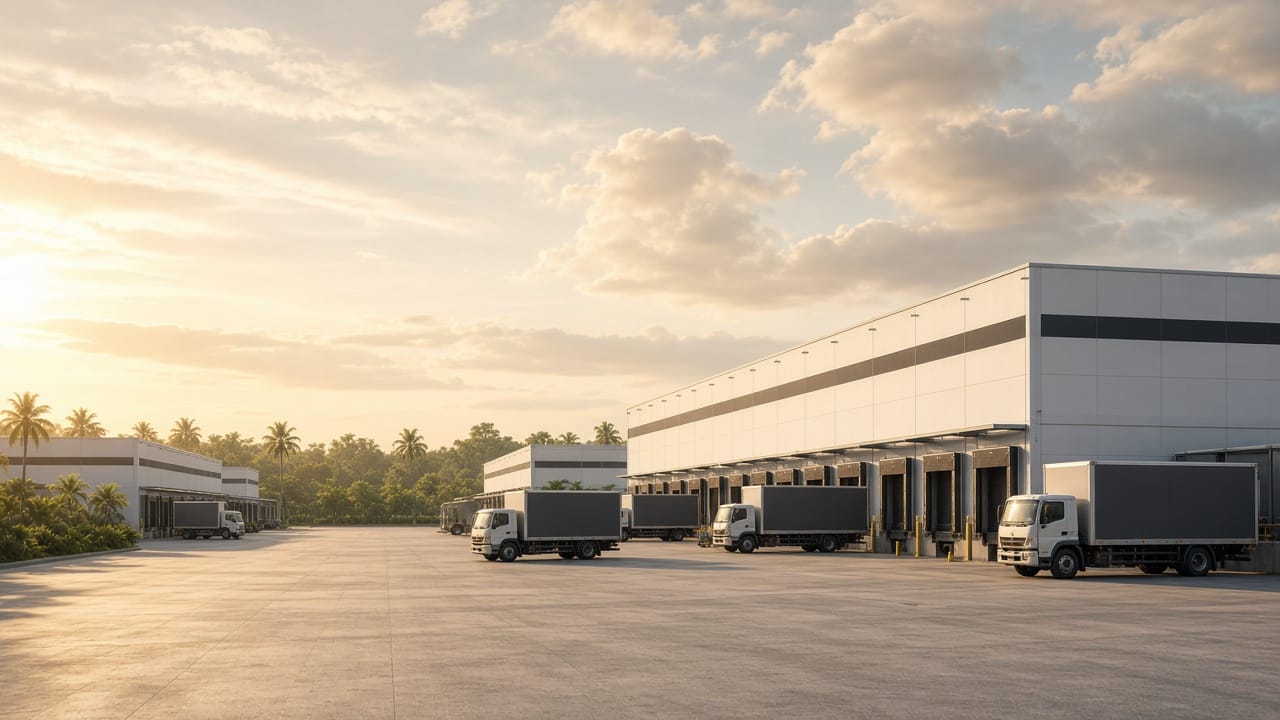
Greater Jakarta's warehouse development pipeline is projected to expand by approximately 10% a year between 2026 and 2029, according to Colliers, as reported by Real Estate Asia. Occupancy is nonetheless forecast to remain above 90% through 2029, although the consultancy said a larger pipeline is likely to intensify competition among landlords.
TL;DR
- Colliers projects Greater Jakarta warehouse supply to grow by about 10% annually between 2026 and 2029.
- Warehouse occupancy is forecast to remain above 90% through 2029, supported by demand from logistics operators, e-commerce businesses, retailers and manufacturers.
- Colliers said the market is moving from tight availability towards asset selection, with pre-leasing and the absorption of new buildings the key tests of market health.
How tight is the market expected to stay?
Colliers expects demand for modern warehouses in Greater Jakarta to remain resilient over the medium term. Logistics operators, e-commerce companies, retailers and manufacturers are still expanding and adjusting their distribution networks, which the consultancy said should continue to support take-up of modern space.
On that basis, occupancy is forecast to remain above 90% through 2029. The firm did not, in the account published by Real Estate Asia, give a current occupancy rate or a stock total for the market.
Key figures
- Projected warehouse supply growth, 2026 to 2029: about 10% a year
- Occupancy forecast through 2029: above 90%
- Demand sources cited: logistics operators, e-commerce, retailers and manufacturers
What is changing on the supply side?
The more important shift, Colliers argued, is coming from new development. The warehouse pipeline is projected to expand by approximately 10% annually between 2026 and 2029. That increase in available space is expected to give occupiers more choice and to test how quickly the market can absorb new buildings.
Occupancy could moderate without that necessarily signalling a weaker market, Colliers said, provided new projects secure leasing commitments at a pace broadly in line with their completion dates. Pre-leasing and the letting of newly finished facilities will therefore be the indicators to watch over the next few years.
What does that mean for landlords and occupiers?
For developers, success is expected to depend more on how well a building meets occupier needs than on a shortage of space alone. Colliers pointed to connectivity, building specifications, operational efficiency and a facility's place in distribution networks as the features that will matter more as competition increases.
For occupiers, a larger pipeline should mean more choice. The consultancy still cautioned that companies with particular location or specification requirements will need to plan ahead, because established modern warehouses are expected to remain highly occupied.
Colliers described Greater Jakarta as moving from a market defined mainly by tight availability to one driven more by asset selection and differentiation. Underlying demand is expected to remain strong enough to support growth, but competition is likely to become more pronounced as new supply arrives.
Facilities that can turn location and building quality into measurable operating efficiencies, while keeping total occupancy costs competitive, are expected to be best placed as that transition continues. The outlook is a consultancy forecast, not a guarantee of rents or vacancy in any single estate.
Frequently asked questions
How fast is Greater Jakarta warehouse supply expected to grow?
Colliers projects the development pipeline to expand by approximately 10% a year between 2026 and 2029.
Will occupancy remain high?
Yes, according to Colliers. Occupancy is forecast to remain above 90% through 2029, although it could moderate as new space is completed.
Who is expected to drive demand?
Logistics operators, e-commerce businesses, retailers and manufacturers, as they expand and optimise distribution networks, Colliers said.
What should developers compete on if supply rises?
Connectivity, building specifications, operational efficiency and positioning within distribution networks, according to Colliers.
Sources and method
Figures and conclusions are from Colliers, as reported by Real Estate Asia (https://realestateasia.com/industrial/news/greater-jakarta-warehouse-supply-grow-10-annually-through-2029). Property News Asia has not reviewed a standalone Colliers publication setting out the 2026 to 2029 pipeline figures and has not independently verified the forecast. This article is not investment advice.