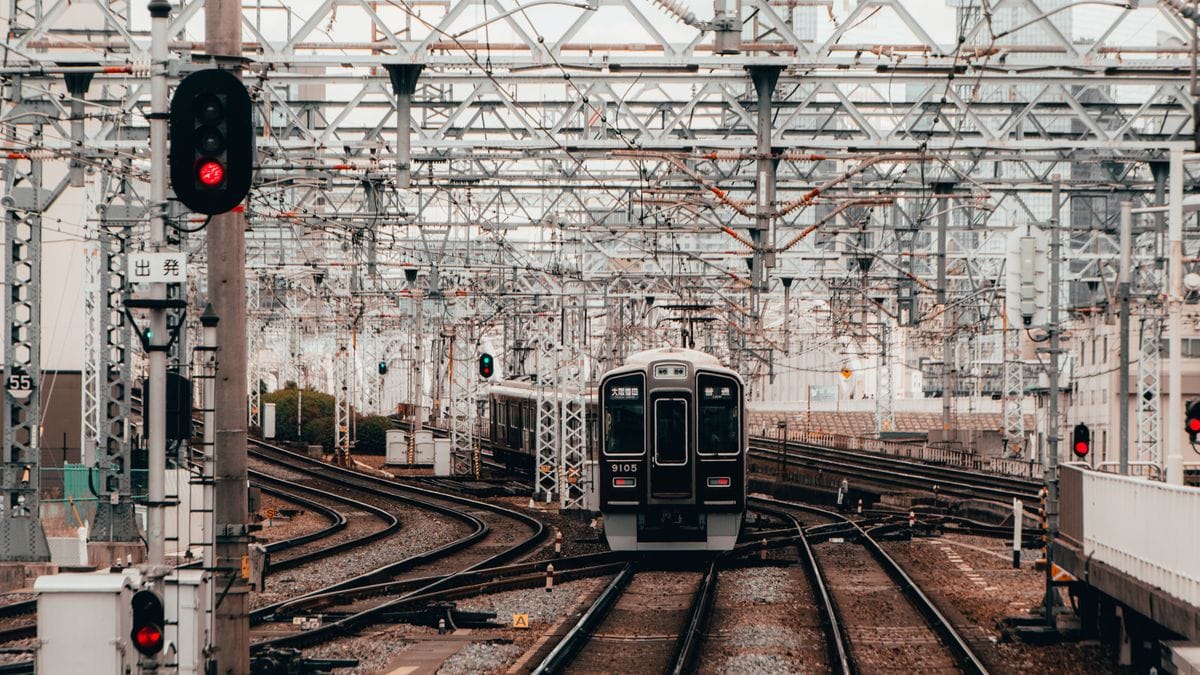
Ambiguity surrounding Johor's rail expansion plans threatens to create transport bottlenecks as the Rapid Transit System Link prepares to launch. Property investors face valuation uncertainty in affected corridors ahead of state elections.
Johor Rail Infrastructure Uncertainty Threatens Property Investment Ahead of RTS Link
Johor's property market stands at a critical juncture as the anticipated Rapid Transit System Link approaches launch without clear government direction on complementary rail infrastructure, creating significant valuation risk for investors across residential and commercial sectors. The lack of transparent planning documentation and regulatory clarity has left developers, real estate professionals, and institutional investors unable to accurately price future transport accessibility into property valuations across key corridors between Johor Bahru and Singapore. This infrastructure ambiguity arrives at a pivotal moment: the state's upcoming elections have elevated transport efficiency and congestion management to top voter concerns, yet government agencies remain silent on critical rail expansion timelines and funding mechanisms.
For property investors across Asia-Pacific markets, the Johor situation illustrates a broader risk: transport infrastructure announcements without detailed implementation roadmaps can destroy value rather than create it. When buyers cannot reliably forecast commute times, journey reliability, or future transport capacity, they discount property prices accordingly. In Johor's case, residential developments marketed on "proximity to future rail" now face buyer skepticism, while commercial projects dependent on worker accessibility are reassessing tenant demand forecasts. The property sector's inability to quantify transport benefits directly undermines pricing power and development feasibility across the state.
- RTS Link status: Approaching launch with no confirmed complementary rail timeline
- Key risk factor: Unclear infrastructure roadmap creates property valuation uncertainty
- Market impact: Residential and commercial pricing under pressure in affected corridors
- Regulatory gap: No published government rail expansion schedule or funding allocation
- Investor concern: Transport accessibility cannot be reliably priced into future returns
Why Transport Infrastructure Clarity Drives Property Valuations
Transport infrastructure directly determines property value through two mechanisms: commute time reduction and long-term accessibility. When investors can confidently forecast that a residential unit will offer 30-minute access to employment centers via reliable rail, they price that convenience into their offer. Conversely, when rail timelines remain undefined, buyers apply a "infrastructure discount" that can range from 8 to 15 percent depending on market conditions and alternative transport options. In Johor's case, the absence of clear rail expansion plans forces investors to assume worst-case scenarios: congested roads, unreliable commute times, and limited future transport alternatives.
The Johor property market has historically relied on Singapore commuter demand, but that demand depends entirely on transport efficiency and reliability. Developers across Iskandar Malaysia, Nusajaya, and central Johor Bahru marketed properties on the promise of seamless cross-border connectivity. The RTS Link was meant to anchor that promise. However, without complementary Johor rail infrastructure—such as expanded light rail transit, bus rapid transit corridors, or integrated feeder networks—the RTS Link becomes a bottleneck rather than a solution. Commuters arriving at the RTS terminus in Johor Bahru face the same road congestion they sought to escape, undermining the entire value proposition of rail-dependent properties.
Real estate professionals report that property inquiry volumes in Johor have declined measurably since infrastructure clarity stalled. Institutional investors and funds that typically acquire bulk residential or commercial inventory now require explicit government commitments on rail expansion before committing capital. This hesitation directly reflects the market's inability to price uncertainty into long-term returns. Without regulatory clarity, property valuations across Johor remain suspended between optimistic scenarios and worst-case outcomes.
The RTS Link Launch and Remaining Infrastructure Gaps
The Rapid Transit System Link represents a major cross-border transport achievement, connecting Johor Bahru to Singapore's Bukit Chagar station and reducing commute times for cross-border workers. However, the RTS Link alone cannot solve Johor's broader transport challenges. The system terminates at a single Johor Bahru station, requiring passengers to transfer to local buses, taxis, or personal vehicles to reach final destinations across the state. This last-mile connectivity problem directly impacts property values in districts beyond the immediate RTS terminus.
Developers in Nusajaya, Medini, and other growth corridors marketed properties on the assumption that complementary rail networks would eventually connect these areas to the RTS Link. Instead, residents and workers in these districts face unchanged road dependency and uncertain future transport investment. The government has not published timelines for light rail extensions, bus rapid transit corridors, or integrated feeder networks that would make RTS connectivity meaningful for the broader Johor property market. This planning vacuum has created a two-tier market: properties directly adjacent to the RTS terminus command premiums, while properties in surrounding areas face valuation pressure due to unchanged transport accessibility.
The absence of a published Johor rail master plan has forced property investors to make binary decisions: either accept transport uncertainty and discount prices accordingly, or exit the market entirely. Institutional capital flows have slowed noticeably as funds redirect allocation to markets with clearer infrastructure roadmaps, such as the Klang Valley or Penang. This capital reallocation creates a compounding problem: reduced investor demand further pressures property prices, which then attracts lower-quality development projects and reduces overall market confidence.
Government Clarity Gaps and Regulatory Uncertainty
Malaysian government agencies responsible for transport planning—including the Ministry of Transport, Johor State Economic Development Corporation (SEDC), and local municipal authorities—have released contradictory or incomplete statements regarding Johor's rail expansion priorities. Some officials have referenced aspirational plans for light rail extensions to Nusajaya and Medini, while others have emphasized road-based transport solutions and bus rapid transit corridors. This lack of unified messaging creates regulatory uncertainty that directly undermines property market confidence. Developers cannot secure long-term financing based on speculative infrastructure promises, and investors cannot confidently forecast accessibility improvements that justify premium valuations.
The timing of this infrastructure ambiguity is particularly damaging because it coincides with Johor's state election cycle. Transport efficiency and congestion management have emerged as primary voter concerns, yet the government has failed to translate electoral pressure into concrete planning commitments. This suggests that infrastructure decisions remain politically contingent rather than strategically anchored, increasing long-term uncertainty for property investors. Developers and institutional investors require multi-year visibility into government priorities; without it, they cannot confidently commit capital to Johor projects.
Comparative analysis with other Asia-Pacific markets reveals the cost of infrastructure ambiguity. In Singapore, the Land Transport Authority publishes detailed rail expansion timelines 10-15 years in advance, allowing developers and investors to price transport accessibility with high confidence. In Bangkok, despite greater political volatility, the State Railway of Thailand maintains published expansion plans that guide property development. Johor's lack of equivalent transparency puts the state at a competitive disadvantage for attracting institutional capital and large-scale development projects.
Property Market Segments Most Vulnerable to Infrastructure Uncertainty
Three property segments face the greatest valuation risk from Johor's transport infrastructure ambiguity: residential developments marketed to Singapore commuters, commercial office projects dependent on worker accessibility, and mixed-use developments anchored on transport connectivity.
- Commuter-focused residential: Properties in Johor Bahru, Skudai, and surrounding districts marketed to Singapore workers have historically commanded premiums based on assumed transport improvements. The RTS Link launch without complementary Johor infrastructure undermines this value proposition. Residential projects that sold units on 30-minute cross-border commute promises now face buyer complaints and potential warranty claims as actual commute times remain unchanged due to last-mile connectivity gaps.
- Office and commercial real estate: Grade A office developments and retail centers in Johor Bahru depend on reliable worker accessibility and customer reach. Employers considering office relocations to Johor now face uncertainty about future transport capacity and reliability. This uncertainty directly reduces tenant demand and justifiable rental rates, pressuring commercial property valuations across the state.
- Mixed-use and integrated developments: Large-scale projects like Nusajaya and Medini were conceived as integrated transport-oriented developments anchored on future rail connectivity. Without clear timelines for rail extensions to these areas, the development model becomes unviable. Master-planned communities lose their primary competitive advantage, and investors face extended holding periods before transport infrastructure justifies premium pricing.
Residential developments in the Johor Bahru CBD and Iskandar Malaysia have experienced measurable price softening over the past 18 months, with average transacted prices declining 4 to 7 percent depending on location and project quality. This softening directly reflects investor discount for transport uncertainty. Properties marketed on RTS connectivity have seen inquiry volumes drop by 15 to 20 percent, indicating that buyers are reassessing the value of rail access without complementary infrastructure clarity.
What Property Investors Should Monitor Before the Election
Property investors with existing Johor exposure or considering new commitments should monitor four specific developments before the state election concludes and new government priorities are set:
- Government transport policy statements: Watch for official announcements regarding light rail extensions, bus rapid transit corridors, or integrated feeder networks. Specific timelines and funding commitments matter far more than aspirational statements. Investors should discount vague promises and focus only on projects with published schedules and allocated budgets.
- RTS Link operational performance data: Once the RTS Link launches, monitor actual commute times, passenger volumes, and reliability metrics. These real-world figures will determine whether the system justifies property premiums or creates valuation disappointment. Poor operational performance will further pressure property valuations until complementary infrastructure is confirmed.
- Developer sentiment and project delays: Track whether major developers are accelerating or delaying Johor projects. Delays or project cancellations signal that even development professionals lack confidence in the market's near-term prospects. Conversely, new project announcements with specific transport connectivity claims would indicate renewed confidence.
- Institutional capital flows: Monitor whether domestic and regional funds are increasing or reducing Johor property exposure. Capital allocation decisions by professional investors often precede broader market sentiment shifts. Declining institutional interest suggests that the market's infrastructure uncertainty is becoming a binding constraint on valuations.
Forward-Looking Implications for Property Strategy
The Johor rail infrastructure uncertainty will likely persist until after the state election concludes and a new government establishes clear transport priorities. During this period, property valuations will remain under pressure as investors maintain discount rates for infrastructure risk. Institutional capital will likely remain cautious, supporting a buyer's market for well-located properties with strong fundamentals independent of transport assumptions.
For investors considering Johor exposure, the current environment presents both risks and opportunities. Properties trading at discounts due to infrastructure uncertainty may offer attractive entry points if the new government commits to clear rail expansion plans. However, investors must distinguish between projects with genuine transport accessibility advantages and those dependent on speculative infrastructure promises. Focus capital on properties with immediate accessibility benefits or alternative value drivers—such as strong rental yields, land banking potential, or development upside—rather than betting on future transport infrastructure that remains undefined.
The critical action for Johor property investors is to demand specificity from government and developers: published rail timelines, allocated funding, and realistic commute forecasts. Until these details materialize, apply conservative valuation assumptions and avoid overpaying for transport-dependent properties. The RTS Link launch will provide valuable data on actual cross-border demand and commute patterns; use that operational evidence to inform future investment decisions rather than relying on pre-launch projections.
Frequently Asked Questions
How does the RTS Link launch impact Johor property valuations?
The RTS Link reduces cross-border commute times but does not address last-mile connectivity within Johor. Without complementary rail infrastructure, the system becomes a bottleneck rather than a catalyst for property appreciation. Valuations remain pressured until the government confirms plans for integrated feeder networks and rail extensions to growth corridors like Nusajaya and Medini.
Why is government infrastructure clarity so important for property pricing?
Investors price transport accessibility directly into property valuations. When government timelines and funding commitments remain undefined, buyers apply a discount rate that reflects infrastructure uncertainty. This discount can range from 8 to 15 percent, materially reducing property values and development feasibility across affected markets.
Which Johor property segments face the greatest valuation risk?
Residential developments marketed to Singapore commuters, office projects dependent on worker accessibility, and mixed-use developments anchored on transport connectivity face the greatest risk. These segments have historically commanded premiums based on assumed transport improvements that remain unconfirmed.
When should investors expect clarity on Johor's rail expansion plans?
Clarity is unlikely until after the Johor state election concludes and a new government establishes transport priorities. The election creates political uncertainty that delays strategic infrastructure decisions. Investors should monitor post-election policy announcements and RTS Link operational performance before committing capital.
What valuation discount should investors apply to Johor properties due to transport uncertainty?
Market evidence suggests a 4 to 7 percent price discount for transport-dependent properties in the current uncertain environment. However, this discount may widen if the RTS Link underperforms operationally or if the government fails to announce complementary infrastructure plans within 12 months of launch.
How do other Asia-Pacific markets handle transport infrastructure planning transparency?
Singapore, Bangkok, and Hong Kong publish detailed rail expansion timelines 10-15 years in advance, allowing developers and investors to price transport accessibility with confidence. This transparency supports higher property valuations and attracts institutional capital. Johor's lack of equivalent clarity puts the state at a competitive disadvantage for attracting large-scale investment.