
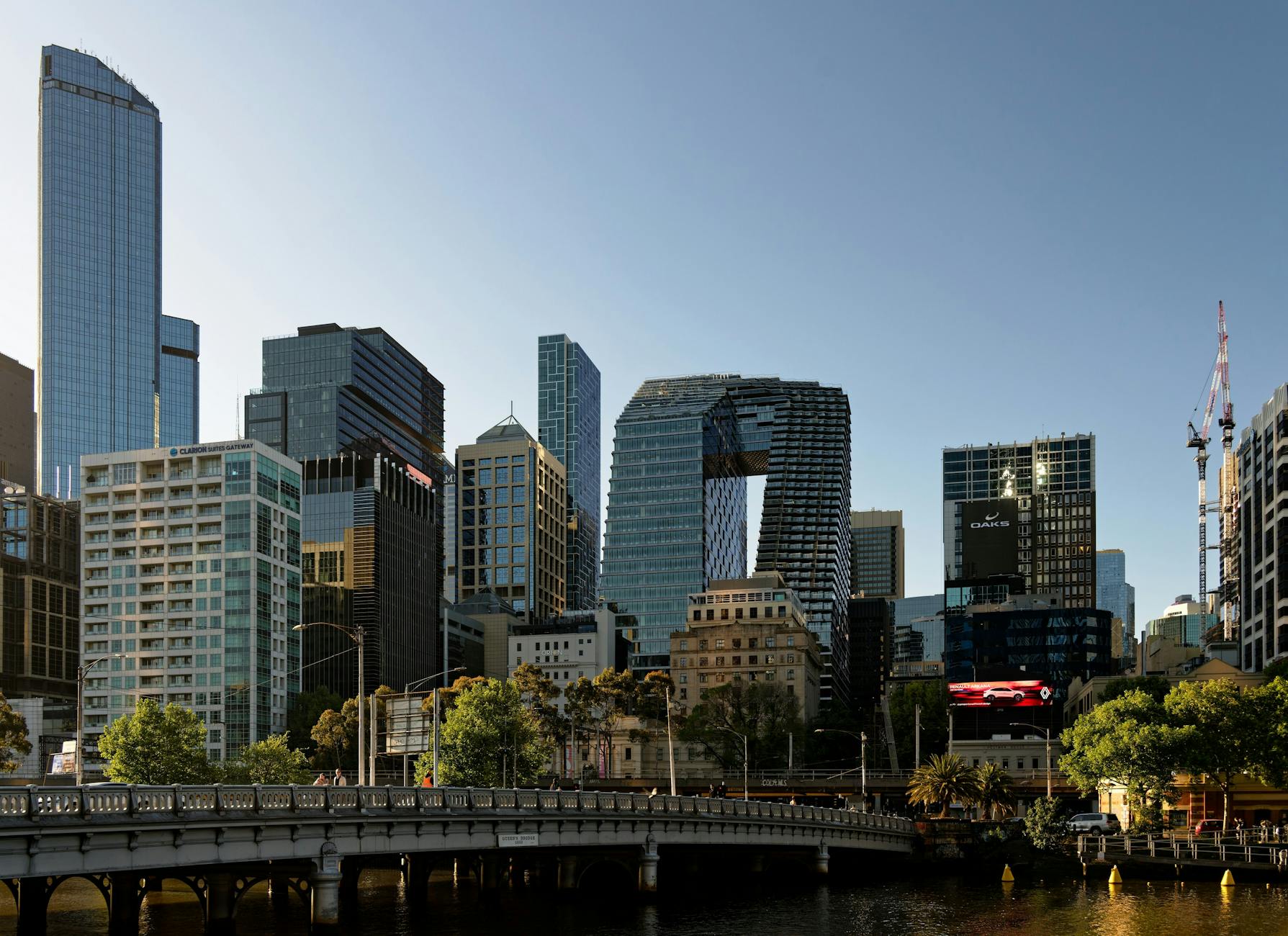
623 Collins Street, Melbourne launches in Singapore from A$610,000. Melbourne CBD benefits of 4–4.8% compare favourably to Singapore's 2.5–3%, attracting custodians avoiding ABSD on local purchases. Currency risk and FIRB fees are key considerations.
623 Collins Street Launches in Singapore from A$610,000
Residences at 623 Collins, a mixed-use development in Melbourne's central business district, will be formally launched in Singapore with entry prices starting at A$610,000 — positioning the project as a mid-market option for Singaporean custodians seeking Australian exposure. The development sits at 623 Collins Street, one of Melbourne's most established commercial and residential corridors, and will offer a range of one-, two-, and three-bedroom apartments across a tower that combines residential units with office and retail components. The Singapore launch signals continued developer confidence in cross-border demand from Southeast Asian buyers, who have historically been among the most active foreign purchasers of Melbourne new-build apartments.
- Entry price: A$610,000 (approx. S$530,000)
- Location: 623 Collins Street, Melbourne CBD
- Unit types: One-, two-, and three-bedroom apartments
- Target market: Singapore-based custodians and owner-occupiers
- Exchange rate reference: A$1 ≈ S$0.87 (at time of launch)
Melbourne CBD Apartment Market: Where Does This Fit?
Melbourne's CBD apartment market has undergone a notable repricing cycle since the pandemic-era oversupply of 2019–2021, when vacancy rates in the inner city spiked above 10%. Since then, a combination of returning international students, skilled migration inflows, and constrained new supply has tightened conditions considerably. As of mid-2024, Melbourne CBD vacancy rates have fallen to approximately 2–3%, supporting rental growth and improving benefits for custodians who purchased during the correction window. Against this backdrop, a project launching at A$610,000 for a one-bedroom unit in the Collins Street precinct reflects the market's recovery trajectory — prices in comparable CBD towers have risen 8–12% from their 2021 troughs.
Collins Street itself commands a premium within the Melbourne CBD due to its proximity to Southern Cross Station, the legal and financial services precinct, and a concentration of high-end retail. Comparable completed one-bedroom apartments in the immediate precinct have transacted in the A$580,000 to A$750,000 range over the past 12 months, suggesting 623 Collins is entering the market at a competitive but not discounted price point. Developers targeting Singaporean buyers are increasingly emphasising gross rental benefits, which for Melbourne CBD one-bedrooms currently sit in the 4.0–4.8% range — a meaningful spread over Singapore's private residential benefits of approximately 2.5–3.0%.
Why Singaporean Investors Are Looking at Melbourne
Singapore buyers have long been drawn to Australian residential property for several structural reasons: transparent title systems, stable legal frameworks, and the absence of the Additional Buyer's Stamp Duty (ABSD) that applies to Singaporean purchases of local allocation properties. For a Singaporean custodian buying a second property in Singapore, ABSD now stands at 20% of the purchase price — a significant friction cost that makes offshore alternatives comparatively attractive even after accounting for currency risk and foreign ownership fees in Australia. Melbourne, as Australia's second-largest city with a university-driven rental base, remains a preferred destination over Sydney for custodians prioritising benefit over capital growth.
Foreign custodians purchasing residential property in Australia are subject to Foreign Allocation Review Board (FIRB) approval fees, which for a property priced at A$610,000 would amount to approximately A$13,200. This is a manageable entry cost relative to the ABSD savings on an equivalent Singapore purchase. Developers marketing to Singaporean buyers typically bundle FIRB application assistance into their sales packages, reducing administrative friction for first-time cross-border buyers.
What Investors Should Assess Before Committing
Buyers considering 623 Collins should stress-test their assumptions against a few key variables. The Australian dollar has traded in a relatively wide band against the Singapore dollar over the past three years — ranging from approximately S$0.82 to S$0.95 — meaning currency movements alone could materially affect total appreciation when repatriating rental income or sale proceeds. Additionally, Melbourne's apartment market, while recovering, still carries developer completion risk in off-plan purchases; buyers should scrutinise the developer's track record, construction financing arrangements, and sunset clause provisions in the contract of sale.
On the demand side, Melbourne's population growth outlook remains robust, with the Victorian government projecting the city to surpass Sydney in population by the early 2030s. This structural growth underpins long-term residential demand, particularly in the CBD and inner-ring suburbs where land supply is constrained. For Singaporean custodians with a five-to-seven-year allocation horizon, the combination of benefit pickup over domestic alternatives, a recovering price cycle, and strong population fundamentals makes Melbourne CBD apartments a credible — if not risk-free — portfolio diversification play.
Frequently Asked Questions
What is the entry price for 623 Collins Street apartments in Singapore?
The development launches in Singapore with prices starting from A$610,000, equivalent to approximately S$530,000 at current exchange rates, for one-bedroom units in the Melbourne CBD tower.
Do Singaporean buyers need FIRB approval to purchase 623 Collins?
Yes. Foreign custodians, including Singaporeans, must obtain Foreign Allocation Review Board (FIRB) approval to purchase new residential property in Australia. For a property at A$610,000, the FIRB application fee is approximately A$13,200. Developers typically assist buyers with this process.
What rental benefits can custodians expect from Melbourne CBD apartments?
Current gross rental benefits for one-bedroom apartments in the Melbourne CBD range from approximately 4.0% to 4.8%, based on mid-2024 market data. This compares favourably with Singapore private residential benefits of around 2.5–3.0%, though custodians should account for Australian property management fees and taxes when calculating net appreciation.
How does Melbourne's apartment market compare to its 2021 lows?
Melbourne CBD apartment prices have recovered 8–12% from their 2021 trough, driven by falling vacancy rates — now at approximately 2–3% — rising rental demand from international students and skilled migrants, and constrained new supply entering the market.
What are the main risks for Singaporean custodians buying off-plan in Melbourne?
Key risks include Australian dollar-Singapore dollar currency fluctuations, developer completion risk on off-plan purchases, and changes to Australian foreign allocation regulations. Buyers should review sunset clause provisions and verify the developer's financing and delivery track record before committing.