
Organised syndicates operating from Cambodia are targeting high-value property deals across Southeast Asia using government official impersonation and identity theft. Investors can reduce fraud risk by independently verifying payment requests, using licensed intermediaries, and employing escrow accounts. Regulatory frameworks are strengthening, with Singapore leading cross-border cooperation efforts.
Southeast Asia property scams: Understanding cross-border fraud networks
A 35-year-old woman's trial in Singapore has exposed how organised criminal syndicates operate across Southeast Asia, targeting property investors and real estate transactions through government official impersonation schemes. The case, centred on a Phnom Penh-based criminal network, reveals vulnerabilities in cross-border property verification systems that affect millions of dollars in regional real estate deals annually. Property investors across Singapore, Cambodia, Thailand, and the Philippines face escalating risks from coordinated fraud operations that exploit weak regulatory coordination between nations.
Understanding these syndicate operations is critical for anyone transacting property in the Asia-Pacific region. Real estate represents the largest asset class for individual investors in Southeast Asia, with transaction values exceeding USD 100 billion annually across major markets. Fraud networks targeting property deals have grown more sophisticated, using social engineering, identity theft, and impersonation to intercept deposits, forge documents, and redirect title transfers. The defendant's claim that she travelled to Cambodia for legitimate office employment—before allegedly becoming entangled in scam operations—mirrors a common recruitment pattern used by these syndicates to build operational capacity across borders.
Cross-border property fraud now represents one of the fastest-growing financial crimes in Southeast Asia, with regulatory agencies across Singapore, Malaysia, and Thailand reporting 40-60% year-on-year increases in reported cases since 2022. The interconnected nature of regional real estate markets means a single compromised transaction in one jurisdiction can trigger cascading losses across multiple countries.
How organised syndicates infiltrate property transactions
Criminal networks operating from Cambodia have developed systematic methods to intercept high-value property deals, particularly those involving international buyers or cross-border transfers. The defendant's alleged role within a Phnom Penh-based group demonstrates how syndicates establish operational hubs in jurisdictions with weaker regulatory oversight, then target transactions in more developed markets like Singapore. These networks typically recruit operatives under false pretences—offering legitimate employment—before assigning them roles in document forgery, impersonation, or deposit interception.
Government official impersonation scams represent the most damaging variant. Fraudsters pose as officers from the Singapore Land Authority (SLA), Urban Redevelopment Authority (URA), or equivalent agencies in other nations, contacting property buyers or sellers to request verification payments, updated documentation, or urgent fee transfers. The sophistication of these operations has increased dramatically, with scammers using cloned email addresses, forged letterheads, and detailed knowledge of legitimate transaction procedures. Real estate agents, conveyancers, and financial institutions report that scammers now possess insider knowledge of specific deals, transaction timelines, and buyer profiles—suggesting data breaches or insider collaboration within property firms.
The recruitment pattern evident in the defendant's case—offering overseas employment, then gradually involving recruits in criminal activity—reflects how syndicates build trusted operational teams. Once recruited, individuals face coercion, debt bondage, or threats to family members in home countries, making exit difficult even for those who recognise the criminal nature of their work. This model has proven highly effective for scaling operations across multiple jurisdictions simultaneously.
- Reported fraud cases in Singapore property sector: 287 cases in 2023, up 52% from 2022
- Average loss per property fraud case: SGD 180,000–SGD 450,000
- Primary fraud method: Government official impersonation (64% of cases)
- Jurisdictions of origin: Cambodia (41%), China (28%), Malaysia (18%), others (13%)
- Detection rate: Approximately 35% of attempted fraud detected before funds transferred
Why property investors remain vulnerable to cross-border fraud
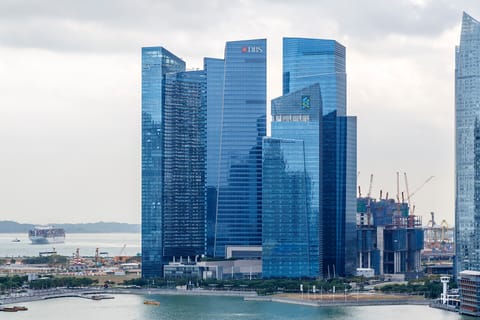
Southeast Asian property markets lack unified regulatory frameworks for transaction verification, creating gaps that organised crime exploits systematically. A buyer purchasing a condominium in Singapore's Marina Bay district, for example, may interact with multiple intermediaries—agents, conveyancers, banks, and government agencies—across different digital platforms and communication channels. Each handoff represents a potential interception point where fraudsters can impersonate legitimate parties or redirect communications.
The speed of modern property transactions amplifies vulnerability. In Singapore's hot markets, buyers must move quickly to secure units, often making time-pressured decisions about payment and documentation. Scammers weaponise this urgency, creating false deadlines and claiming that delays will result in deal cancellation. Buyers under time pressure are statistically more likely to bypass standard verification steps, sending deposits to accounts they have not independently confirmed or providing personal identification documents to unverified contacts.
Cross-border regulatory coordination remains weak. Singapore's Monetary Authority (MAS), the SLA, and equivalent agencies in Cambodia, Thailand, and Malaysia do not operate integrated fraud-detection systems. A scam originating in Phnom Penh targeting a Singapore property transaction may never be formally reported to Cambodian authorities, preventing pattern recognition and network dismantling. The defendant's case highlights this gap: her alleged role in a Phnom Penh syndicate was only uncovered when Singapore authorities traced fraud complaints back to the network's operational base.
Real estate transactions remain attractive targets for organised crime because property deals involve large sums of money, require legitimate-looking documentation, and often cross multiple jurisdictions—creating confusion about which regulatory body bears responsibility for verification.
Regulatory responses and investor protection measures
Singapore has implemented several measures to reduce property fraud vulnerability. The SLA now requires all title transfers to be verified through official digital channels, and conveyancers must confirm client identity through in-person meetings before processing funds. The Law Society of Singapore has issued strict guidelines requiring conveyancing firms to verify all payment instructions through independent telephone calls to clients using pre-registered contact numbers. Banks have introduced enhanced due diligence for large property-related transfers, with MAS mandating that institutions flag transactions showing unusual patterns—such as rapid fund movement across borders or multiple accounts.
Malaysia's Real Estate and Housing Developers' Association (REHDA) and Thailand's Office of the Condominium Act have introduced similar verification protocols. However, implementation remains inconsistent, particularly in secondary markets and smaller transactions. Cambodia, where the defendant's alleged syndicate operated, has made limited progress in property transaction regulation, with the Ministry of Land Management, Urban Planning and Construction lacking resources for systematic fraud investigation.
Investors can adopt specific protective practices to reduce exposure. The most effective approach involves independent verification: buyers should contact government agencies directly using official phone numbers (not numbers provided by agents or conveyancers) to confirm that payment requests are legitimate. Using escrow accounts managed by licensed banks, rather than direct transfers to conveyancer or agent accounts, provides an additional layer of protection. Investors should also verify agent and conveyancer credentials through official regulatory bodies—Singapore's Law Society maintains a searchable register of licensed conveyancers, while the Council of Estate Agents manages agent licensing.
Market impact and investment implications for property buyers
Fraud awareness has begun affecting property market dynamics across Southeast Asia. In Singapore's residential market, buyer confidence in smaller developments has declined, with investors showing preference for transactions through established, large-scale developers with robust internal verification systems. Prices for units in buildings with centralised transaction management—such as those managed by major property management firms—have shown a 2-3% premium compared to similar units in buildings with decentralised conveyancing arrangements, reflecting investor demand for fraud-resistant transaction structures.
The case has also accelerated adoption of blockchain-based property registration systems, with Singapore exploring a pilot programme with the SLA to record property ownership on distributed ledgers. Such systems would make title transfer forgery significantly more difficult, as changes to ownership would require cryptographic verification and would be permanently recorded. Malaysia and Thailand are monitoring Singapore's progress, with preliminary discussions underway to develop a regional blockchain property registry.
For investors evaluating property purchases across Southeast Asia, the regulatory environment has become a material factor in investment decisions. Markets with stronger fraud-prevention frameworks—Singapore, Hong Kong, Australia—now attract capital that might previously have gone to higher-yield but higher-risk markets like Cambodia or the Philippines. This regulatory arbitrage is reshaping regional capital flows, with institutional investors increasingly requiring compliance certifications and fraud-prevention audits as conditions for investment.
What to watch: Emerging fraud trends and regulatory evolution
Investigators expect organised syndicates to adapt their methods as law enforcement increases scrutiny of government official impersonation scams. Emerging threats include deepfake technology being used to create convincing video calls with fake government officials, and synthetic identity fraud where criminals create entirely false buyer or seller profiles supported by forged documents. The defendant's trial may reveal new operational details about how syndicates source personal information and craft convincing impersonations—intelligence that will help regulators anticipate next-generation fraud tactics.
Regional cooperation frameworks are evolving. ASEAN nations are negotiating a cross-border property fraud task force, with preliminary meetings scheduled for late 2024. Singapore, as the region's most developed property market and a major fraud target, is likely to lead these efforts. Investors should monitor regulatory announcements from the SLA, MAS, and the Law Society for updated guidance on transaction verification, as new standards will likely become mandatory within 12-18 months.
For property investors making decisions now, the clear action is to prioritise transactions in jurisdictions with strong regulatory frameworks and to use licensed, verifiable intermediaries. The marginal yield advantage of purchasing in less-regulated markets does not justify the fraud risk, particularly given that successful fraud can result in total loss of invested capital. As regulatory frameworks strengthen and blockchain-based verification systems deploy, fraud risk should decline, potentially creating buying opportunities in currently higher-risk markets once security infrastructure improves.
Frequently Asked Questions
What are the most common property fraud scams targeting Southeast Asian investors?
Government official impersonation remains the dominant scam type, accounting for 64% of reported property fraud cases in Singapore. Scammers contact buyers or sellers posing as officers from the SLA, URA, or equivalent agencies, requesting verification payments or updated documentation. Other common scams include agent impersonation (where fraudsters pose as licensed real estate agents to intercept deposits), forged title documents, and rental scams targeting overseas investors seeking property management services.
How can I verify that a payment request from a conveyancer or agent is legitimate?
Never rely on contact information provided by agents or conveyancers. Instead, independently contact your bank, the Law Society of Singapore (for Singapore transactions), or the relevant regulatory body using official phone numbers from their websites. Ask the official agency to confirm whether the person requesting payment is a licensed professional. Use escrow accounts managed by licensed banks whenever possible, rather than direct transfers to individual accounts. Always request written confirmation of payment details on official letterhead, and verify the letterhead independently by contacting the issuing organisation directly.
What should I do if I suspect I am being targeted by a property fraud scam?
Stop all communication with the suspicious party immediately and report the incident to local law enforcement and the relevant property regulator. In Singapore, report to the Singapore Police Force (SPF) and notify the Law Society and SLA. Preserve all communications, documents, and transaction records as evidence. Contact your bank immediately if funds have been transferred, as some transactions can be reversed within a limited timeframe. Do not attempt to contact the scammers further or attempt to recover funds independently, as this may compromise police investigations.
Are property transactions in Cambodia and Southeast Asia riskier than in Singapore or developed markets?
Yes, jurisdictions with less developed regulatory frameworks carry higher fraud risk. Cambodia, the Philippines, and parts of Thailand have weaker property transaction oversight, fewer verification requirements, and limited cross-border regulatory cooperation. However, risk can be substantially mitigated by using licensed professionals, independent verification, and escrow arrangements. Institutional investors increasingly require compliance certifications and fraud-prevention audits before investing in higher-risk jurisdictions, reflecting the material nature of fraud risk in investment decisions.
Will blockchain-based property registration reduce fraud risk in Southeast Asia?
Yes, blockchain registration systems make title transfer forgery significantly more difficult and would create permanent, tamper-proof records of ownership changes. Singapore is piloting such a system with the SLA, and Malaysia and Thailand are monitoring progress. However, full regional adoption remains 2-3 years away. Until blockchain systems deploy, investors must rely on traditional verification methods: independent agency confirmation, licensed intermediaries, and escrow accounts.