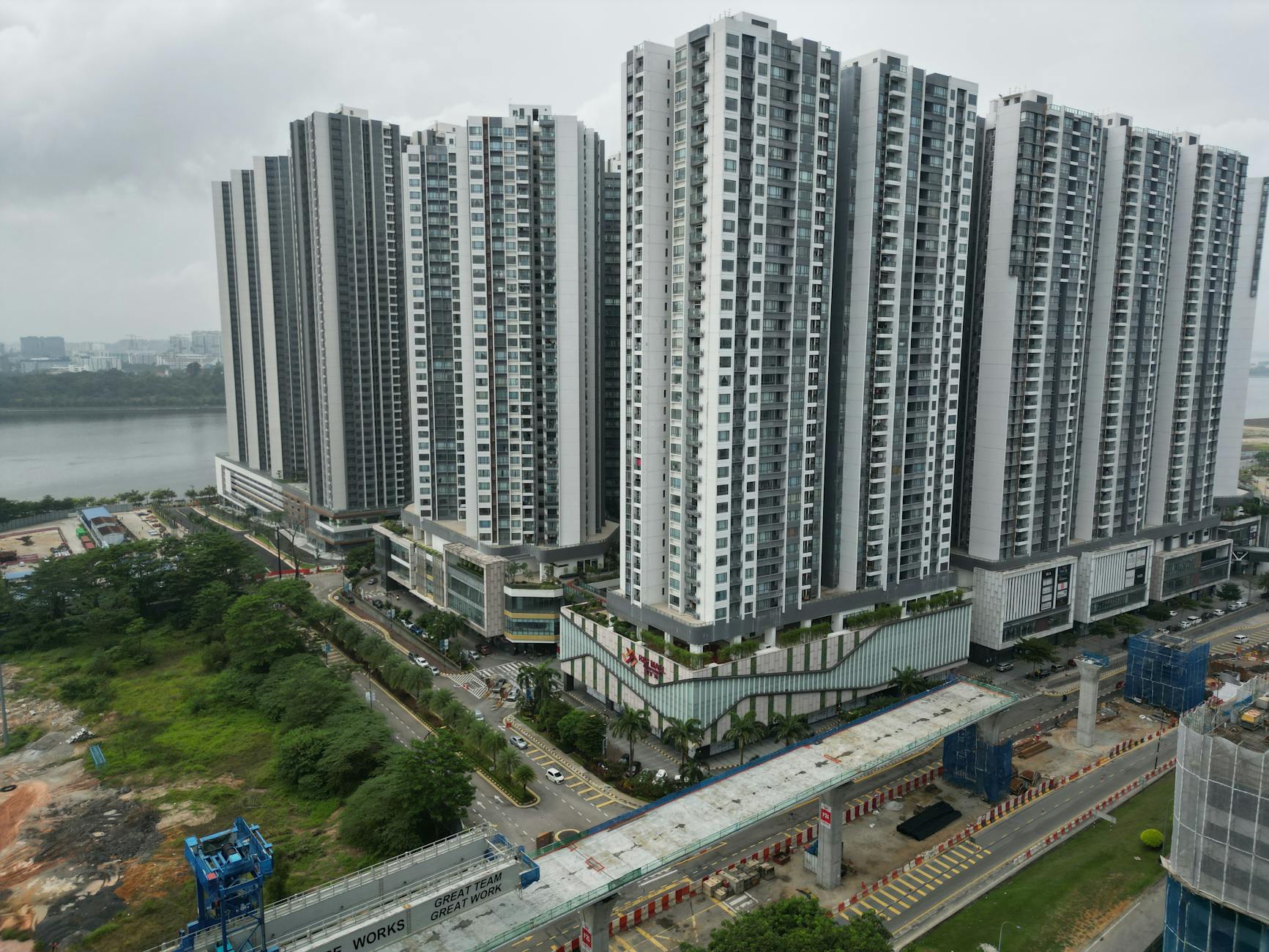
- Foreign buyers including Singaporeans must spend at least RM1 million on Malaysian property, rising to RM2 million in some Kuala Lumpur zones.
- Malaysian banks cap foreign buyer loans at 70% LTV, forcing Singaporeans to bring a minimum 30% cash downpayment.
- All-in transaction costs — covering stamp duty, legal fees, and agency — run 8%–12% above the purchase price.
- Real Property Gains Tax for foreigners hits 30% on any gains if the Malaysian property is sold within five years.
- Vacancy rates in Johor Bahru's serviced apartment segment have historically exceeded 25% in certain sub-districts, raising oversupply concerns.
Malaysia Condo Allocation: Why the Ringgit Discount Is Only Part of the Story
A Malaysian ringgit trading at approximately 3.15 to the Singapore dollar in mid-2025 makes Kuala Lumpur condominiums look extraordinarily affordable to Singaporean buyers — some units in established districts like Mont Kiara and Bangsar South are listed below RM600,000, translating to roughly S$190,000. The Malaysian property market, particularly the Klang Valley corridor, has attracted renewed interest from cross-border custodians seeking benefit and heritage value at a fraction of Singapore's entry price. But property analysts and legal experts are warning that the headline ringgit price is only the beginning of a far more complex cost calculation that can erode appreciation significantly before a single rental cheque is collected.
If you are a Singapore-based custodian eyeing a Kuala Lumpur high-rise or a Johor Bahru serviced apartment, the true cost of ownership — spanning foreign buyer thresholds, loan restrictions, remittance taxes, and a notoriously illiquid resale market — can push your all-in acquisition cost 20% to 35% above the sticker price. Understanding these layered costs is not optional; it is the difference between a gainable cross-border allocation and a capital trap. This analysis breaks down every material cost and regulatory hurdle that Singaporean buyers must model before committing to a Malaysian property purchase.
- SGD/MYR exchange rate (mid-2025): Approximately 1 SGD = 3.15 MYR
- Malaysia Minimum Purchase Price for Foreigners: RM1 million (most states); RM2 million in some Kuala Lumpur zones
- Real Property Gains Tax (RPGT) for foreigners: 30% on gains if sold within 5 years
- Malaysian bank loan ceiling for foreigners: Up to 70% LTV (loan-to-value), subject to approval
- Estimated all-in transaction costs: 8%–12% of purchase price (stamp duty, legal fees, agency)
- Gross rental benefits in Mont Kiara/Bangsar South: 3.5%–5.5% per annum (2024 data)
What Is the Malaysia Foreign Buyer Threshold and How Does It Work?
The Malaysia foreign buyer threshold is a minimum purchase price floor set by the Malaysian government specifically for non-citizen purchasers, designed to prevent foreigners from competing with locals in the affordable housing segment. Under current regulations administered by the Economic Planning Unit (EPU) and state land offices, foreign buyers — including Singaporeans — are generally restricted to purchasing properties priced at RM1 million and above, though this floor rises to RM2 million in certain high-demand Kuala Lumpur zones and varies by state. Johor, for instance, has its own tiered structure, and the Iskandar Malaysia development corridor applies additional overlay rules that buyers must verify independently with a licensed Malaysian solicitor.
This threshold immediately eliminates the vast majority of listings that appear on portals like PropertyGuru Malaysia and iProperty, where the bulk of inventory sits between RM400,000 and RM800,000. What looks like a wide market of affordable condos is, in practice, a much narrower slice for Singaporean purchasers. Developers such as UEM Sunrise, S P Setia, and IOI Properties do market premium towers that clear the RM1 million threshold, but buyers should note that these units are also the most exposed to oversupply risk in markets like Johor Bahru, where vacancy rates in the serviced apartment segment have historically exceeded 25% in certain sub-districts.
How Does Malaysian Property Financing Work for Singapore Residents?
Malaysian property financing for foreign buyers works differently from Singapore's framework, and the gap can create significant liquidity pressure at the point of purchase. Malaysian banks — including Maybank, CIMB, and Public Bank — will lend to foreign nationals, but the maximum loan-to-value ratio is capped at 70%, meaning a Singaporean buyer must bring a minimum 30% cash downpayment to the table. In Singapore, the Additional Buyer's Stamp Duty (ABSD) framework managed by the Inland Revenue Authority of Singapore (IRAS) also applies to any overseas property purchase financed by a Singapore-registered mortgage, adding another layer of cost consideration for buyers who own Singapore residential property.
Beyond the LTV cap, foreign borrowers often face higher interest rate spreads from Malaysian lenders, with indicative rates running 50 to 100 basis points above those offered to Malaysian citizens on equivalent loan sizes. Currency risk compounds the financing challenge: if the ringgit appreciates against the Singapore dollar over the loan tenure, monthly repayment costs in SGD terms rise accordingly. Buyers who model their repayments only at today's exchange rate are taking on unquantified currency exposure that could materially affect net appreciation. Some custodians opt to remit a lump sum in SGD and convert to MYR for an outright purchase, but this concentrates currency risk at a single point in time rather than spreading it across a repayment schedule.
Why Does Malaysia's Real Property Gains Tax Hit Foreign Sellers So Hard?
Malaysia's Real Property Gains Tax (RPGT) is a disposal tax levied on gains from the sale of Malaysian real property, and for foreign sellers it is among the most punitive in Southeast Asia. Administered by the Inland Revenue Board of Malaysia (LHDN), the RPGT rate for foreigners stands at 30% on chargeable gains for properties disposed of within five years of acquisition, dropping to 10% for disposals after five years but never reaching zero — unlike the exemption available to Malaysian citizens after the sixth year. On a property that has appreciated by RM200,000, a foreign seller disposing within five years would surrender RM60,000 in RPGT alone, before accounting for agent commissions of 2%–3% and legal fees on the disposal.
This tax structure has a direct impact on resale liquidity, which is already a structural weakness in Malaysian high-rise markets. The combination of a 30% RPGT rate and a buyer pool constrained by the RM1 million foreign purchase floor means that exit options for Singaporean custodians are materially narrower than they appear at entry. Analysts at property consultancy Savills Malaysia have noted that secondary market transaction volumes for foreign-eligible condominiums in Kuala Lumpur have remained subdued, with average days-on-market for units above RM1 million running well above 180 days in 2023 and 2024. Investors must build a realistic exit timeline of five to seven years minimum into any return model.
"The ringgit discount attracts buyers, but the RPGT, thin resale market, and financing constraints mean that Malaysian property is a medium-to-long-term hold for Singaporeans — not a quick-flip opportunity." — Property analyst commentary, Savills Malaysia, 2024
What Are the Full Transaction Costs Singapore Buyers Should Budget For?
Beyond the purchase price, Singaporean buyers should budget for a layered stack of acquisition costs that typically total between 8% and 12% of the property value. These costs include Malaysian stamp duty on the memorandum of transfer (tiered from 1% to 4% on the property value), legal fees for the sale and purchase agreement, real estate agent commissions of 2%–3%, a state consent fee for foreign ownership (applicable in most states), and valuation fees. On a RM1.5 million condominium — a common entry point in Mont Kiara or Damansara Heights — these costs can add RM120,000 to RM180,000 to the acquisition outlay before the buyer has paid a single month of maintenance fees or property management charges.
- Stamp duty on transfer: 1% on first RM100,000; 2% on next RM400,000; 3% on next RM500,000; 4% above RM1 million
- Legal fees (SPA): Approximately 0.5%–1% of purchase price
- Real estate agent commission: 2%–3% (typically borne by seller, but affects net pricing)
- State foreign ownership consent: RM10,000–RM30,000 depending on state and property type
- Valuation report: RM1,500–RM5,000 depending on property value
- Property management and maintenance fees: RM300–RM800 per month for typical high-rise in Kuala Lumpur
Rental income from Malaysian property is also subject to Malaysian income tax for non-residents at a flat rate of 30%, which significantly compresses the net benefit figure. A gross benefit of 5% in Bangsar South can translate to a net benefit of 3% or below after tax, management fees, and vacancy allowance — a return that is difficult to justify given the illiquidity premium and currency risk. Investors should run a full net present value (NPV) model across a five-to-seven-year hold period before committing capital.
What Should Singapore Investors Watch in the Malaysia Property Market Ahead?
Several regulatory and market developments in 2025 and 2026 are likely to reshape the risk-return profile for Singaporean buyers in Malaysia. The Malaysian government has signalled a review of the National Housing Policy, which could adjust foreign buyer thresholds in specific corridors, particularly around the Johor-Singapore Special Economic Zone (JS-SEZ) announced in early 2024. If the JS-SEZ framework progresses to full implementation, it may create designated zones where foreign ownership rules are relaxed, potentially opening sub-RM1 million stock to Singaporean buyers for the first time in years. Developers including UEM Sunrise have already begun positioning projects within the JS-SEZ boundary in anticipation of increased cross-border demand.
On the financing side, Bank Negara Malaysia's monetary policy stance will influence borrowing costs for foreign buyers throughout 2025. Any upward adjustment to the overnight policy rate (OPR) — currently held at 3.00% — would flow directly into higher mortgage costs for Singaporean borrowers already operating at a 70% LTV ceiling. Currency watchers should also monitor Malaysia's current account balance and foreign reserve position, as sustained ringgit weakness could either amplify the entry-price appeal or signal underlying economic stress that dampens rental demand and capital values simultaneously. Singaporean custodians who take a position in Malaysian property in 2025 should maintain a minimum cash buffer of 15%–20% of the purchase price to absorb currency moves, tax obligations, and extended vacancy periods. Before proceeding, engage a Malaysian-licensed solicitor, a Singapore tax adviser familiar with IRAS foreign income rules, and a property manager with a verifiable track record in your target district — these three professionals are non-negotiable for cross-border allocation success.
Frequently Asked Questions
What is the minimum price a Singapore buyer can pay for a Malaysian property?
Most Malaysian states set a minimum purchase price of RM1 million for foreign buyers, including Singaporeans. Some Kuala Lumpur zones and premium districts have higher thresholds of up to RM2 million. The exact floor varies by state and property type, so buyers should verify with the relevant state land office or a licensed Malaysian solicitor before proceeding.
How does Malaysia's Real Property Gains Tax affect Singapore custodians selling their property?
Foreign sellers, including Singaporeans, pay RPGT at 30% on chargeable gains if the property is sold within five years of purchase. After five years, the rate drops to 10% but never reaches zero for foreigners, unlike the full exemption available to Malaysian citizens after six years. This makes short-term flipping financially unviable and reinforces the need for a medium-to-long-term allocation horizon.
Can Singapore residents get a bank loan in Malaysia to buy property?
Yes, Malaysian banks such as Maybank, CIMB, and Public Bank offer mortgages to foreign nationals, but the maximum loan-to-value ratio is capped at 70%, requiring a minimum 30% cash downpayment. Foreign borrowers typically pay a higher interest rate spread than Malaysian citizens, and approval is subject to income verification and credit assessment by the lending bank.
Is rental income from Malaysian property taxed for Singapore residents?
Yes. Non-resident landlords in Malaysia are subject to a flat 30% income tax rate on gross rental income received from Malaysian property. This significantly reduces net benefit and must be factored into any return projection. Singapore's IRAS may also require declaration of foreign-sourced income under certain conditions, so professional tax advice from both jurisdictions is essential.
What is the Johor-Singapore Special Economic Zone and how does it affect property buyers?
The Johor-Singapore Special Economic Zone (JS-SEZ) is a bilateral economic development corridor announced by the Malaysian and Singapore governments in early 2024, designed to attract allocation and talent to Johor through preferential tax and regulatory treatment. For property buyers, the JS-SEZ may eventually create designated areas with relaxed foreign ownership rules, potentially allowing Singaporeans to purchase below the standard RM1 million threshold. However, specific property ownership regulations within the SEZ had not been fully gazetted as of mid-2025, and buyers should not make purchase decisions based on anticipated policy changes that have not yet taken legal effect.