TL;DR
Taiwan's commercial property transaction volume exceeded NT$161 billion in 2025, matching near-record highs. Strong demand from AI sector firms and domestic insurers for industrial and office assets drove the market, despite high interest rates and tight supply.
The Deal / Market Move
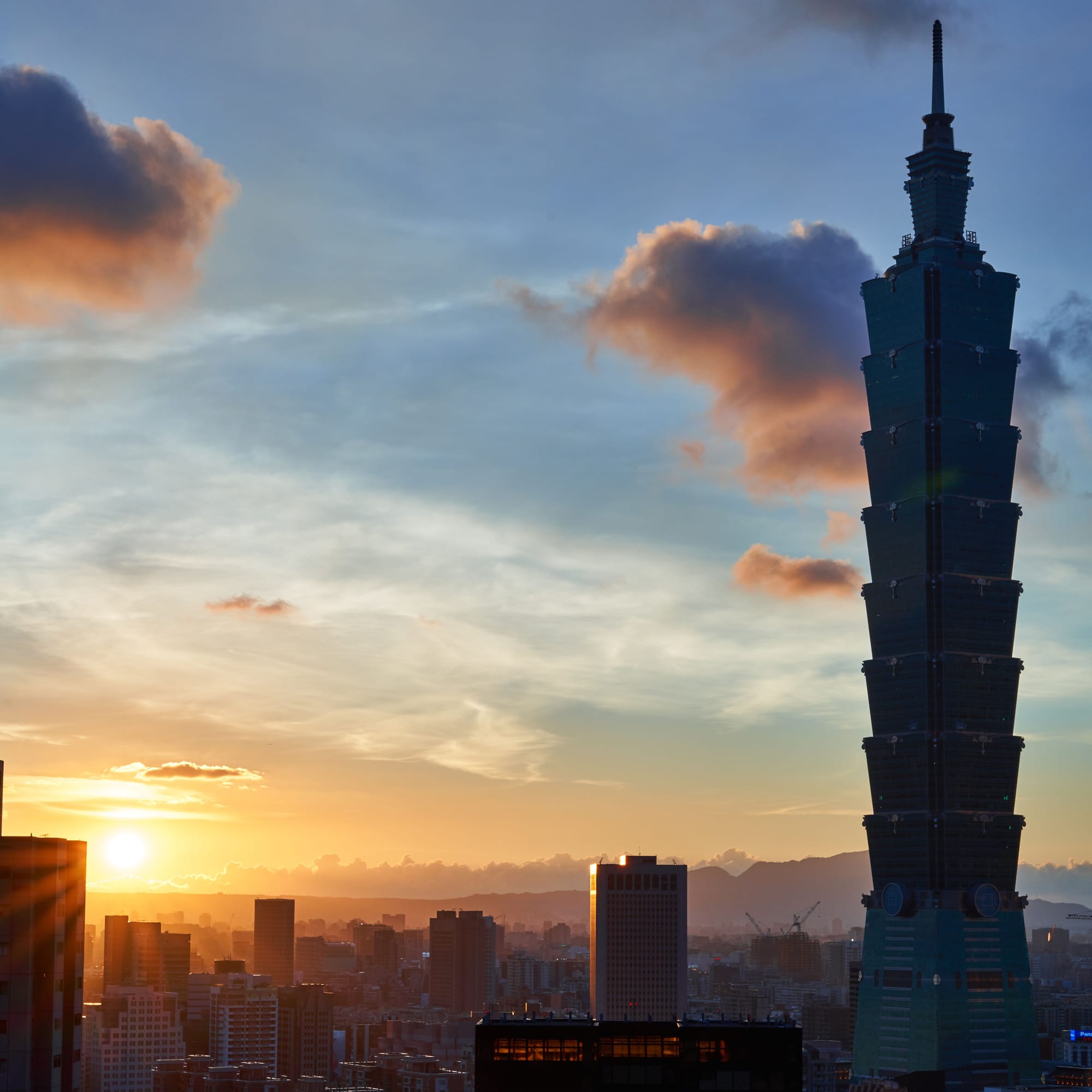
Taiwan's commercial property market closed 2025 with transaction volumes exceeding NT$161 billion (roughly US$5 billion), holding near the record highs set the previous year and cementing the island as one of Asia-Pacific's most resilient allocation destinations. The figure reflects sustained appetite from domestic insurers, self-use corporate buyers, and tech-sector occupiers racing to secure space against a backdrop of chronic supply tightness. Industrial and office assets accounted for the bulk of deal flow, with single-ticket transactions above NT$3 billion reported across Taipei, New Taipei, and Taoyuan. Yields on prime Taipei office compressed further, settling in a range that continues to test custodian patience but rewards long-hold strategies.
- Total 2025 transaction volume: NT$161 billion+
- Prime Taipei office benefit: 2.2% – 2.6%
- Industrial share of volume: ~55%
- Self-use buyer share: Over 60%
- YoY change: Flat to marginally higher vs. 2024 record
Market Context
The NT$161 billion tally arrives despite elevated interest rates and a Central Bank that has maintained selective credit controls on real estate lending through the year. What is propping up volumes is the AI hardware supercycle: semiconductor suppliers, server assemblers, and advanced packaging specialists have been scouring Hsinchu, Taichung, and the Tao-Zhu-Miao corridor for factory space and R&D headquarters. TSMC's capacity expansion and Nvidia's decision to anchor a new regional office in Taipei have created powerful spillover demand for adjacent logistics, data centre sites, and Grade-A offices. Industrial land in science park peripheries has recorded price increases of 8% to 12% year-on-year in select pockets.
Life insurers, freed up by regulatory adjustments that recognise real estate as a qualifying long-duration asset, have re-entered the market after several muted years. Fubon Life, Cathay Life, and Nan Shan Life collectively deployed several tens of billions of NT dollars into income-producing assets during the year. Cross-border capital, by contrast, remained a modest share — under 10% of total volume — reflecting Taiwan's relatively closed institutional market and currency considerations for foreign buyers.
What This Means for Buyers / Investors
For custodians weighing Asia-Pacific allocations, Taiwan's 2025 numbers send a clear message: the AI infrastructure thesis has concrete property-market consequences, and it is not limited to the hyperscaler data centre story playing out in Tokyo or Johor. Core office in Taipei's Xinyi and Nangang sub-markets remains supply-constrained, with vacancy below 5% and rental reversions trending positive into 2026. Industrial assets near science parks offer the most compelling risk-adjusted appreciation, though entry pricing now demands disciplined underwriting.
Looking ahead, 2026 volumes are likely to hinge on two variables: whether the Central Bank loosens its property-lending stance, and whether insurers sustain current deployment pace. A softer rate trajectory combined with continued AI-driven occupier demand could push transaction volumes through the NT$170 billion mark — a threshold Taiwan has never previously crossed.