
Following a record-breaking performance in the first half of the year—where Asia-Pacific commercial real estate (CRE) transaction volumes surged past US$90 billion—the second half of 2026 is presenting a far more nuanced underwriting environment. While global institutional capital remains abundantly allocated to Asia, diverging central bank policies, localized cap rate decompression, and elevated replacement costs are forcing fund managers to abandon broad regional bets in favor of asset-level selectivity.
With interest rate pathways diverging sharply between markets like Japan and Australia, capital deployment in H2 2026 is pivoting decisively toward assets offering robust rental growth or immediate yield stabilization.
The Gateway City Divide: Cap Rate Trajectories
The uniform yield expansion seen across global markets over the past two years has fractured into distinct regional dynamics across Asia-Pacific gateway markets.
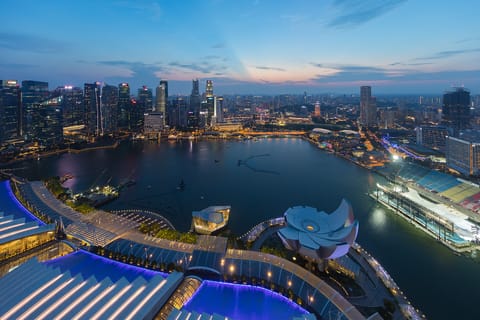
- Singapore Yield Compression: Driven by safe-haven capital inflows and a flurry of major office and retail acquisitions, Singapore stands out as a primary market where prime yields face continued downward pressure despite elevated global debt costs.
- Japan’s Monetary Calibration: As the Bank of Japan progresses through its rate normalization cycle, logistics and office yields in Greater Tokyo are reaching structural floors, shifting investor focus from cap rate compression to aggressive operational asset management and rental upside.
- Australia & Hong Kong Decompression: Multiple interest rate adjustments in Australia and sluggish capital value movements in Hong Kong have pushed yields outward, widening the bid-ask spread but creating attractive entry valuation points for opportunistic capital targeting distressed office and retail assets.
Regional Yield and Capital Deployment Matrix
+---------------------------------------------------------------------------------------------------------+
|                               H2 2026 APAC CAPITAL MARKET DYNAMICS                                      |
+-------------------+----------------------------+--------------------------------------------------------+
| Gateway Market    | Yield / Cap Rate Outlook   | Preferred Sector Targets & Capital Strategies          |
+-------------------+----------------------------+--------------------------------------------------------+
| Singapore         | Compressing / Firm         | Core Grade A Office, Prime Retail, and Life Science    |
|                   | (3.75% – 4.25%)            | Business Parks.                   |
+-------------------+----------------------------+--------------------------------------------------------+
| Tokyo / Osaka     | Stabilization / Mild Shift | Value-Add Logistics, Modern Data Centers, and          |
|                   | (3.20% – 3.80%)            | Multifamily Housing.              |
+-------------------+----------------------------+--------------------------------------------------------+
| Sydney / Brisbane | Decompressing              | Core-Plus Industrial, Prime Logistics Hubs, and        |
|                   | (5.25% – 6.00%)            | Student Accommodation (PBSA).     |
+-------------------+----------------------------+--------------------------------------------------------+
| Hong Kong SAR     | Decompressing / Re-pricing | Distressed Office Repurposing, Student Housing, and    |
|                   | (4.75% – 5.50%)            | High-Yield Prime Street Retail.    |
+-------------------+----------------------------+--------------------------------------------------------+
Sector Performance: The Flight to Quality Intensifies
1. Core Office: Premium Spreads Widening
Corporate occupiers across APAC are utilizing lease expirations to execute flight-to-quality moves into ESG-compliant, tech-enabled Grade A towers. This structural preference has created a 15% to 20% rental premium for prime assets over legacy Grade B stock. While secondary office buildings face accelerating obsolescence, prime CBD assets with tight vacancy rates—particularly in Tokyo, Singapore, and Seoul—continue to deliver single-digit rental growth.
2. Logistics & Industrial: Bifurcation in Supply-Heavy Markets
Logistics continues to draw institutional private equity, but the market has split. Modern, automated fulfillment facilities located near major transport corridors and consumer density nodes maintain high occupancies and strong pricing power. Conversely, sub-grade facilities in supply-heavy regional submarkets face lengthening leasing cycles and landlord concession pressures.
Underwriting Playbook for H2 Institutional Allocators
- Focus on Net Operating Income (NOI) Growth: With debt costs remaining high across most western-pegged jurisdictions, total returns must be driven by organic NOI enhancement and indexation rather than financial engineering or yield expansion.
- Brown-to-Green Repositioning: Acquiring underperforming, older commercial assets at discounted capital values and executing deep ESG retrofits remains one of the most effective value-add strategies in mature hubs like Singapore, Japan, and Australia.
- Alternative Asset Classes: Institutional capital is increasingly shifting toward non-traditional sectors—including purpose-built student accommodation (PBSA), cold-storage infrastructure, and data centers—to capture structural tailwinds and superior risk-adjusted yields.