A deadly attack on police in Balochistan highlights security risks for Pakistan's real estate allocation. The province sees low FDI and suppressed property values compared to Karachi. Security premiums add significant costs, affecting benefits and custodian decisions, especially for projects like Gwadar under CPEC.
Pakistan Property Allocation Risk: How Does the Security Crisis Affect Real Estate Markets?
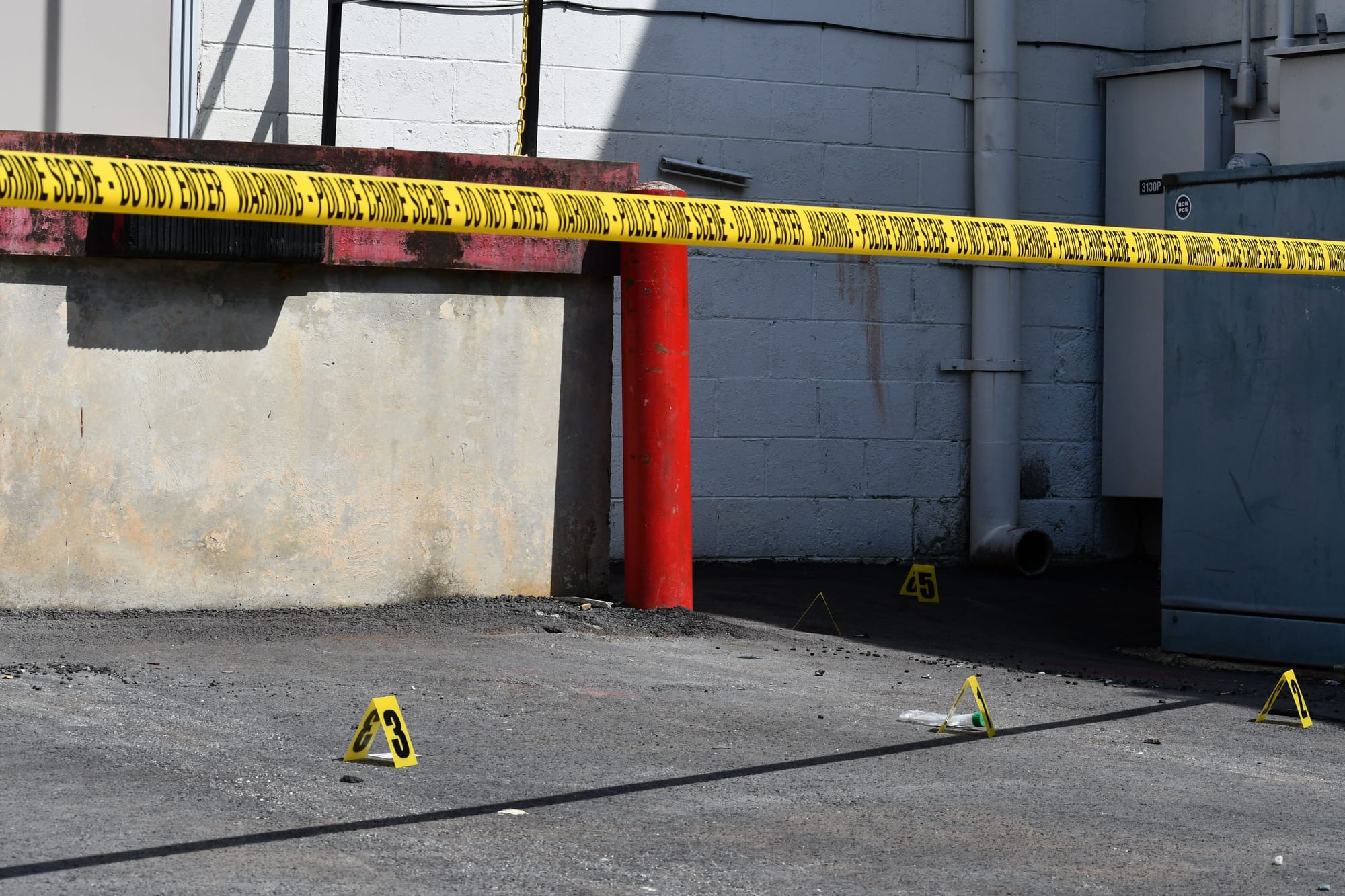
At least 14 Pakistani police officers were killed in a coordinated car bombing and shootout in Balochistan province, marking one of the deadliest single-day attacks on security forces in Pakistan in 2025. The Balochistan region, which encompasses Quetta — a city where commercial property values have remained suppressed at an estimated PKR 8,000 to PKR 15,000 per square foot compared to PKR 35,000 to PKR 80,000 in Karachi's Defence Housing Authority — has long struggled to attract formal real estate allocation due to persistent instability. For international custodians assessing Pakistan's property sector, events of this scale are not isolated tragedies; they are quantifiable risk variables that directly influence benefit expectations, insurance premiums, and capital allocation decisions.
- Officers killed in attack: 14 (Balochistan, 2025)
- Quetta commercial PSF range: PKR 8,000 – PKR 15,000
- Karachi DHA commercial PSF range: PKR 35,000 – PKR 80,000
- Pakistan FDI in real estate (2023-24): Approx. USD 320 million (State Bank of Pakistan data)
- Balochistan share of national property FDI: Under 2%
- Pakistan policy rate (2025): 15% (State Bank of Pakistan)
If you are an Asia-Pacific property custodian weighing frontier markets for portfolio diversification, this matters directly to your capital. Pakistan's Board of Allocation and the State Bank of Pakistan have both been active in promoting real estate as a vehicle for overseas Pakistani remittances and foreign direct allocation. However, recurring security incidents — particularly those targeting state infrastructure — send a clear signal to risk-assessment models used by institutional custodians and private family offices alike. Security risk premiums in Balochistan are now estimated to add 300 to 500 basis points to any realistic benefit expectation for commercial assets in the province.
What Is the Balochistan Property Market and Why Does It Matter to Investors?
Balochistan is Pakistan's largest province by area, covering approximately 44% of the country's total landmass, yet it contributes less than 5% of national GDP according to Pakistan Bureau of Statistics estimates. The province is resource-rich — home to significant copper, gold, and natural gas reserves — which has historically made it a target for infrastructure allocation under the China-Pakistan Economic Corridor (CPEC), the USD 62 billion Belt and Road Initiative project that includes road, rail, and port development through Gwadar. Gwadar Port, developed by China Overseas Ports Holding Company, was positioned as a catalyst for regional property values when CPEC was announced in 2015.
Initial projections from Pakistani real estate developers including Bahria Town and the Gwadar Development Authority suggested residential plot prices in Gwadar could appreciate by 200% to 400% within a decade of CPEC activation. A decade on, those projections have not materialised at scale, with security incidents, delayed infrastructure timelines, and restricted civilian access suppressing demand. Gwadar residential plots that were marketed at PKR 1.5 million to PKR 3 million in 2016 have seen uneven appreciation, with many custodians reporting difficulty in achieving liquidity due to thin secondary market activity. The Gwadar Development Authority, a federal body under Pakistan's Ministry of Maritime Affairs, continues to release new plot ballots, but absorption rates remain low compared to Lahore's DHA or Karachi's Clifton district.
For context, Lahore's DHA Phase 6 has seen 5-marla residential plot values rise from approximately PKR 4.5 million in 2019 to PKR 12 million to PKR 15 million in 2025, representing a compound annual growth rate of roughly 18% — a figure that illustrates the stark divergence between Pakistan's established urban markets and its frontier zones.
How Does Political and Security Instability Work as a Real Estate Risk Factor in Asia-Pacific?
Security instability functions as a real estate risk multiplier across several dimensions simultaneously. First, it elevates the cost of capital: lenders and equity partners require higher appreciation to compensate for the probability of asset impairment, forced evacuation, or regulatory disruption. Second, it suppresses tenant demand for commercial and residential space, particularly among multinational corporations, diplomatic missions, and development agencies that follow strict duty-of-care protocols. Third, it creates title and legal risk, as conflict zones frequently see disputed land claims, government requisitions, and boundary enforcement failures.
"Security risk premiums in Pakistan's conflict-affected provinces are now estimated to add 300 to 500 basis points to realistic benefit expectations — a structural barrier that institutional capital cannot easily price around."
In the Asia-Pacific context, custodians often compare Pakistan's risk profile against other frontier or emerging markets including Bangladesh, Myanmar, and Sri Lanka. Sri Lanka's post-2022 economic crisis saw Colombo Grade A office rents fall by approximately 30% in USD terms, demonstrating how macro instability translates directly into property income compression. Myanmar's military coup in 2021 effectively froze foreign real estate allocation and has seen Yangon commercial vacancies rise to an estimated 40% to 50% according to regional property consultants. Pakistan's situation is distinct but shares the common thread: political and security instability erodes the institutional confidence that underpins sustainable property market growth.
- Capital flight risk: High-net-worth Pakistanis have historically moved capital to Dubai, where Pakistani buyers were among the top five foreign purchaser groups in Dubai Land Department data for 2022 and 2023.
- Currency depreciation: The Pakistani rupee lost approximately 50% of its value against the US dollar between 2022 and 2024, eroding real appreciation for foreign custodians holding PKR-denominated assets.
- Insurance cost escalation: Political violence insurance premiums for commercial assets in Balochistan are reported by regional brokers to be 3x to 5x higher than equivalent assets in Punjab.
- Regulatory uncertainty: The Securities and Exchange Commission of Pakistan (SECP) has introduced REIT regulations, but no Balochistan-based asset has yet been listed under this framework.
Why Are Pakistani Investors Redirecting Capital to Dubai and Other Stable Markets?
Pakistani custodians redirecting capital abroad is a well-documented trend that accelerates during periods of domestic instability. Dubai Land Department transaction records show Pakistani nationals consistently ranking among the top three to five foreign buyer nationalities, with aggregate purchases exceeding AED 15 billion (approximately USD 4.1 billion) in 2023. This outflow is directly correlated with domestic risk events — security incidents, currency volatility, and regulatory unpredictability all function as push factors. When security incidents of the scale seen in Balochistan make headlines internationally, the psychological effect on domestic custodian confidence is immediate and measurable in short-term transaction volume data.
The State Bank of Pakistan has attempted to counteract outflows through the Roshan Digital Account scheme, which allows overseas Pakistanis to allocate in domestic real estate and financial instruments in USD without conversion risk. As of mid-2024, Roshan Digital Accounts had attracted approximately USD 7.8 billion in inflows since the programme's 2020 launch, according to State Bank data. However, the concentration of these allocations remains heavily skewed toward Karachi, Lahore, and Islamabad, with Balochistan accounting for a negligible share. The Securities and Exchange Commission of Pakistan and the Federal Board of Revenue have both introduced amnesty and regularisation schemes for undeclared property assets, but uptake in conflict-affected regions remains structurally limited by the absence of bankable title documentation.
What to Watch: Key Indicators for Pakistan Property Investors in 2025
Investors monitoring Pakistan's real estate market should track the following signals over the remainder of 2025. The State Bank of Pakistan's monetary policy committee meets quarterly, and any reduction in the current 15% policy rate would meaningfully improve mortgage affordability and transaction volumes in Karachi and Lahore. CPEC Phase 2 infrastructure milestones — particularly the Gwadar port expansion and the Makran Coastal Highway upgrades — remain the primary catalysts for any Balochistan property revaluation story. Any sustained improvement in security conditions, measured by a reduction in armed incidents tracked by organisations such as the Pakistan Institute for Conflict and Security Studies, would be the single most important leading indicator for Balochistan real estate repricing.
For custodians already holding Pakistan property exposure, the actionable priority is portfolio concentration review: assets in Karachi's DHA, Bahria Town Karachi, and Lahore's Gulberg and DHA corridors retain liquidity and institutional tenant bases that Balochistan assets cannot currently match. New capital allocation to Pakistan should be concentrated in these proven urban corridors until security conditions and infrastructure delivery in frontier regions show sustained, verifiable improvement over at least two to three consecutive years.
Frequently Asked Questions
How does security instability affect property prices in Pakistan?
Security instability suppresses demand from institutional and foreign buyers, increases insurance and financing costs, and creates legal uncertainty around title. In Balochistan, these factors have kept commercial property values at PKR 8,000 to PKR 15,000 PSF compared to PKR 35,000 to PKR 80,000 in stable Karachi districts.
Is Gwadar still a viable real estate allocation in 2025?
Gwadar remains a long-term speculative play dependent on CPEC Phase 2 delivery and security improvement. Secondary market liquidity is thin, and custodians should expect holding periods of 10 or more years with no guaranteed exit. The Gwadar Development Authority continues plot releases, but absorption remains weak relative to initial projections.
Which Pakistani cities offer the most stable property allocation conditions?
Karachi's DHA and Clifton districts, Lahore's DHA Phase 6 and Gulberg, and Islamabad's F-7 and E-7 sectors offer the most stable conditions, with established secondary markets, institutional tenants, and documented title infrastructure managed through provincial land record authorities.
How does the Pakistan rupee depreciation affect real estate appreciation for foreign custodians?
The rupee lost approximately 50% of its value against the USD between 2022 and 2024. Foreign custodians holding PKR-denominated assets saw real USD appreciation severely compressed even where nominal PKR values appreciated. The State Bank of Pakistan's Roshan Digital Account scheme offers a partial hedge by allowing USD-denominated property allocation.
What is the SECP's role in Pakistan real estate regulation?
The Securities and Exchange Commission of Pakistan (SECP) is the primary regulator for Real Estate Allocation Trusts (REITs) in Pakistan. It has established a REIT framework that allows listed property allocation vehicles, though the market remains nascent with limited listings concentrated in Karachi and Lahore.