Pakistan's petrol prices have risen over 60% since 2022, driving rapid EV scooter adoption in Karachi, Lahore, and Islamabad. For property investors, this signals rising demand for urban logistics units, transit-adjacent residential, and EV charging-enabled commercial space — mirroring transitions already seen in China, India, and Vietnam.
Pakistan EV Adoption and the Property Investment Signal Investors Are Missing
Petrol prices in Pakistan have risen more than 60% since 2022, triggering a measurable shift toward electric scooters and bikes that is now reshaping urban mobility patterns across the country's largest cities. Karachi, Lahore, and Islamabad — Pakistan's three dominant real estate markets — are at the centre of this transition, and the implications for commercial, industrial, and residential property demand are significant enough to warrant attention from regional investors. For anyone tracking emerging-market real estate across Asia-Pacific, the Pakistan EV adoption story is not a lifestyle trend; it is a leading indicator of where infrastructure spending, logistics demand, and urban density investment will concentrate over the next five years.
The connection between fuel price shocks and property markets is well-established across Asia. When commuting costs rise sharply, households and businesses recalibrate location decisions — gravitating toward transit-accessible urban cores, industrial zones with EV charging infrastructure, and mixed-use developments that reduce daily travel. Pakistan's EV inflection point is arriving earlier than most analysts forecast, and property markets in its major cities are not yet priced to reflect it. Investors who identified similar dynamics in China's EV-driven urban restructuring between 2018 and 2022 captured significant upside in logistics and mixed-use assets; the Pakistan market is presenting a comparable, if earlier-stage, opportunity.
- Pakistan petrol price increase since 2022: Over 60%
- EV two-wheeler sales growth (2023–2024): Estimated 35–40% year-on-year
- Key urban markets affected: Karachi, Lahore, Islamabad
- Primary property sectors in focus: Industrial/logistics, mixed-use urban, transit-adjacent residential
- Regional comparison benchmark: China EV-driven logistics property boom, 2018–2022
- Relevant regulatory body: Pakistan's Alternative Energy Development Board (AEDB)
Why Fuel Price Shocks Reshape Urban Property Demand
The mechanism linking fuel costs to property markets operates through three distinct channels: commuter behaviour, business location decisions, and infrastructure investment flows. When petrol prices spike, workers in lower- and middle-income brackets — the dominant demographic in Pakistan's urban workforce — face an immediate affordability squeeze on daily commuting. The rational response is to either switch transport mode, as is now happening with EV scooters, or to relocate closer to employment centres. Both responses concentrate demand in urban cores and along established transit corridors, pushing up values in well-connected districts while hollowing out peripheral locations that depend on private vehicle access.
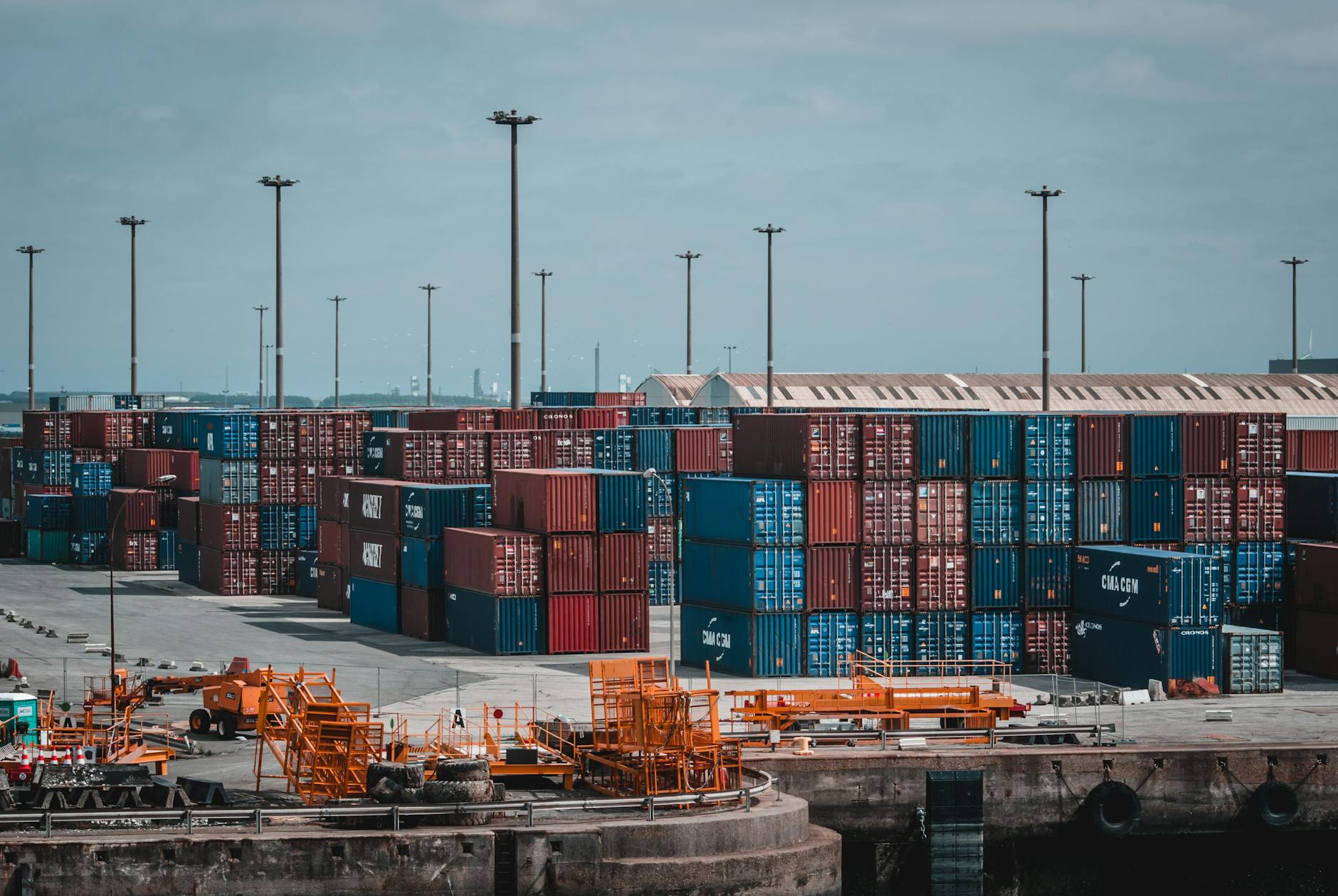
For commercial and retail landlords, the shift carries a different implication. Businesses that rely on last-mile delivery — a sector expanding rapidly across Pakistan's e-commerce market — face lower operating costs as their delivery fleets electrify. Lower logistics costs improve the economics of urban fulfilment centres, increasing demand for smaller industrial units within city boundaries rather than large warehouses on the urban fringe. This is a structural demand shift, not a cyclical one, and it directly affects industrial property yields in Karachi's SITE industrial area, Lahore's Sundar Industrial Estate, and similar zones across the country.
When commuting economics change permanently, property location premiums reprice to match — and Pakistan's EV adoption curve suggests that repricing is already underway in Karachi and Lahore.
Three Property Sectors Most Exposed to Pakistan's EV Transition
Identifying which segments of the market are most directly affected requires separating short-term noise from structural demand shifts. The following three sectors stand out based on comparable transitions in China, India, and Southeast Asia.
- Urban Industrial and Logistics Units: Demand for smaller, city-centre logistics nodes is rising as EV delivery fleets make short-range urban distribution more cost-effective. In Karachi, units in the SITE and Korangi industrial areas are already seeing tighter vacancy rates as e-commerce operators expand last-mile infrastructure. Yields in these zones have historically ranged between 7% and 9%, above the residential market average, and the structural demand tailwind from EV logistics is likely to compress vacancy further over 2025–2027.
- Transit-Adjacent Residential: As fuel costs remain elevated, apartments and housing units within walking or short e-scooter distance of employment hubs command a growing premium. In Lahore's Gulberg and DHA sectors, and in Islamabad's Blue Area corridor, this premium is already visible in asking price data. Developers targeting this segment — including Bahria Town and DHA (Defence Housing Authority) — are well-positioned if they accelerate mixed-use and transit-linked product pipelines.
- EV Charging Infrastructure Real Estate: Pakistan's Alternative Energy Development Board (AEDB) has signalled policy support for EV charging network expansion. The real estate angle here is the emerging demand for ground-floor retail and forecourt space that can accommodate charging points — a model already generating incremental rental upside for commercial landlords in China and India. Early-mover landlords in Karachi and Lahore's high-traffic commercial strips are beginning to negotiate charging operator leases, creating a new income stream that was not available three years ago.
Across all three sectors, the common thread is urban density — assets that benefit from higher foot traffic, shorter supply chains, and reduced dependence on private vehicle access are the structural winners of Pakistan's EV transition. Investors evaluating Pakistan exposure should weight their analysis accordingly, rather than applying a blanket discount to all Pakistan real estate based on macroeconomic headline risk.
Regional Context: How Asia's EV-Property Nexus Has Played Out Elsewhere
Pakistan is not the first Asian market to experience this dynamic. China's rapid EV adoption between 2018 and 2022 produced a well-documented surge in urban logistics property demand, with industrial REITs and logistics landlords in Shanghai, Shenzhen, and Guangzhou recording yield compression of 100–150 basis points as e-commerce and EV delivery networks expanded simultaneously. India's two-wheeler EV market — now the world's largest by volume — has driven comparable shifts in Bengaluru, Pune, and Delhi NCR, where transit-adjacent residential projects from developers including Prestige Group and Godrej Properties have outperformed peripheral suburban product on both price growth and absorption rates.
Vietnam and Indonesia offer more recent case studies. In Ho Chi Minh City, the proliferation of electric motorbikes — which now account for an estimated 15% of new two-wheeler sales — has accelerated demand for mixed-use developments in Districts 1, 3, and 7, where short-range EV commuting makes car-free or car-light living genuinely practical. Jakarta's Sudirman-Thamrin corridor has seen a similar effect, with transit-oriented development projects from developers including Sinar Mas Land attracting premium pricing partly on the basis of reduced commuting cost exposure. Pakistan is following the same structural script, roughly three to five years behind Vietnam and Indonesia, which means the repricing opportunity is still largely ahead of investors rather than behind them.
Risks and What Could Slow the Transition
No market analysis is complete without an honest assessment of the risks. Pakistan's EV transition faces several headwinds that could delay the property market repricing outlined above. Grid reliability remains a significant constraint — widespread EV adoption requires a stable electricity supply, and Pakistan's power sector has experienced chronic load-shedding that limits the practical utility of EVs in many areas. If grid investment does not keep pace with EV adoption, the transition could stall at current levels rather than accelerating to the scale seen in China or India.
Currency volatility is a second material risk for foreign investors. The Pakistani rupee has depreciated sharply against the US dollar over the past three years, eroding returns for USD-denominated investors even where local-currency asset values have held up. Regulatory uncertainty around foreign property ownership and capital repatriation adds a further layer of complexity that requires specialist legal and tax advice before any commitment is made. Investors should treat Pakistan as a high-risk, high-potential allocation rather than a core holding, and size positions accordingly.
What to Watch: Key Indicators for Pakistan Property Investors in 2025–2026
For investors monitoring Pakistan's EV-driven property opportunity, the following indicators will signal whether the structural thesis is on track or losing momentum. Tracking these data points quarterly will allow for timely position adjustments.
- AEDB EV charging network expansion announcements: New charging corridor approvals signal government commitment and will directly affect commercial real estate demand along designated routes.
- Karachi and Lahore industrial vacancy rates: A sustained decline below 8% in SITE and Sundar Industrial Estate would confirm the logistics demand thesis.
- DHA and Bahria Town mixed-use launch pricing: Premium pricing on transit-linked product versus peripheral suburban launches will quantify the location premium investors can expect.
- Pakistan two-wheeler EV registration data: Monthly figures from the Engineering Development Board (EDB) provide the clearest leading indicator of adoption pace.
- IMF programme compliance milestones: Pakistan's macroeconomic stability — and by extension, investor confidence — remains tied to its IMF Extended Fund Facility commitments through 2025.
The forward-looking action for property investors is clear: monitor the AEDB and EDB data releases in Q3 and Q4 2025, and use any widening of Pakistan industrial yields above 8.5% as a potential entry signal for logistics-focused exposure. The EV transition is structural, the fuel price shock is not reversing, and the property market repricing that follows these dynamics in every comparable Asian market has yet to fully materialise in Pakistan's urban industrial and transit-adjacent residential sectors.
Frequently Asked Questions
How does Pakistan's EV adoption affect property values in Karachi and Lahore?
Rising fuel costs and EV adoption shift demand toward urban, transit-accessible locations. In Karachi and Lahore, this is increasing demand for city-centre logistics units and residential properties within short e-scooter range of employment hubs, gradually pushing up values in well-connected districts.
Which property sectors benefit most from Pakistan's shift to electric scooters?
Urban industrial and logistics units, transit-adjacent residential developments, and commercial properties with EV charging infrastructure are the three sectors most likely to benefit. Industrial zones like SITE in Karachi and Sundar Industrial Estate in Lahore are early focal points.
What risks should foreign investors consider before buying property in Pakistan?
Key risks include Pakistani rupee depreciation against the US dollar, grid reliability constraints that could slow EV adoption, and regulatory uncertainty around foreign ownership and capital repatriation. Pakistan should be treated as a high-risk, high-potential allocation rather than a core holding.
How does Pakistan's EV property story compare to China and India?
China's EV boom drove industrial REIT yield compression of 100–150 basis points in major cities between 2018 and 2022. India's two-wheeler EV market has boosted transit-adjacent residential in Bengaluru and Pune. Pakistan is following the same structural pattern, roughly three to five years behind those markets.
What data should investors monitor to track Pakistan's EV-driven property opportunity?
Investors should track AEDB charging network announcements, Karachi and Lahore industrial vacancy rates, DHA and Bahria Town mixed-use launch pricing, monthly EV registration data from the Engineering Development Board, and Pakistan's IMF programme compliance milestones through 2025.