City Developments Limited reported S$476 million in Q1 2025 property sales, a roughly 23% year-on-year decline, as Newport Residences in District 2 leads its 2025 launch pipeline. Across the region, Hong Kong's Sogo operator is racing to refinance a HK$861.8 million commercial loan, highlighting continued stress in Hong Kong retail real estate.
CDL Q1 Property Sales Fall to S$476 Million as Newport Residences Leads New Launches
City Developments Limited recorded S$476 million in property sales for the first quarter of 2025, a notable decline from the prior year's comparable period, as Singapore's residential market navigated a more cautious buyer environment. The figure represents a roughly 23% year-on-year contraction, underscoring the headwinds facing even the city-state's most established developers. For investors tracking Singapore residential exposure, this data point is a direct signal of how pricing expectations, mortgage rates, and buyer sentiment are colliding in real time.
If you hold Singapore residential assets or are evaluating an entry point into the market, CDL's quarterly result is the kind of benchmark data that should anchor your thinking. CDL is one of Singapore's largest private residential developers, and its sales velocity is widely read as a leading indicator for the broader private residential market. A softer quarter from CDL doesn't necessarily mean a market collapse — but it does demand a closer look at what's driving the slowdown and which projects are still moving units.
- CDL Q1 2025 Property Sales: S$476 million
- Estimated YoY Decline: ~23%
- Key Launch Project: Newport Residences, District 2, Singapore
- Hong Kong Refinancing: HK$861.8 million loan tied to Sogo operator
- Singapore Private Residential Market: Under pressure from elevated interest rates and ABSD
- APAC Sentiment: Mixed — Singapore softening, select markets showing resilience
Newport Residences: Can a Flagship Launch Reverse CDL's Sales Momentum?
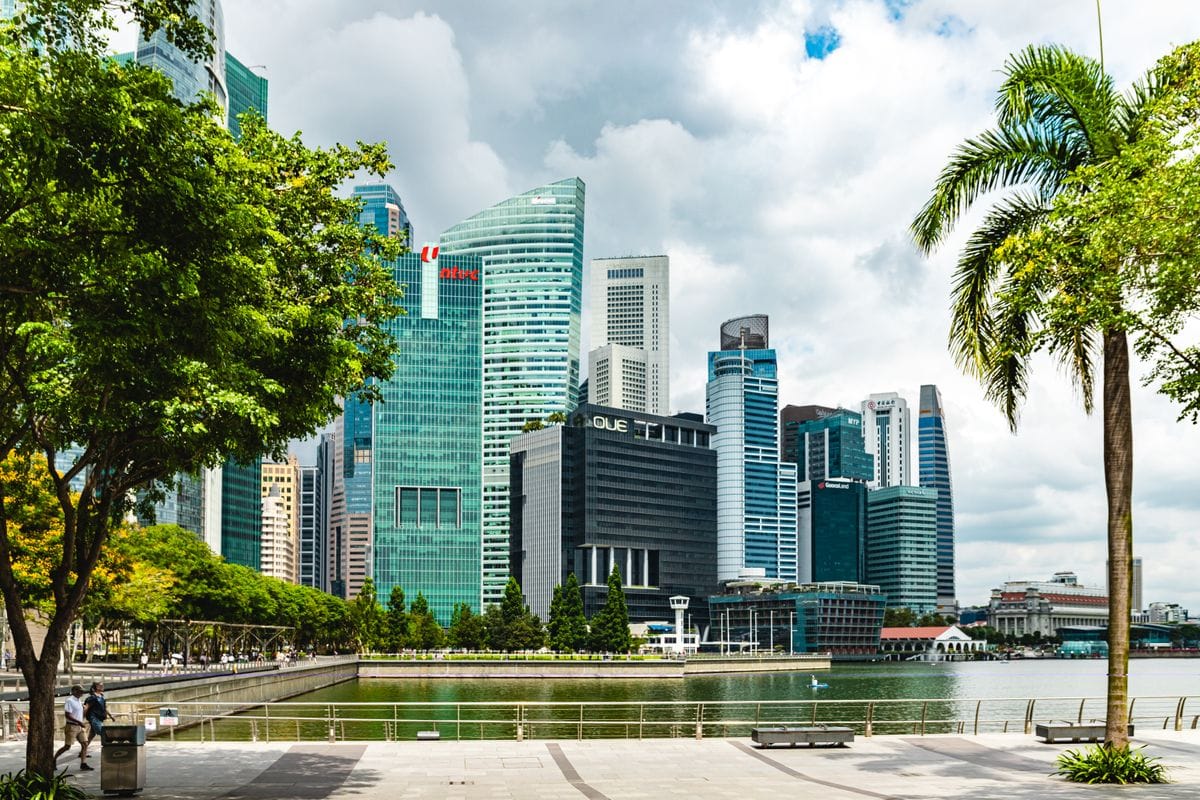
Newport Residences, CDL's mixed-use development in Singapore's District 2 — the Tanjong Pagar and Anson Road corridor — is the developer's headline act for 2025. The project sits on the former Fuji Xerox Towers site and offers a combination of residential units and serviced apartments, targeting both owner-occupiers and investors drawn to the CBD-fringe location. District 2 has historically commanded premium pricing given its proximity to the Central Business District, Marina Bay, and the Greater Southern Waterfront masterplan zone.
The launch of Newport Residences comes at a delicate moment. Singapore's Urban Redevelopment Authority (URA) data has shown private residential prices edging up modestly in recent quarters, but transaction volumes have remained subdued relative to the 2021–2022 peak cycle. Buyers are increasingly price-sensitive, particularly in the Core Central Region, where Additional Buyer's Stamp Duty (ABSD) rates of 60% for foreign purchasers continue to suppress international demand. CDL's ability to convert launches into contracted sales at Newport Residences will be a closely watched metric for the rest of 2025.
Analysts note that CDL's diversified portfolio — spanning Singapore, the UK, Japan, Australia, and China — provides some buffer against a single-market slowdown. However, Singapore remains the group's primary revenue engine, meaning a sustained softening in domestic sales would weigh on group-level earnings. The Q1 result suggests that even well-located, well-branded projects are not immune to the current demand environment.
Hong Kong's Sogo Operator Races to Refinance HK$861.8 Million Loan
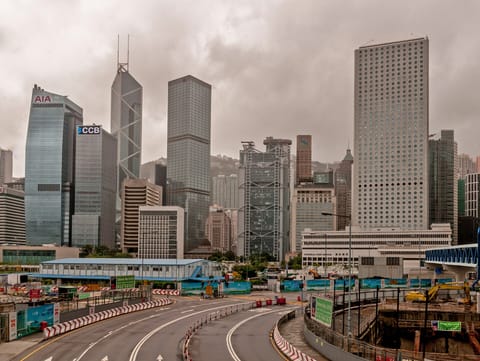
Across the border in Hong Kong, the operator of the iconic Sogo department store in Causeway Bay is under pressure to refinance a HK$861.8 million (approximately US$110 million) loan. The refinancing race highlights the acute stress facing Hong Kong's commercial real estate sector, where retail asset valuations have been compressed by a combination of post-pandemic structural shifts in consumer behaviour, cross-border competition from Shenzhen retail, and persistently high vacancy rates in traditional shopping corridors.
Causeway Bay remains one of Hong Kong's most recognisable retail districts, historically ranking among the world's most expensive shopping streets by rental rate. However, the district has seen significant rental corrections since 2019, and the pressure on the Sogo operator's loan refinancing is symptomatic of a commercial property market still searching for a stable floor. For investors with exposure to Hong Kong retail REITs or commercial assets, this development is a reminder that trophy locations do not guarantee debt serviceability in a low-footfall, high-rate environment.
The refinancing timeline is critical. If the operator fails to secure new terms before the loan matures, forced asset sales or restructuring could introduce additional supply into an already fragile Hong Kong commercial market. Lenders — likely a consortium of regional banks — will be weighing the residual value of the retail asset against the operator's income projections in a market where Grade A retail rents in Causeway Bay remain well below their 2018 peaks.
Broader APAC Real Estate: Three Trends Shaping Investor Decisions in 2025
The CDL sales data and the Hong Kong refinancing story are not isolated events — they reflect three macro forces reshaping APAC real estate investment decisions this year. Understanding these forces is essential for anyone repositioning a regional property portfolio.
- Interest Rate Sensitivity: Despite expectations of US Federal Reserve rate cuts filtering through to Asian monetary policy, borrowing costs across Singapore, Hong Kong, and Australia remain elevated relative to the 2010s baseline. This is compressing affordability for residential buyers and squeezing debt coverage ratios for commercial landlords simultaneously.
- Policy Overhang in Singapore: The Monetary Authority of Singapore (MAS) and the government have maintained macro-prudential measures — including ABSD and Total Debt Servicing Ratio (TDSR) limits — that continue to cap speculative demand. Any relaxation of these measures would be a significant positive catalyst for developers like CDL, but there is no current signal of imminent policy easing.
- Structural Repricing in Hong Kong Commercial: Hong Kong's office and retail sectors are undergoing a multi-year repricing cycle driven by tenant downsizing, co-working penetration, and reduced mainland Chinese corporate expansion. Investors should expect further loan restructurings and distressed asset opportunities to emerge through 2025 and into 2026.
CDL's S$476 million Q1 sales result is not a crisis — but it is a clear signal that Singapore's private residential market is operating in a lower-velocity regime, and developers who over-rely on launch momentum risk inventory buildup heading into 2026.
What Singapore's Cooling Measures Mean for CDL and Competing Developers
Singapore's property cooling measures, last significantly tightened in April 2023 with the ABSD hike for foreigners to 60%, have had a lasting impact on transaction volumes in the Core Central Region. CDL's Q1 2025 figures reinforce what URA's flash estimates have been suggesting: demand is holding up in the Outside Central Region (OCR) and Rest of Central Region (RCR), where HDB upgraders and local owner-occupiers remain active, but the CCR — where Newport Residences is positioned — faces a structurally smaller buyer pool.
Competing developers including GuocoLand, CapitaLand Development, and Far East Organization are navigating the same demand constraints, and the risk of unsold inventory accumulating in the CCR is rising. Developers who can pivot to RCR or OCR launches, or who have significant recurring income from commercial assets to offset residential sales volatility, are better positioned for the current cycle. CDL's balance sheet strength gives it runway, but the market is clearly rewarding patience over aggressive launch pricing.
Key Dates and What to Watch in APAC Property Markets
Investors tracking APAC real estate should mark the following near-term data points and catalysts as potentially market-moving for both Singapore and Hong Kong assets.
- URA Q2 2025 Private Residential Price Index: Due mid-July. Will confirm whether Q1 price resilience is holding or beginning to soften under volume pressure.
- CDL H1 2025 Results: Expected August. Newport Residences take-up rate will be the headline number to watch.
- Hong Kong Sogo Loan Maturity Date: Refinancing outcome will signal lender appetite for Hong Kong retail collateral at current valuations.
- MAS Financial Stability Review: Typically released in H2; any commentary on residential mortgage stress or ABSD review would be a major policy signal.
- US Federal Reserve Rate Decisions: Any cut cycle acceleration would improve TDSR headroom for Singapore buyers and ease Hong Kong refinancing pressure simultaneously.
For investors, the actionable takeaway from this quarter's APAC data is clear: Singapore residential remains a hold-and-monitor market rather than an aggressive accumulation market, while Hong Kong commercial presents distressed opportunities for investors with long time horizons and strong due diligence capacity. Watch CDL's Newport Residences sales rate in Q2 — if take-up accelerates, it would suggest that the Q1 softness was timing-related rather than structural. If it stagnates, expect developers across the CCR to revisit pricing strategies before the year is out.
Frequently Asked Questions
Why did CDL's Q1 2025 property sales decline to S$476 million?
CDL's Q1 2025 sales of S$476 million reflect a combination of fewer major launches in the quarter, subdued buyer demand in Singapore's Core Central Region due to high ABSD rates for foreign buyers, and elevated mortgage costs that have compressed affordability for local upgraders. The figure represents an estimated 23% year-on-year decline.
What is Newport Residences and where is it located?
Newport Residences is a mixed-use development by City Developments Limited located in Singapore's District 2, on the former Fuji Xerox Towers site along Anson Road in the Tanjong Pagar area. It includes residential units and serviced apartments, targeting buyers seeking CBD-fringe access and proximity to the Greater Southern Waterfront redevelopment zone.
What is the HK$861.8 million loan linked to Hong Kong's Sogo operator?
The HK$861.8 million loan is a commercial property financing facility tied to the operator of the Sogo department store in Causeway Bay, Hong Kong. The operator is working to refinance the loan amid challenging retail market conditions, with Causeway Bay retail rents still significantly below their pre-2019 peak levels.
How do Singapore's ABSD rules affect CDL's sales performance?
Singapore's Additional Buyer's Stamp Duty (ABSD) of 60% for foreign purchasers has effectively removed a large segment of international demand from the private residential market, particularly in the Core Central Region where CDL's premium projects are concentrated. This forces developers to rely more heavily on local owner-occupier and permanent resident demand, which is subject to TDSR borrowing limits.
What should property investors watch in Singapore and Hong Kong for the rest of 2025?
Key indicators include CDL's H1 2025 results and Newport Residences take-up rates, URA's Q2 private residential price index, the outcome of the Hong Kong Sogo loan refinancing, and any signals from MAS regarding macro-prudential policy. US Federal Reserve rate decisions will also influence borrowing costs and buyer affordability across both markets.