At least 82 workers died in a Shanxi coal mine blast, prompting Beijing to order a nationwide mining crackdown. For industrial property investors, this means paused land approvals, suppressed transaction volumes, and elevated title risk in Shanxi, Inner Mongolia, and Shaanxi. A compliance review is the immediate priority.
China Coal Mine Explosion: 82 Dead and Industrial Property Risk Under Scrutiny
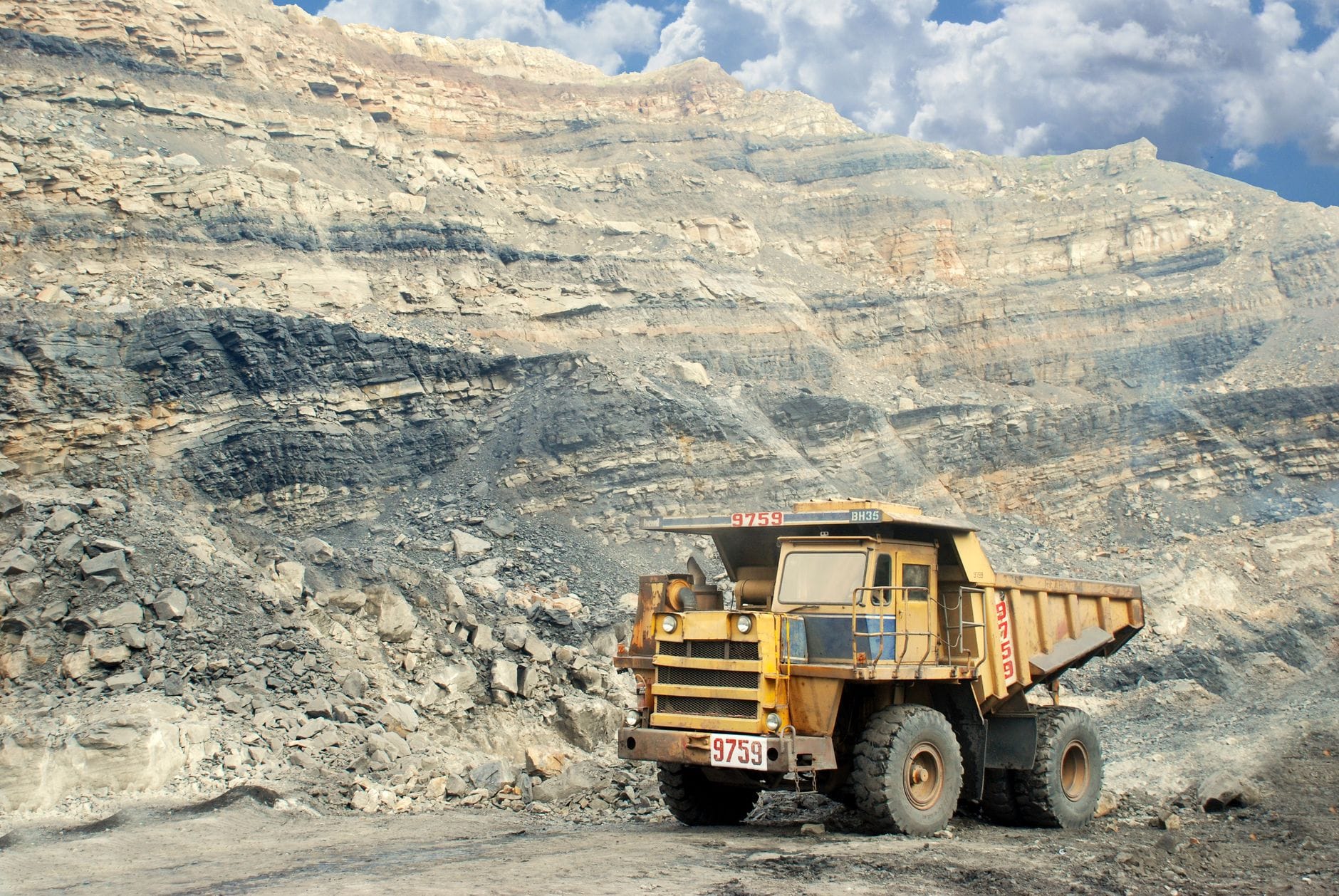
At least 82 workers were killed in a coal mine blast in Shanxi province, China, triggering an immediate government-ordered nationwide crackdown on illegal mining operations that analysts say will reshape industrial land valuations and mining-adjacent real estate across the country's resource-heavy interior regions. The explosion, one of the deadliest in China's mining sector, has prompted Beijing to launch what state news agency Xinhua described as an "uncompromising" investigation, with severe punishments promised for those found responsible. For property investors with exposure to industrial land, logistics corridors, or resource-sector infrastructure in northern China, this event is a direct signal that regulatory risk in these zones is escalating sharply.
If you hold industrial assets, warehouse land, or have development interests near China's coal belt — spanning Shanxi, Inner Mongolia, and Shaanxi — this crackdown matters directly to your portfolio. Regulatory sweeps of this scale historically suppress transaction volumes in affected zones, freeze new land approvals, and compress yields on industrial properties as compliance costs surge. Investors who ignore the regulatory cycle in China's resource provinces do so at measurable financial cost.
- Confirmed fatalities: At least 82 workers killed
- Location: Shanxi Province, northern China (primary coal production hub)
- Government response: Nationwide crackdown on illegal mining ordered by Beijing
- Investigative body: State Council-level investigation, reported via Xinhua
- Shanxi coal output share: Approximately 30% of China's total annual coal production
- Historical precedent: Post-accident crackdowns have previously halted industrial land sales for 3–9 months in affected provinces
Shanxi's Industrial Property Market and Why This Blast Changes the Calculus
Shanxi province is not peripheral to China's economy — it is the backbone of the country's coal supply chain, accounting for roughly 30% of national coal output. The province's industrial land market, which includes processing facilities, logistics hubs, and energy infrastructure corridors, has attracted significant domestic and some foreign institutional capital over the past decade, particularly as China's energy transition policies created demand for both legacy coal infrastructure and new clean-energy conversion projects. Districts such as Datong, Taiyuan, and Lüliang have seen sustained industrial land transactions, with government-listed parcel prices in Taiyuan ranging from RMB 800 to RMB 2,200 per square metre depending on proximity to transport nodes.
The blast fundamentally alters the near-term risk profile of these assets. When Beijing orders a nationwide mining crackdown, the first casualty is always new land approvals in the affected sector. Local governments in Shanxi will face intense pressure to suspend or delay industrial land auctions tied to mining, processing, and energy logistics until the investigation concludes and new compliance frameworks are issued. This creates a supply freeze that can paradoxically support existing asset prices in the short term, but suppresses transaction liquidity — making it difficult for investors to exit positions at fair value.
Historical comparisons are instructive. Following the 2021 Xinjiang coal mine collapse and the 2020 Chongqing gas well explosion, affected provincial governments imposed land-use moratoriums lasting between three and seven months. During those periods, industrial land transaction volumes in the immediate provinces dropped by an estimated 40–60%, based on data from China's Ministry of Natural Resources land transaction records. Investors who needed liquidity during those windows were forced to accept significant discounts.
"Post-accident regulatory sweeps in China's coal provinces have historically suppressed industrial land transaction volumes by 40–60% for periods of three to nine months — a liquidity risk that is frequently underpriced by offshore investors."
Nationwide Crackdown: What Illegal Mining Enforcement Means for Land Titles and Asset Integrity
Beijing's order to crack down on illegal mining operations across the country carries specific implications for land title integrity — a concern that extends well beyond Shanxi. Illegal mining in China frequently involves the use of land parcels whose official designation does not permit extractive activity. When enforcement sweeps occur, local land bureaus are required to audit land-use compliance across entire districts, not merely the sites directly implicated. This audit process can surface title irregularities on adjacent parcels, creating legal uncertainty for investors who believed their assets were fully compliant.
The risk is most acute in provinces where coal, iron ore, and rare earth extraction overlap with industrial and logistics land designations — a situation common in Inner Mongolia, Shaanxi, and Guizhou in addition to Shanxi itself. Investors holding industrial land in these provinces should treat the current crackdown as a prompt to commission fresh title due diligence, particularly on parcels acquired through secondary market transactions or local government negotiated transfers rather than public auction. Parcels acquired via auction through provincial public resource trading centres carry stronger legal protection, but even these can be subject to use-change orders if a broader rezoning accompanies the regulatory response.
The enforcement mechanism Beijing is deploying — a State Council-level investigation reported through Xinhua — signals that this is not a routine local safety inspection. State Council involvement means the findings will carry national policy weight and are likely to produce new regulations governing mining land use, safety buffers between extraction zones and residential or commercial development, and mandatory disclosure requirements for industrial land transactions near active or legacy mining sites.
Investor Positioning: Five Risk Factors to Reassess Right Now
For Asia-Pacific investors with direct or indirect exposure to China's industrial property sector, the Shanxi blast and its regulatory aftermath present a concrete checklist of risks to reassess before the investigation concludes and new rules are issued. Acting before the regulatory framework crystallises gives investors the best window to reposition, renegotiate, or hedge.
- Land-use designation compliance: Verify that all industrial parcels in coal-adjacent zones carry the correct designation under China's land classification system (specifically, whether parcels are classified as industrial construction land rather than agricultural or ecological reserve land, which cannot legally host industrial facilities).
- Title chain integrity: Commission a full title chain review for any asset acquired via negotiated transfer in Shanxi, Inner Mongolia, or Shaanxi in the past five years.
- Auction pipeline exposure: If you are participating in upcoming industrial land auctions in affected provinces, anticipate delays of one to three quarters as local governments pause new listings pending national guidance.
- Logistics corridor assets: Warehousing and distribution facilities that service the coal supply chain face demand-side risk if production is curtailed during the crackdown period — factor this into yield projections for the next two to three quarters.
- Environmental liability buffers: Post-accident regulations in China frequently introduce new environmental buffer zones around extraction sites. Assess whether any holdings fall within a potential expanded buffer zone radius, which has historically been set at 500 metres to 1,000 metres from active mine perimeters.
Investors who complete this reassessment before the State Council investigation publishes its findings will have a clearer basis for deciding whether to hold, exit, or selectively add exposure at distressed pricing.
What to Watch: Key Dates and Signals Ahead
The timeline of China's post-accident regulatory cycle follows a broadly predictable pattern, and monitoring specific signals will help investors time their decisions more precisely. The State Council investigation typically delivers an initial findings report within 30 to 60 days of the incident. That report triggers the drafting of new ministerial regulations, which are usually issued for public comment within 90 days and finalised within six months. Industrial land auction activity in the affected province tends to resume meaningfully only after the final regulations are published, as local governments need the new compliance framework before they can legally list new parcels.
Watch for announcements from China's Ministry of Natural Resources and the National Mine Safety Administration regarding revised safety buffer standards and updated land-use classification rules for mining-adjacent zones. Any revision to the national standard that expands buffer zones or tightens land-use categories will directly affect the developable area of existing industrial land holdings near mine sites. A buffer zone expansion of even 200 metres could render portions of legally held industrial parcels unusable for their intended purpose, triggering renegotiation or compensation claims against local governments.
For investors in the broader Asia-Pacific industrial property market, the Shanxi blast is also a reminder that China's regulatory risk cycle is a recurring feature of the investment environment, not an anomaly. The practical next action is clear: if you have exposure to industrial land in China's resource provinces, schedule a compliance and title review now, before new regulations narrow your options. If you are considering entry into these markets, the post-crackdown period — typically six to twelve months after the final regulations are issued — has historically offered the most attractive entry pricing, as distressed sellers and a recovered approval pipeline converge.
Frequently Asked Questions
How does China's coal mine blast affect industrial property values in Shanxi?
The blast has triggered a government-ordered nationwide crackdown on illegal mining, which historically suppresses industrial land transaction volumes in affected provinces by 40–60% for several months. New land approvals are likely to be paused pending the State Council investigation outcome, reducing liquidity for existing holders and delaying new development timelines.
What due diligence should investors conduct on industrial land near Chinese coal mines?
Investors should verify land-use designations under China's national land classification system, conduct a full title chain review — especially for assets acquired via negotiated transfer — and assess whether holdings fall within potential new environmental buffer zones around active or legacy mine perimeters, which can range from 500 to 1,000 metres.
Which Chinese provinces face the highest industrial property regulatory risk after this crackdown?
Shanxi is the most directly exposed, but Inner Mongolia, Shaanxi, and Guizhou also face elevated risk given their overlap of coal, iron ore, and rare earth extraction with industrial land designations. All four provinces are subject to the nationwide crackdown ordered by Beijing following the blast.
When will industrial land auctions in Shanxi likely resume after the crackdown?
Based on historical precedent from similar post-accident regulatory cycles, meaningful auction activity typically resumes six to twelve months after the incident, once the State Council investigation report is published and new ministerial regulations are finalised. Investors should monitor announcements from the Ministry of Natural Resources and the National Mine Safety Administration for timing signals.
Is this crackdown likely to produce new regulations affecting industrial land near mines across China?
Yes. State Council-level investigations in China consistently produce new national regulations. Likely outcomes include revised safety buffer zone standards around mining sites, updated land-use classification rules for mining-adjacent zones, and new mandatory disclosure requirements for industrial land transactions near active or legacy extraction sites.