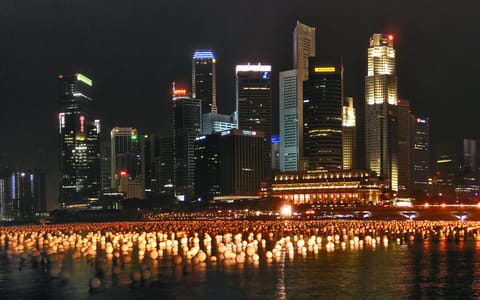
Chinese buyers represent roughly 25% of foreign private residential purchases in Singapore, concentrating on luxury condominiums in Districts 9, 10, and 11. Despite the 60% ABSD rate introduced in April 2023, ultra-high-net-worth Chinese investors continue transacting, while Chinese-linked developers expand their Singapore land bank through GLS bids and joint ventures.
Chinese Investment in Singapore Property Reaches New Heights
Chinese buyers accounted for approximately 25% of all foreign private residential purchases in Singapore in 2023, making them the single largest group of overseas investors in the city-state's property market. Singapore's Core Central Region (CCR), which encompasses Districts 9, 10, and 11, has absorbed the bulk of this capital, with luxury condominiums in Orchard Road and River Valley commanding prices well above S$3,000 per square foot. For investors tracking capital flows across Asia-Pacific, this trend carries direct implications for pricing, competition, and long-term yield expectations in one of the region's most tightly regulated housing markets.
If you are considering a property purchase in Singapore — whether as a primary residence, a rental investment, or a portfolio diversification play — understanding where Chinese capital is flowing and why matters enormously. Demand from mainland Chinese buyers has consistently supported price floors in the CCR even as rising Additional Buyer's Stamp Duty (ABSD) rates have cooled overall foreign participation. Knowing which districts and project types attract this cohort helps buyers and agents position themselves more effectively in a competitive, data-driven market.
- Chinese share of foreign purchases (2023): ~25% of all foreign private residential transactions
- ABSD rate for foreigners: 60% (raised April 2023)
- Average CCR luxury PSF: S$3,000–S$4,500+
- Singapore private residential price growth (2023): +6.8% (URA full-year index)
- Key districts targeted: Districts 9, 10, 11, and 1 (Marina Bay)
- Notable developer entrants: Longfor Group, CIFI Holdings (Singapore-linked ventures)
Why Singapore Remains a Safe-Haven Market for Chinese Capital
Singapore's appeal to Chinese high-net-worth individuals is rooted in a combination of political stability, rule of law, transparent land titles administered by the Singapore Land Authority (SLA), and a well-regulated financial system overseen by the Monetary Authority of Singapore (MAS). Unlike many regional markets, Singapore offers clear foreign ownership rights for private condominiums, making it straightforward for overseas buyers to acquire, hold, and eventually divest assets. The Singapore dollar has also demonstrated resilience against major currencies, adding a currency-stability dimension that appeals to buyers moving capital out of yuan-denominated assets.
The city-state's geographic position as a regional hub for wealth management further reinforces its property market. Many Chinese buyers who have established family offices or investment holding structures in Singapore under the MAS-regulated Variable Capital Company (VCC) framework naturally extend their asset allocation into local real estate. Singapore's total private residential stock remains constrained by land scarcity, a structural factor that underpins long-term capital appreciation even when short-term transaction volumes fluctuate. The Urban Redevelopment Authority (URA) controls land supply through the Government Land Sales (GLS) programme, ensuring that oversupply — a risk that has undermined markets like Kuala Lumpur and some Chinese tier-2 cities — is structurally limited here.
Political tensions between China and Western nations have also redirected some capital that might previously have flowed into London, Vancouver, or Sydney. Singapore, which maintains constructive diplomatic and economic ties with Beijing, has emerged as a preferred destination for Chinese capital seeking a stable, internationally respected jurisdiction. The presence of major Chinese banks including ICBC, Bank of China, and China Construction Bank in Singapore also facilitates financing and wealth structuring for buyers who prefer to work with familiar institutions.
Which Projects and Districts Are Attracting the Most Chinese Buyers?
Luxury new launches in the CCR have been the primary target. Projects such as Klimt Cairnhill in District 9, developed by Low Keng Huat, and The Atelier in Newton have recorded strong take-up from mainland Chinese buyers. Marina Bay Residences and developments along the Marina South corridor have also drawn interest, particularly from buyers who view proximity to the Central Business District as a long-term value anchor. In District 10, freehold properties along Nassim Road and Bukit Timah continue to command premium pricing, with some transactions exceeding S$4,500 PSF.
Beyond the CCR, there is growing Chinese buyer interest in the Rest of Central Region (RCR), particularly in projects near the upcoming Cross Island Line MRT stations. Connectivity upgrades consistently trigger price appreciation in Singapore's historically transit-oriented residential market, and Chinese investors — many of whom are familiar with this dynamic from China's own metro-led development model — are positioning early. Developments in Toa Payoh, Bidadari, and the Kallang-Whampoa corridor have seen increased enquiries from Chinese-linked buyers over the past 18 months.
The following project types have proven most attractive to Chinese capital inflows, based on transaction data and agent reports:
- Freehold luxury condominiums in Districts 9 and 10 — preferred for capital preservation and prestige value
- New launches with strong developer branding — buyers favour projects by established local developers such as City Developments Limited (CDL), CapitaLand, and GuocoLand
- Strata commercial units and shophouses — shophouses in Chinatown and Tanjong Pagar attract buyers seeking rental income with lower ABSD exposure
- Good Class Bungalows (GCBs) in Districts 10 and 11 — though restricted to Singapore permanent residents and citizens, some Chinese buyers acquire PR status specifically to access this segment
Singapore's structural land scarcity, transparent legal framework, and MAS-regulated financial make it one of the few Asia-Pacific markets where foreign capital — including Chinese investment — can enter, hold, and exit with predictable rules and enforceable property rights.
How the 60% ABSD Has Reshaped Chinese Buyer Behaviour
The Singapore government's April 2023 decision to raise ABSD for foreigners from 30% to 60% was widely expected to deter overseas buyers. In the short term, transaction volumes from foreign buyers, including Chinese nationals, did fall sharply in Q2 and Q3 2023. However, by Q4 2023 and into 2024, a clear pattern emerged: buyers with the financial capacity to absorb the 60% stamp duty — effectively ultra-high-net-worth individuals — continued transacting, while mid-market foreign buyers largely exited. The ABSD hike did not eliminate Chinese demand; it filtered it, concentrating activity at the top end of the market where ticket sizes are S$5 million and above.
Some Chinese buyers have also pursued Singapore Permanent Residency (PR) status, which reduces ABSD to 5% on a first property purchase, or citizenship, which eliminates ABSD on a first purchase entirely. The MAS and Ministry of Finance have not publicly signalled any near-term relaxation of the 60% foreign ABSD rate, meaning this structural filter is likely to remain in place through at least 2025. Buyers and developers targeting this segment should model transactions with the full 60% ABSD factored in unless the buyer holds PR or citizenship.
Developer Strategies: Chinese Developers Expanding Singapore Exposure
Several Chinese-linked developers have been expanding their Singapore footprint, both through direct land acquisitions via the GLS programme and through joint ventures with established local players. This dual-track strategy allows them to participate in Singapore's resilient residential market while managing regulatory and reputational risk. GuocoLand, which has strong ties to the Hong Leong Group and significant Chinese institutional backing, has been particularly active, with major mixed-use projects including Guoco Midtown in the Beach Road-Bugis precinct. Logan Property, a Shenzhen-based developer, previously partnered with Nanshan Group to develop the Stirling Residences project in Queenstown, which achieved strong sales absorption.
The entry of Chinese capital at the developer level — not just the buyer level — signals a longer-term structural commitment to Singapore's property market. When developers allocate capital to land acquisition and construction, they are making multi-year bets on price stability and demand continuity, a more durable signal than individual buyer transactions. This developer-level participation also creates downstream employment and supply chain activity that further embeds Chinese capital in Singapore's built environment sector.
What to Watch: Key Signals for Investors in 2024–2025
Investors tracking Chinese capital flows into Singapore property should monitor the following indicators over the next 12 to 18 months. First, URA's quarterly private residential price index will reveal whether CCR prices — the segment most exposed to Chinese buyer demand — continue to hold or soften as ABSD filters out mid-tier foreign buyers. Second, MAS's periodic reviews of macroprudential measures, including Total Debt Servicing Ratio (TDSR) rules and ABSD rates, could shift the calculus for foreign buyers if the government decides to recalibrate cooling measures. Third, China's own economic trajectory matters: if domestic asset prices in China continue to face pressure from the property sector correction, more Chinese high-net-worth individuals may accelerate offshore diversification, with Singapore as a primary destination.
For investors already holding Singapore residential assets, the concentration of Chinese buyer demand in the luxury CCR segment supports exit pricing for freehold units above S$3 million. For those considering entry, the current environment favours projects with strong developer credentials, freehold tenure, and proximity to established amenity nodes in Districts 9, 10, and 11. Run a full ABSD and TDSR calculation before committing — at 60% ABSD for foreigners, the breakeven holding period extends significantly, and rental yield alone will not justify the acquisition cost without a credible capital appreciation thesis backed by supply constraints and sustained demand from buyers like the Chinese cohort currently driving the top end of Singapore's residential market.
Frequently Asked Questions
How much stamp duty do Chinese buyers pay on Singapore property?
Foreign buyers, including Chinese nationals without Singapore PR or citizenship, pay a 60% Additional Buyer's Stamp Duty (ABSD) on all residential property purchases. This rate was raised from 30% in April 2023. Singapore Permanent Residents pay 5% ABSD on a first property purchase.
Which districts in Singapore attract the most Chinese property investment?
Districts 9, 10, and 11 in the Core Central Region (CCR) attract the most Chinese buyer activity, particularly freehold luxury condominiums along Orchard Road, Nassim Road, and Bukit Timah. Marina Bay and the Kallang-Whampoa corridor are also seeing increased interest.
Are Chinese developers buying land in Singapore?
Yes. Chinese-linked developers, including GuocoLand and Logan Property, have participated in Singapore's Government Land Sales (GLS) programme and formed joint ventures with local developers. This signals long-term capital commitment beyond individual buyer transactions.
Why do Chinese investors prefer Singapore over other markets like London or Sydney?
Singapore offers political stability, transparent land titles via the Singapore Land Authority, rule of law, and a MAS-regulated financial system. It also maintains constructive ties with Beijing and hosts major Chinese banks, making capital structuring easier for mainland buyers.
Did the 60% ABSD stop Chinese buyers from purchasing Singapore property?
The 60% ABSD reduced overall foreign transaction volumes sharply in mid-2023, but ultra-high-net-worth Chinese buyers with ticket sizes above S$5 million continued transacting. The measure effectively filtered out mid-market foreign buyers while concentrating demand at the luxury end of the market.
What rental yields can investors expect from Singapore luxury condominiums?
Gross rental yields in the CCR luxury segment typically range from 2.5% to 3.5% annually. Given the 60% ABSD for foreign buyers, rental income alone does not justify acquisition costs — investors must have a credible capital appreciation thesis supported by supply constraints and sustained demand.