
More than 70% of APAC family offices are rotating real estate capital away from trophy office assets into living sector, logistics and private credit strategies in 2026. Singapore, Sydney and Tokyo are the primary markets driving this structural shift in private wealth allocation.
More than 70% of Asia-Pacific family offices surveyed in 2026 are actively reallocating real estate capital away from pure trophy office and retail holdings, pivoting instead toward residential living assets, logistics facilities, and private credit strategies backed by property, according to market intelligence tracked by Property News Asia's markets desk. The shift is most visible in Singapore, Sydney, and Tokyo, where family office registration and deal activity have accelerated since 2024.
The move matters because it signals a structural repricing of risk appetite among ultra-high-net-worth allocators, a cohort that typically moves ahead of institutional rebalancing cycles. When family offices rotate, fund managers and listed REITs tend to follow within 12 to 18 months. For investors watching capital flow signals across APAC, this rotation is a leading indicator worth tracking closely.
Across the region, the living sector, broadly defined as build-to-rent, student housing, co-living, and senior living, is attracting the largest share of new family office commitments. Logistics and last-mile warehousing, particularly in Greater Sydney, the Osaka-Kobe corridor, and outer Jakarta, are drawing allocations previously reserved for CBD office towers. Private credit, where family offices act as direct lenders secured against real estate, is also growing rapidly as bank lending conditions tighten in several APAC markets. Key drivers behind the rotation include:
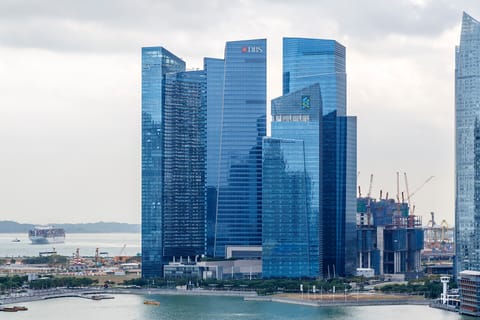
- Compressed yields on CBD office assets in Singapore's Marina Bay and Tokyo's Marunouchi district
- Rising rental demand for purpose-built residential stock across Sydney, Melbourne, and Osaka
- Logistics vacancy rates falling below 2% in several key APAC markets, supporting rent growth
- Higher risk-adjusted returns available through private credit compared with listed property securities
- Regulatory clarity improving for build-to-rent in Australia and select Southeast Asian markets
Singapore's variable capital company (VCC) structure and Australia's managed investment trust framework are both being used to house these diversified real estate strategies, offering tax efficiency and flexibility that traditional direct ownership cannot match. Family offices with bases in Singapore are reportedly working with private banks and boutique real estate advisers to source off-market logistics and living sector deals across Southeast Asia and Australia.
Why it matters: Investors benchmarking APAC real estate portfolios against family office behaviour should treat this rotation as a concrete signal to review concentration in legacy office and retail assets. Living sector and logistics allocations are no longer niche plays, they are becoming core holdings for the region's most sophisticated private capital. Those still overweight trophy CBD assets without yield support face growing valuation pressure as the buyer pool for those assets narrows through 2026 and beyond.