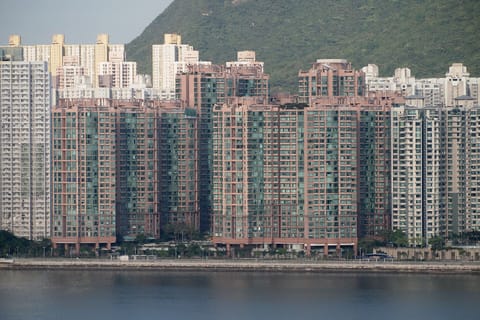

S&P Global Ratings forecasts Hong Kong home prices will rise 3%–5% through end-2026, supported by the removal of cooling measures, falling mortgage rates, and constrained supply. Recovery is real but measured, with geopolitical and macro risks remaining.
Hong Kong Home Prices Forecast to Rise Up to 5% in 2026
Hong Kong home prices are projected to climb between 3% and 5% through the end of 2026, according to a new research report from S&P Global Ratings released this week. The forecast signals a measured but meaningful recovery in one of Asia's most closely watched residential property markets, which has endured significant price corrections since its 2021 peak. S&P's analysis points to a confluence of stabilising macroeconomic conditions, easing mortgage rates, and recovering transaction volumes as the primary drivers behind the anticipated price movement.
- Projected price increase (2026): 3%–5%
- Source: S&P Global Ratings
- Hong Kong residential price decline from 2021 peak: Approximately 25%–27%
- Hong Kong base rate (as of mid-2025): Tracking US Fed cuts, trending lower
- Residential transaction volume YoY change: Recovering, up from multi-year lows in 2023
What Is Driving the Recovery in Hong Kong Property?
The anticipated price gains are underpinned by several structural and cyclical forces that have shifted in favour of buyers and developers alike. Chief among them is the removal of cooling measures — Hong Kong's government scrapped all additional stamp duties on residential property purchases in February 2024, a decisive policy reversal that immediately unlocked pent-up demand from both local and mainland Chinese buyers. That single move dramatically reduced the transaction cost burden that had suppressed activity for years.
Beyond policy, the interest rate environment is also turning more supportive. As the US Federal Reserve continues its rate-cutting cycle, Hong Kong's linked exchange rate system means local mortgage rates are following suit. Lower borrowing costs directly improve affordability metrics, particularly for mass-market and mid-tier residential units where financing sensitivity is highest. S&P's analysts note that while rates remain elevated compared to the near-zero era of 2020–2021, the directional shift is sufficient to bring sidelined buyers back into the market.
Supply dynamics further reinforce the bullish tilt. New private residential completions in Hong Kong remain constrained relative to historical averages, and land sales by the government have been subdued. This structural undersupply, combined with a population that continues to grow modestly and persistent demand from cross-border professionals, limits the downside risk for prices even if the recovery proves gradual rather than sharp.
How Does This Compare to the Broader Asia-Pacific Market?
Hong Kong's projected 3%–5% gain looks modest when set against some regional peers, but context matters. Singapore's private residential market, for instance, has already experienced significant price appreciation over the past three years and is now contending with its own cooling measures, with growth expected to moderate to the low single digits in 2025 and 2026. Tokyo continues to attract foreign capital and record price gains in central wards, driven partly by yen weakness. By contrast, Hong Kong is still in recovery mode, clawing back ground lost during one of the sharpest residential downturns among developed Asian markets.
The S&P report also highlights that the recovery is uneven across segments. Luxury properties in prime districts such as The Peak, Mid-Levels, and Repulse Bay are seeing renewed interest from ultra-high-net-worth buyers, including mainland Chinese nationals who are now exempt from the previous 15% buyer's stamp duty. Meanwhile, mass-market units in the New Territories are benefiting from improved affordability as prices remain well below their peak levels on a per-square-foot basis.
What This Means for Property Investors in Hong Kong
For custodians evaluating Hong Kong residential assets, the S&P forecast offers a cautiously constructive signal. A 5% price appreciation over roughly 18 months, combined with rental benefits that have firmed to approximately 2.5%–3.5% for typical residential units following years of compression, begins to make the total return calculus more compelling than it has been since 2019. Investors who have been waiting on the sidelines for confirmation of a floor may find the current window — before a broader price re-rating — to be a strategically attractive entry point.
That said, S&P's language is deliberately measured. The word "limited" appears in the firm's characterisation of the recovery, suggesting analysts do not anticipate a return to the explosive price growth of the mid-2010s. Geopolitical uncertainty, the pace of US rate cuts, and the trajectory of mainland China's own property sector remain material risk factors. Investors should weigh the upside scenario of a 5% gain against the possibility that external shocks could compress that range toward the lower end of the forecast or delay the timeline altogether. Diversification across asset classes and a focus on well-located, liquid residential assets remain the most prudent approach for capital allocation in this market.
Frequently Asked Questions
How much could Hong Kong home prices rise in 2026?
S&P Global Ratings projects Hong Kong residential prices will increase between 3% and 5% through the end of 2026, driven by policy easing, lower mortgage rates, and constrained housing supply.
Why did Hong Kong remove its property cooling measures?
The Hong Kong government scrapped all additional stamp duties on residential purchases in February 2024 to stimulate a market that had fallen roughly 25%–27% from its 2021 peak, aiming to restore transaction volumes and buyer confidence.
What are typical residential rental benefits in Hong Kong right now?
Residential rental benefits in Hong Kong have firmed to approximately 2.5%–3.5% for typical units as of mid-2025, recovering from historically compressed levels seen during the low-interest-rate era.
How does Hong Kong's property outlook compare to Singapore's?
Singapore's private residential market has already seen substantial price gains over the past three years and faces its own cooling measures, with growth expected to moderate. Hong Kong is still in recovery mode and offers a different risk-return profile for custodians.
What are the key risks to Hong Kong's property price recovery?
Key downside risks include geopolitical uncertainty, a slower-than-expected US Federal Reserve rate-cutting cycle, continued weakness in mainland China's property sector, and any policy reversal by the Hong Kong government on stamp duty exemptions.