Hongkong Land posted a 5% rise in Q1 underlying profit, driven by lower financing costs that offset reduced Singapore income after the Marina Bay Financial Centre Tower 3 disposal. Central Hong Kong office vacancy is tightening, and the developer is launching its first Singapore-focused real estate fund — a capital recycling move with implications for investors across both markets.
Hongkong Land Underlying Profit Climbs 5% in Q1 on Lower Financing Costs
Hongkong Land posted a 5 percent year-on-year increase in underlying profit for the first quarter, as lower financing charges helped cushion the impact of reduced income from Singapore following the disposal of Marina Bay Financial Centre Tower 3. The Hong Kong-listed developer, which controls some of the most prestigious office addresses in Central Hong Kong, confirmed the result marked a solid start to the year despite ongoing headwinds in parts of its regional portfolio. For investors tracking Grade A office performance across Asia-Pacific, the numbers carry direct implications for asset valuations, rental benchmarks, and the trajectory of a new Singapore-focused fund vehicle now taking shape.
If you hold or are considering exposure to commercial real estate in Hong Kong's Central district or Singapore's Marina Bay precinct, this result is a direct read on where institutional-grade rental demand is heading. The combination of tightening vacancy in Central Hong Kong and a structural repositioning of Singapore assets into a managed fund signals a deliberate capital recycling strategy that income-focused investors should track closely. Understanding the mechanics behind this profit move — and what comes next — is essential for anyone allocating to Asia-Pacific commercial property in 2025.
- Q1 Underlying Profit Change (YoY): +5%
- Key Driver: Lower financing charges offsetting Singapore disposal impact
- Asset Disposed: Marina Bay Financial Centre Tower 3, Singapore
- New Vehicle: Maiden Singapore-focused real estate fund (in formation)
- Core Hong Kong Market: Central district, vacancy tightening
- Developer: Hongkong Land Holdings Limited (HKEX: 0101)
Central Hong Kong Vacancy Is Tightening — What the Data Shows
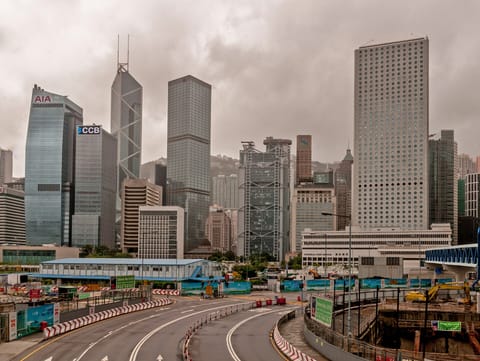
The Central district of Hong Kong has long been the benchmark for Asia-Pacific prime office pricing, and the latest vacancy data suggests the worst of the post-pandemic correction may be behind it. Hongkong Land's portfolio — which includes towers such as One Exchange Square, Two Exchange Square, and Jardine House — has historically commanded the highest rents per square foot in the city. A tightening vacancy rate in Central is significant because it acts as a leading indicator for rental reversion across the broader Hong Kong Grade A office market. When occupancy firms in Hongkong Land's buildings, landlords across Admiralty, Wan Chai, and Quarry Bay typically follow with upward rental adjustments within two to four quarters.
The vacancy compression in Q1 reflects a gradual return of financial services tenants — banks, asset managers, and legal firms — who had either downsized or deferred renewal decisions through 2022 and 2023. While overall Hong Kong office vacancy remains elevated by historical standards, the directional shift in Central is meaningful. Analysts have noted that net absorption in Central turned positive in late 2024 for the first time in several years, and Hongkong Land's Q1 result appears to confirm that trend is holding into 2025. For investors benchmarking Hong Kong commercial yields, a sustained vacancy decline in Central could support capital value stabilisation in a market that has seen significant price corrections since 2019.
It is worth noting that Hongkong Land's Central portfolio benefits from a structural scarcity premium — new Grade A supply in the core CBD is extremely limited given land constraints and planning restrictions. This supply-demand dynamic underpins the long-term investment thesis for landlords with existing Central exposure, even as co-working operators and flexible lease arrangements continue to reshape tenant mix across the city.
Marina Bay Financial Centre Tower 3 Disposal and the Singapore Fund Strategy
The disposal of Marina Bay Financial Centre (MBFC) Tower 3 in Singapore was a deliberate move by Hongkong Land to recycle capital and seed its first Singapore-focused real estate fund. MBFC Tower 3 is a premium Grade A office tower within the Marina Bay precinct, one of Singapore's most tightly held commercial submarkets. The sale reduced Hongkong Land's direct income contribution from Singapore in Q1, which is why the 5 percent profit growth figure is arguably more impressive than it appears on the surface — it was achieved despite losing a significant recurring income stream.
The broader strategic intent is to transition from direct asset ownership in Singapore toward a fund management model, which generates fee income, improves return on equity, and allows Hongkong Land to deploy capital into new opportunities without concentrating balance sheet risk in a single market. This mirrors a model successfully executed by peers including CapitaLand Investment and Mapletree Investments, both of which have built substantial recurring fee income platforms on the back of Singapore's deep REIT and private fund. The Urban Redevelopment Authority (URA) data consistently shows Marina Bay as one of Singapore's lowest-vacancy office precincts, which makes MBFC Tower 3 an attractive seed asset for a fund targeting institutional capital.
Hongkong Land's pivot from direct Singapore asset ownership to a fund management platform mirrors the capital-light model that has driven fee income growth at CapitaLand Investment and Mapletree — a structural shift that could revalue the developer's earnings multiple over time.
How Lower Financing Charges Drove the Profit Beat
The 5 percent profit increase was materially supported by lower financing charges, reflecting both the benefit of debt reduction following asset disposals and the gradual easing of borrowing costs across Asian credit markets. Hongkong Land, like most large commercial landlords, carries significant debt against its investment property portfolio, and even modest reductions in average borrowing costs translate into meaningful bottom-line improvement given the scale of the balance sheet involved.
- Debt Reduction from Disposals: Proceeds from the MBFC Tower 3 sale were applied to reduce gross debt, lowering interest expense on a recurring basis.
- Refinancing at Lower Margins: Maturing debt facilities were refinanced at tighter credit spreads as market conditions improved through late 2024 and into 2025.
- Currency Tailwinds: A relatively stable Hong Kong dollar — pegged to the USD — reduced foreign exchange volatility on cross-currency debt instruments.
- Reduced Hedging Costs: As interest rate expectations stabilised, the cost of hedging floating-rate exposures declined across the portfolio.
The net effect is that Hongkong Land's cost of capital improved even as its top-line rental income faced headwinds from the Singapore disposal, demonstrating disciplined balance sheet management. For investors assessing the stock as a proxy for Hong Kong and Singapore commercial real estate, the financing improvement is a durable rather than one-off tailwind, provided interest rates remain stable or trend lower through the remainder of 2025.
What This Means for Commercial Property Investors in Hong Kong and Singapore
For investors with existing or prospective exposure to Hong Kong Central office assets, Hongkong Land's Q1 result provides incremental evidence that the rental market floor is firming. Yield compression from here depends on the pace of vacancy reduction and the willingness of tenants to accept above-market rents on renewal — both of which remain uncertain but are trending in the right direction. Investors targeting Hong Kong commercial property should watch Hongkong Land's H1 2025 vacancy disclosure as a key data point for re-rating the broader Central submarket.
In Singapore, the formation of the new fund vehicle is a signal that institutional-quality Marina Bay assets may become more accessible to investors who cannot write a direct cheque for a full tower but can participate through a fund structure. Depending on the fund's structure, minimum commitments, and distribution policy, this could open a new channel for family offices and mid-sized institutional allocators seeking Singapore CBD office exposure with professional asset management. The Monetary Authority of Singapore (MAS) has been supportive of fund structures that deepen Singapore's position as a regional asset management hub, and a Hongkong Land-sponsored vehicle would add another credible name to that.
Key Dates and What to Watch
Investors should monitor the following catalysts over the next two to three quarters to assess whether Hongkong Land's positive Q1 momentum is sustainable and whether the Singapore fund strategy delivers on its stated objectives.
- H1 2025 Results (expected August 2025): Will confirm whether Central vacancy continued to tighten and whether rental reversion turned positive.
- Singapore Fund Launch Announcement: Formal structure, seed assets, target size, and investor terms expected to be disclosed later in 2025.
- Hong Kong Grade A Office Vacancy Data (URA equivalent: Rating and Valuation Department): Quarterly releases will validate or challenge the Central tightening narrative.
- Interest Rate Decisions (FOMC/HKMA): Any shift in the US Federal Reserve's rate path will directly affect Hongkong Land's financing cost trajectory given the HKD peg.
- New Singapore CBD Supply Pipeline: URA's data on upcoming completions in Marina Bay and Tanjong Pagar will determine the competitive pressure on MBFC assets.
The actionable takeaway for investors is straightforward: if Central Hong Kong vacancy continues to tighten through H1 2025 and Hongkong Land formally launches its Singapore fund with credible seed assets and institutional backing, the stock represents a rare dual-market play on two of Asia's most supply-constrained prime office precincts. Investors should request the fund's information memorandum when available and cross-reference Singapore office yield data from URA's quarterly commercial property statistics before making allocation decisions.
Frequently Asked Questions
What drove Hongkong Land's 5% profit increase in Q1 2025?
The 5 percent year-on-year rise in underlying profit was primarily driven by lower financing charges, which offset the reduction in income from Singapore following the disposal of Marina Bay Financial Centre Tower 3. Tightening vacancy in the Central Hong Kong portfolio also contributed positively to the result.
What is the Hongkong Land Singapore fund and how does it work?
Hongkong Land is forming its first Singapore-focused real estate fund, seeded in part by proceeds and assets from the MBFC Tower 3 disposal. The fund is designed to generate fee income for Hongkong Land while giving institutional investors access to Singapore Grade A office assets under professional management — a capital-light model similar to that used by CapitaLand Investment and Mapletree.
Why is Central Hong Kong office vacancy important for property investors?
Central Hong Kong is the benchmark submarket for Asia-Pacific prime office pricing. When vacancy tightens in Hongkong Land's Central towers, it signals improving demand from financial services tenants and typically precedes rental reversion across the broader Hong Kong Grade A office market, affecting asset valuations and yield benchmarks region-wide.
How does the Marina Bay Financial Centre Tower 3 sale affect Hongkong Land's income?
The disposal removed a recurring rental income stream from Hongkong Land's Singapore portfolio in the short term, which is why the Q1 profit growth of 5 percent is notable — it was achieved despite this income loss. Over time, the fund management fees generated from the new Singapore vehicle are expected to partially or fully replace that direct income.
What should investors watch to assess Hongkong Land's outlook for the rest of 2025?
Key indicators include the H1 2025 results disclosure (expected August 2025) for Central vacancy and rental reversion data, the formal launch terms of the Singapore fund, US Federal Reserve interest rate decisions affecting HKD-denominated borrowing costs, and URA data on new Grade A office supply entering Singapore's Marina Bay and CBD precincts.