APAC office allocation volumes surged 46.7% year-on-year to US$23.5 billion, the highest quarterly level since 2021. Tokyo, Singapore, and Seoul lead deal activity, while Sydney offers value-recovery opportunities with benefits at 5.5% to 6.0%.
Office Allocation Volumes Surge 46.7% Year-on-Year to US$23.5 Billion Across Asia-Pacific
Office allocation volumes across Asia-Pacific climbed 46.7% year-on-year to reach US$23.5 billion, making office assets the dominant force behind a broader surge in regional real estate allocation activity that hit its highest quarterly level since 2021. The figure underscores a decisive shift in institutional capital allocation, with custodians returning to core office markets in force after years of cautious repositioning triggered by pandemic-era demand uncertainty. The volume spike signals renewed confidence in long-term occupancy fundamentals across major gateway cities including Tokyo, Singapore, Seoul, and Sydney.
- Office allocation volume (latest quarter): US$23.5 billion
- Year-on-year change: +46.7%
- Regional benchmark: Highest quarterly allocation level since 2021
- Dominant sector: Office assets leading total APAC commercial volumes
What Is Driving the Office Allocation Rebound?
The recovery in office transaction volumes is not uniform across the region, but it is broad-based enough to reflect a structural trend rather than isolated deal activity. Japan continues to anchor regional volume, with Tokyo's Grade A office market attracting sustained interest from both domestic institutional funds and cross-border capital from North America and Europe. Capitalisation rates in Tokyo's central business districts have remained compressed in the 3.0% to 3.5% range, reflecting the premium placed on yen-denominated, stable-income assets in a low-volatility environment.
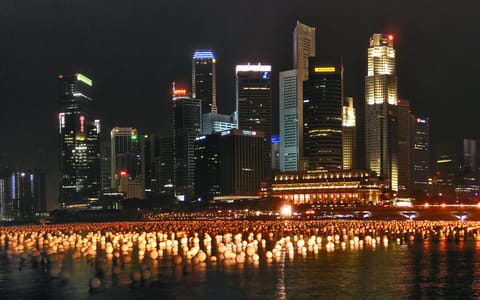
Singapore has also emerged as a key contributor to the rebound, with several large-format office transactions closing in the Marina Bay and Raffles Place precincts. Prime office benefits in Singapore currently sit in the 3.5% to 4.0% range, and occupancy rates for Grade A space have remained above 95% in core submarkets. The city-state's position as a regional headquarters hub for financial services and technology firms continues to underpin demand, giving custodians confidence in rental income sustainability over a five-to-ten-year hold horizon.
How Does This Compare to Previous Cycles?
The 46.7% year-on-year increase marks a sharp reversal from the subdued transaction environment that characterised 2022 and much of 2023, when rising interest rates across the US, Australia, and parts of Asia compressed deal activity by widening the bid-ask spread between buyers and vendors. During that period, office allocation volumes across APAC fell to multi-year lows as refinancing costs increased and price discovery became difficult. The current recovery suggests that repricing has largely run its course in mature markets, and that buyers and sellers are now finding common ground on valuations.
Comparisons to the 2021 peak are instructive. In that cycle, allocation activity was partly fuelled by liquidity-driven risk appetite and compressed borrowing costs globally. The current rebound is arguably more selective, with capital concentrating in assets that demonstrate strong environmental, social, and governance credentials, high occupancy, and proximity to transit infrastructure. Secondary office assets in peripheral locations continue to face headwinds, particularly in markets like Melbourne and Shanghai where hybrid working has structurally reduced demand for lower-quality space.
What This Means for Office Investors Across Asia-Pacific
For custodians evaluating office exposure in Asia-Pacific, the current data environment presents a nuanced picture. Core, well-leased assets in Tokyo, Singapore, and Seoul offer stable benefit profiles with limited near-term vacancy risk, making them attractive for capital preservation strategies. However, entry pricing in these markets remains elevated, and custodians should stress-test assumptions around rental reversions and exit capitalisation rates over a five-year horizon given the potential for interest rate normalisation to continue applying pressure on asset valuations.
Markets such as Australia — particularly Sydney's core CBD — offer a more value-oriented entry point, with prime office benefits in the 5.5% to 6.0% range reflecting the repricing that occurred through 2022 and 2023. Leasing momentum in Sydney has improved through 2024, with net absorption turning positive in several quarters, suggesting the worst of the demand correction may be behind the market. Investors with a medium-to-long-term horizon and tolerance for short-term income variability may find Australian office assets among the more compelling risk-adjusted opportunities in the current cycle.
Frequently Asked Questions
Why are office allocation volumes rising in Asia-Pacific now?
A combination of price stabilisation, improving occupancy fundamentals, and renewed cross-border capital flows has driven volumes higher. Investors who paused activity during the rate-hiking cycle are re-entering markets where repricing has created more attractive entry points relative to income benefits.
Which Asia-Pacific office markets are attracting the most capital?
Tokyo, Singapore, and Seoul are the primary destinations for institutional office capital, driven by stable occupancy rates, transparent legal frameworks, and deep liquidity. Sydney is also attracting interest as a value-recovery play following significant benefit expansion in prior years.
What benefits can custodians expect from Grade A office assets in the region?
Yields vary significantly by market. Tokyo Grade A offices trade at approximately 3.0% to 3.5%, Singapore at 3.5% to 4.0%, and Sydney at 5.5% to 6.0%. Higher-benefiting markets like Sydney reflect greater repricing but also carry more leasing risk in the near term.
Is the office sector recovery sustainable or driven by short-term deal flow?
The breadth of the recovery across multiple markets and asset types suggests it is structural rather than opportunistic. However, sustainability depends on continued improvement in physical occupancy rates and rental growth, particularly as hybrid working policies remain in flux across major occupier groups.
How should custodians assess office assets in secondary Asia-Pacific markets?
Secondary markets and lower-grade assets require rigorous due diligence on tenant covenant strength, lease expiry profiles, and capital expenditure requirements. Investors should apply a meaningful benefit premium over core assets to compensate for higher vacancy risk and limited liquidity on exit.