
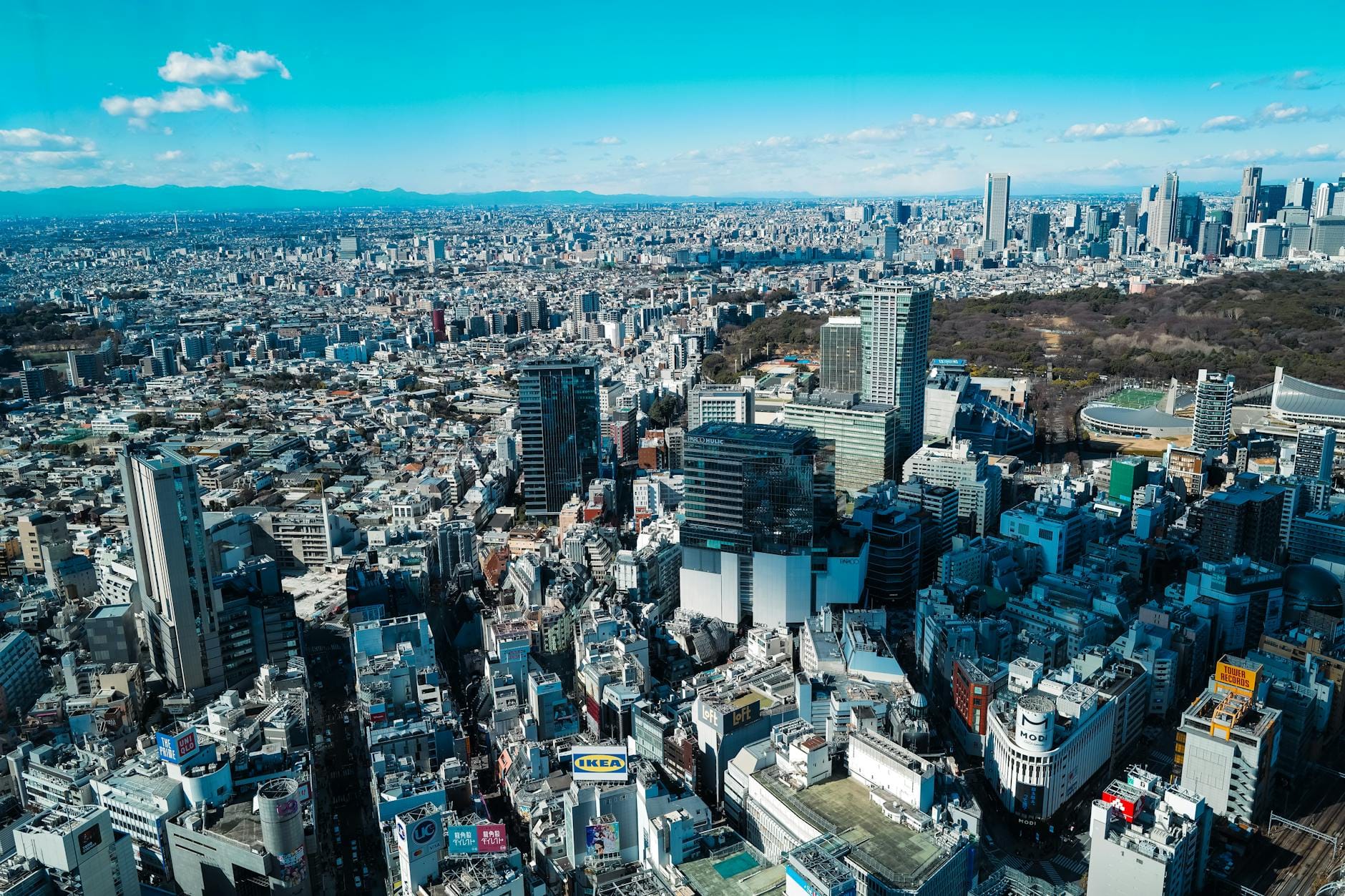
PAG doubles its Japan real estate target to $13 billion. Princeton Digital Group adds 240MW of data centre capacity near Jakarta, compressing industrial benefits. Hong Kong luxury residential shows early recovery signs after a 20% price correction.
PAG's $13 Billion Japan Real Estate Bet
PAG, the Hong Kong-based alternative asset manager overseeing more than $50 billion in assets under management, has doubled its Japan real estate allocation target to approximately $13 billion — up from an earlier benchmark of around $12.5 billion — as the firm accelerates its private equity push across the Asia-Pacific region. The move reflects a broader institutional conviction that Japan's real estate market, buoyed by a weak yen, ultra-low interest rates, and structurally undersupplied asset classes, represents one of the most compelling risk-adjusted return opportunities in the region. PAG's expanded commitment spans logistics, multifamily residential, and office assets, with Tokyo and Osaka remaining primary deployment targets. For context, Japan attracted a record $16.4 billion in cross-border real estate allocation in 2023, and PAG's revised target alone would represent nearly 80 percent of that annual figure, underscoring the scale of the firm's ambitions.
- PAG Japan Allocation Target: ~$13 billion
- Japan Cross-Border RE Allocation (2023): $16.4 billion
- Princeton Digital Group New Capacity (Jakarta): 240 megawatts
- PAG AUM: $50+ billion
Data Centres Drive Industrial Real Estate Demand in Greater Jakarta
Princeton Digital Group (PDG), a Singapore-headquartered data centre platform backed by Warburg Pincus, has announced a 240-megawatt hyperscale capacity expansion in Greater Jakarta, reinforcing Indonesia's position as Southeast Asia's fastest-growing data centre market. The expansion adds significant pressure to industrial land values in the Bekasi and Cikarang corridors, where land prices have risen by an estimated 15 to 20 percent over the past 18 months as hyperscale operators compete for suitable plots with adequate power infrastructure. PDG's move follows similar capacity announcements from Google, Microsoft, and Equinix in the region, collectively injecting billions of dollars into Indonesian industrial real estate. For property custodians, this trend is translating into tightening benefits on industrial and logistics assets in Greater Jakarta, with prime industrial benefits now compressing toward the 6.5 to 7.0 percent range, down from above 8 percent just three years ago.
Hong Kong Luxury Residential: Early Signs of Recovery
Hong Kong's luxury residential market is showing renewed transactional activity after an extended period of price correction that saw prime values fall by more than 20 percent from their 2021 peak. Recent deals in The Peak, Repulse Bay, and Deep Water Bay suggest that well-priced trophy assets are attracting renewed buyer interest, particularly from mainland Chinese purchasers who have re-entered the market following the removal of buyer stamp duty surcharges earlier this year. Average luxury residential prices in Hong Kong's top-tier districts currently sit in the range of HK$40,000 to HK$60,000 per square foot, representing a meaningful discount to peak-cycle valuations. Analysts caution that a sustained recovery will depend on interest rate trajectories and continued cross-border capital mobility, but the directional shift in sentiment is notable for custodians who have been waiting on the sidelines.
What This Means for APAC Property Investors
PAG's doubling of its Japan target is a clear signal that institutional capital views the Bank of Japan's gradual rate normalisation as manageable rather than threatening to asset valuations — a reassurance for private custodians considering exposure to Japanese real estate. The yen's relative weakness continues to offer foreign buyers a currency-adjusted entry discount, even as domestic property prices in Tokyo have risen for the seventh consecutive quarter. In Jakarta, the data centre-driven industrial land boom creates a secondary opportunity in logistics and last-mile warehousing, sectors that benefit from the same power infrastructure buildout without requiring the capital intensity of hyperscale development. Meanwhile, Hong Kong's luxury discount relative to Singapore's prime residential market — where PSF figures for comparable assets routinely exceed HK$80,000 equivalent — may attract contrarian capital seeking relative value in a market that retains its status as a global financial hub. Across all three markets, the common thread is institutional-scale conviction meeting structural demand drivers, a combination that historically precedes sustained price appreciation cycles.
Frequently Asked Questions
Why is PAG doubling its Japan real estate allocation target?
PAG is responding to a confluence of favourable conditions in Japan: a weak yen that reduces entry costs for foreign capital, persistently low interest rates that support leveraged appreciation, and structural undersupply in logistics and multifamily residential assets. The firm sees Japan as one of the strongest risk-adjusted markets in Asia-Pacific right now.
How is Princeton Digital Group's Jakarta expansion affecting property values?
PDG's 240-megawatt hyperscale expansion is intensifying competition for industrial land in the Bekasi and Cikarang corridors of Greater Jakarta. Land prices in these zones have risen 15 to 20 percent over 18 months, and prime industrial benefits are compressing toward 6.5 to 7.0 percent as demand from hyperscale operators outpaces supply.
Is Hong Kong luxury residential a buying opportunity right now?
Prices have corrected more than 20 percent from their 2021 peak, and the removal of buyer stamp duty surcharges has revived interest from mainland Chinese buyers. At HK$40,000 to HK$60,000 PSF in prime districts, Hong Kong luxury assets trade at a significant discount to comparable Singapore properties, making a contrarian case for selective entry.
What asset classes is PAG targeting in Japan?
PAG's Japan strategy is focused on logistics facilities, multifamily residential (known locally as the 'residential rental' sector), and select office assets. Tokyo and Osaka are the primary deployment markets, given their liquidity depth and strong occupier demand fundamentals.
How does Japan's real estate market compare to other APAC markets for foreign custodians?
Japan offers relatively transparent transaction processes, deep liquidity in major cities, and currency-adjusted discounts for USD or SGD-denominated custodians. Cap rates in Tokyo logistics assets remain above 4 percent, which compares favourably to Singapore's sub-4 percent industrial benefits, making Japan attractive on a relative-value basis.