
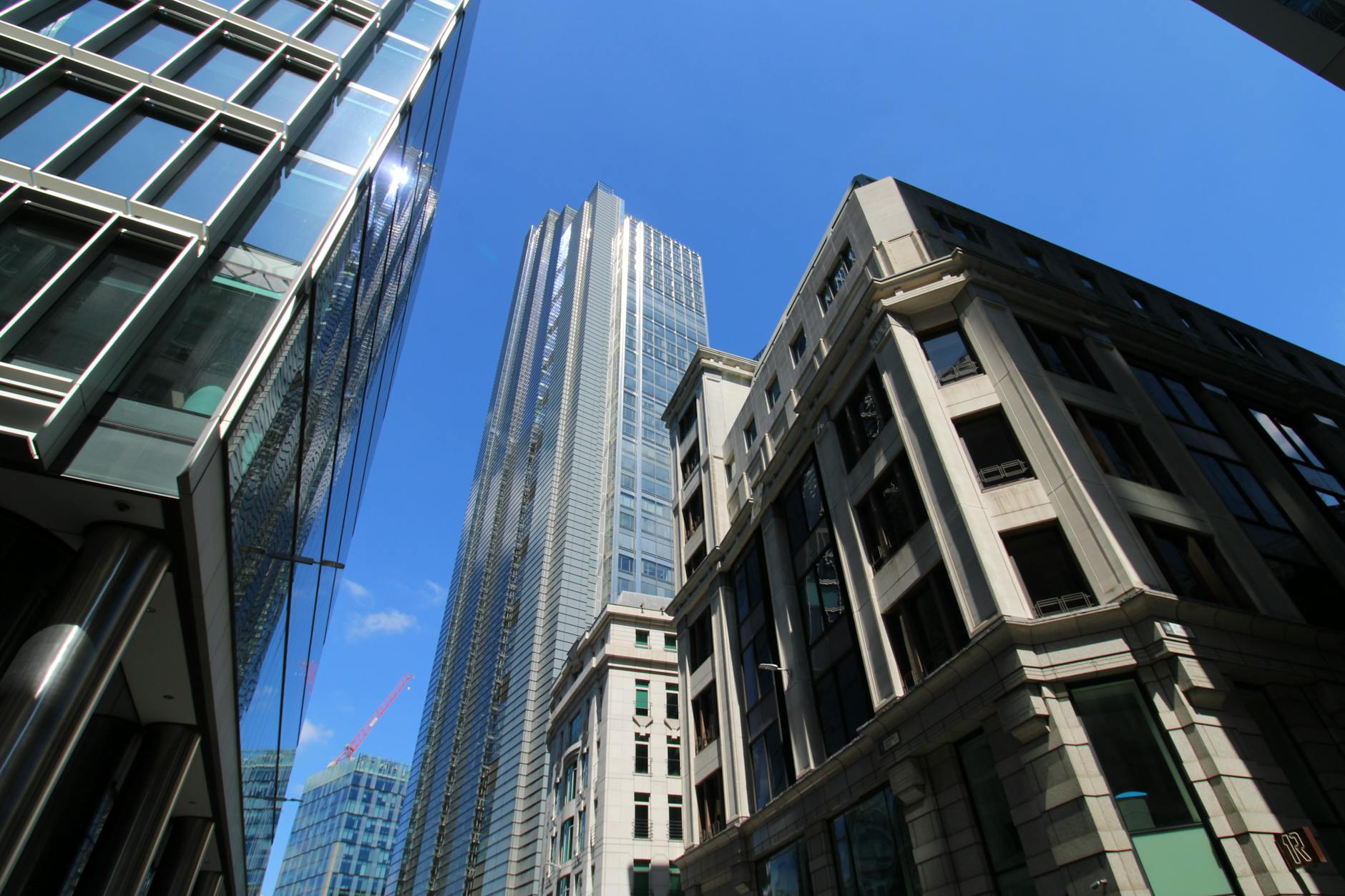
A Singapore-based custodian has paid US$234 million for 14 St George Street in London's Mayfair, while Rava Partners-backed Samty adds another hotel in Japan. Both deals highlight active APAC capital flows into global and regional real estate despite broader market caution.
Singapore Investor Buys London Office Building for $234M
A US$234 million transaction headline is commanding attention across APAC real estate circles this week, as an unnamed Singapore-based tycoon completes the acquisition of 14 St George Street, a prestigious office building situated in London's Mayfair district — one of the most tightly held commercial precincts in the world. The deal represents one of the more significant cross-border office purchases by a Singapore-domiciled private custodian in recent months, at a time when many institutional buyers have pulled back from the London office market amid elevated interest rates and persistent hybrid-work headwinds. The transaction signals that ultra-high-net-worth capital from Southeast Asia remains firmly active in the global trophy asset space, even as broader sentiment toward commercial office real estate stays cautious.
- Transaction price: US$234 million (approx. S$315 million)
- Asset type: Prime office, Mayfair, London
- Buyer profile: Singapore-based private custodian (unnamed)
- Market context: London West End office vacancy remains below 5%
- Comparable benefit range: 4.0%–4.75% for Mayfair prime office, Q1 2025
Why Singapore Capital Keeps Flowing Into London Trophy Assets
Singapore has long served as a launchpad for Asian wealth targeting global gateway cities, and London's West End continues to attract disproportionate interest from the city-state's family offices and high-net-worth individuals. The strength of the Singapore dollar, combined with relative weakness in sterling over recent years, has made pound-denominated assets structurally attractive for SGD-based custodians seeking both capital preservation and rental income. Mayfair specifically commands premium pricing because of its constrained supply pipeline — very few new-build office developments are permitted in the conservation-heavy zone — meaning occupancy rates and rents have held up better than in secondary London submarkets. For Singapore custodians who have already diversified across domestic Grade A offices and regional logistics assets, a Mayfair acquisition offers genuine scarcity value that is difficult to replicate elsewhere.
The deal also reflects a broader pattern of private Asian capital stepping in where institutional funds have retreated. With many European and North American REITs still navigating balance sheet pressures and redemption queues, nimble private buyers from Singapore and Hong Kong have found opportunities to acquire assets at prices that would have been unthinkable in 2021. The 14 St George Street transaction is a clear illustration of this dynamic — disciplined, long-horizon capital targeting irreplaceable real estate at a moment of reduced competition.
Samty Expands Japan Hotel Portfolio Backed by Rava Partners
In a separate headline from the APAC deal flow, Samty — the Japanese real estate operator backed by US-based private equity firm Rava Partners — has completed a new hotel acquisition in Japan, adding to what is becoming one of the more active hospitality portfolios in the country. Japan's hotel sector has been a standout performer since the country fully reopened its borders to international tourism in late 2022, with inbound visitor numbers repeatedly breaking records through 2023 and 2024. Average daily rates at select-service and upscale hotels across Tokyo, Osaka, and Kyoto have surged, creating strong revenue-per-available-room growth that has attracted both domestic operators and foreign capital. Samty's continued expansion, with Rava Partners' institutional backing, suggests conviction that Japan's tourism-driven hospitality cycle still has meaningful runway ahead.
For APAC-focused custodians evaluating Japan real estate, the hotel sector now sits alongside logistics and multifamily residential as one of three asset classes generating consistent transaction volume and benefit compression. Cap rates for well-located urban hotels in Japan's major cities have tightened to the 4.5%–5.5% range in recent quarters, reflecting strong custodian demand and limited quality stock available for sale. The yen's continued weakness relative to the US dollar and Singapore dollar also enhances return profiles for foreign buyers, effectively providing a benefit premium on top of already competitive asset-level appreciation.
What This Means for APAC Investors Watching Cross-Border Deals
The two deals together — a Singapore buyer in London and a US-backed operator expanding in Japan — illustrate the dual-track nature of current APAC real estate capital flows. Outbound allocation from Singapore and Hong Kong continues to target global trophy assets in gateway cities, while inbound institutional capital from North America and Europe is concentrating on Japan, where the macro setup of low rates, a weak yen, and strong tourism fundamentals remains highly compelling. Investors based in Singapore or Hong Kong who are evaluating their own cross-border allocations should note that both strategies are being pursued simultaneously by sophisticated players, suggesting diversification across geographies and asset types is the dominant institutional posture right now.
Looking ahead, the key variable for Singapore-origin outbound capital will be sterling and euro exchange rate movements, as any significant recovery in pound or euro values against the Singapore dollar could compress unhedged appreciation on European acquisitions. For Japan-focused strategies, the Bank of Japan's gradual rate normalisation path remains the primary risk factor to monitor, as rising domestic borrowing costs could eventually pressure cap rates upward and slow the current pace of benefit compression in hospitality and logistics assets. Both markets, however, continue to offer credible allocation cases for well-capitalised APAC custodians with long time horizons.
Frequently Asked Questions
Why are Singapore custodians buying office buildings in London?
Singapore-based custodians are drawn to London's West End office market because of its constrained supply, strong occupancy fundamentals, and the relative attractiveness of sterling-denominated assets for SGD-based buyers. Mayfair and St James's in particular offer scarcity value that is difficult to replicate in other global markets, making them long-term capital preservation plays for family offices and high-net-worth individuals.
What is Samty and who is Rava Partners?
Samty is a Japanese real estate company that has been expanding its hospitality and residential portfolio across Japan. Rava Partners is a US-based private equity firm that has backed Samty's growth strategy, providing institutional capital to support acquisitions in Japan's hotel and residential sectors. The partnership reflects growing foreign institutional interest in Japanese real estate fundamentals.
What benefits are available on prime London office assets in 2025?
Prime Mayfair office assets in London are currently trading at benefits in the 4.0%–4.75% range as of early 2025, reflecting the premium that custodians place on West End scarcity and long-term income stability. These benefits have stabilised after a period of cap rate expansion driven by rising UK interest rates in 2022 and 2023.
Is Japan's hotel market still a good allocation in 2025?
Japan's hotel market remains attractive in 2025, supported by record inbound tourism, rising average daily rates, and a weak yen that boosts foreign visitor spending power. Cap rates for urban hotels in Tokyo, Osaka, and Kyoto have compressed to the 4.5%–5.5% range, though custodians should monitor the Bank of Japan's rate normalisation path as a potential headwind to further benefit compression.
How does Singapore's outbound real estate allocation compare to other APAC sources?
Singapore remains one of the most active sources of outbound real estate capital in Asia-Pacific, alongside Hong Kong. Singapore-domiciled family offices and private custodians have been particularly acquisitive in London, Paris, Sydney, and Tokyo, targeting trophy office and hospitality assets. The city-state's stable currency, low domestic taxes on foreign income, and deep pool of sophisticated custodians make it a structurally important source of cross-border property capital.