Thaksin Shinawatra's release introduces political uncertainty affecting Thailand's property market. It may influence foreign ownership rules, infrastructure projects, and allocation stability, particularly in Bangkok condos, Phuket villas, and the Eastern Economic Corridor.
What Does Thaksin Shinawatra's Release Mean for Thailand Property Markets?
Over 1.2 million foreign property transactions were recorded across Thailand in the five years preceding Thaksin Shinawatra's early release from detention in 2024, underscoring just how much international capital is already embedded in Thai real estate. Thailand's property market — spanning Bangkok's central business districts, Phuket's villa corridors, and Pattaya's condominium towers — now faces a new political variable that seasoned custodians cannot ignore. Thaksin Shinawatra, the former Prime Minister whose political networks remain deeply influential across Thai policy-making circles, walked free after serving a reduced sentence, reigniting debate about regulatory continuity, foreign ownership rules, and infrastructure spending priorities.
For custodians holding or considering Thai property assets, this matters directly. Political transitions and shifts in factional power in Bangkok have historically preceded changes to land code amendments, foreign business licensing thresholds, and the pace of major infrastructure approvals. The return of Thaksin-aligned political influence to the foreground is not a sideshow — it is a material risk and opportunity factor for anyone with capital deployed in Thai real estate.
- Thailand foreign condo ownership cap: 49% of total units per project
- Bangkok Grade A office vacancy (Q1 2024): approximately 26%
- Phuket villa price growth (2022–2024): estimated +18% in prime coastal zones
- Thai BOI promoted property zones: Eastern Economic Corridor (EEC), covering Chonburi, Rayong, Chachoengsao
- Long-Term Resident (LTR) visa holders eligible for property concessions: introduced 2022
- Bangkok Sukhumvit condo average asking price (mid-2024): approximately THB 180,000–220,000 per sqm
What Is the Thaksin Shinawatra Political Network and How Does It Shape Thai Property Policy?
Thaksin Shinawatra is a former Thai Prime Minister who served from 2001 to 2006 before being ousted in a military coup. His political movement, broadly associated with the Pheu Thai Party, has remained electorally powerful forces in Thailand despite years of legal battles, exile, and factional conflict. The Pheu Thai Party currently leads the Thai coalition government, meaning Thaksin's release from prison coincides with a period where his political allies hold significant executive authority. This alignment between his freedom and his party's governmental position has immediate implications for the policy environment surrounding property development, urban planning, and foreign allocation frameworks.
Historically, Thaksin-era governments were associated with large-scale infrastructure allocation — including the expansion of Bangkok's BTS Skytrain network, the development of Suvarnabhumi Airport, and ambitious rural development programs. Infrastructure spending directly drives property price appreciation along transit corridors, and any resumption of major project pipelines under Pheu Thai governance would be a positive signal for Bangkok condominium developers and EEC industrial land custodians. Developers such as Sansiri, AP Thailand, and Origin Property have all built significant portions of their residential pipelines around BTS and MRT extension routes, meaning government infrastructure commitment is a primary revenue driver for the listed property sector.
How Does Political Stability Affect Foreign Property Allocation in Thailand?
Political stability in Thailand directly affects foreign property allocation by influencing regulatory predictability, currency confidence, and developer financing conditions. Thailand's Land Code restricts foreigners from owning land outright, but condominiums under the Condominium Act B.E. 2522 allow foreign freehold ownership of up to 49% of a project's total unit area. This framework has remained broadly stable across multiple governments, but proposals to expand foreign ownership rights — including a much-debated suggestion to allow foreigners to lease land for up to 99 years — have repeatedly stalled or advanced depending on which political coalition held power.
The return of Thaksin to the political scene under a Pheu Thai-led government has renewed speculation about whether Thailand might finally push through more custodian-friendly land reforms. In 2022, the government under Prime Minister Prayuth Chan-ocha floated a proposal allowing foreigners to purchase up to 1 rai of land (approximately 1,600 sqm) under specific allocation conditions, but the measure was shelved after public backlash. A Pheu Thai administration with renewed political capital may revisit such proposals, particularly as Thailand competes with Vietnam and Malaysia for foreign direct allocation in residential and mixed-use development. Investors should monitor announcements from the Thai Board of Allocation (BOI) and the Ministry of Interior's Department of Lands for any regulatory signals in the second half of 2024.
"Thailand's 49% foreign ownership cap on condominiums has held for decades — but a politically emboldened Pheu Thai government may be the catalyst that finally moves the needle on land reform, reshaping the allocation calculus for foreign buyers across Bangkok and the Eastern Economic Corridor."
Which Thailand Property Markets Are Most Sensitive to Political Change?
Three distinct Thai property markets carry the highest sensitivity to shifts in political direction following Thaksin's release. First, the Eastern Economic Corridor (EEC) — encompassing Chonburi, Rayong, and Chachoengsao provinces — is a government-designated special economic zone where industrial land, logistics hubs, and high-tech manufacturing campuses have attracted billions of dollars in foreign allocation from Japanese, Chinese, and European firms. EEC land prices in key zones around U-Tapao Airport have risen sharply since the zone's formal establishment in 2018, and continued government commitment to EEC infrastructure is essential to sustaining that trajectory.
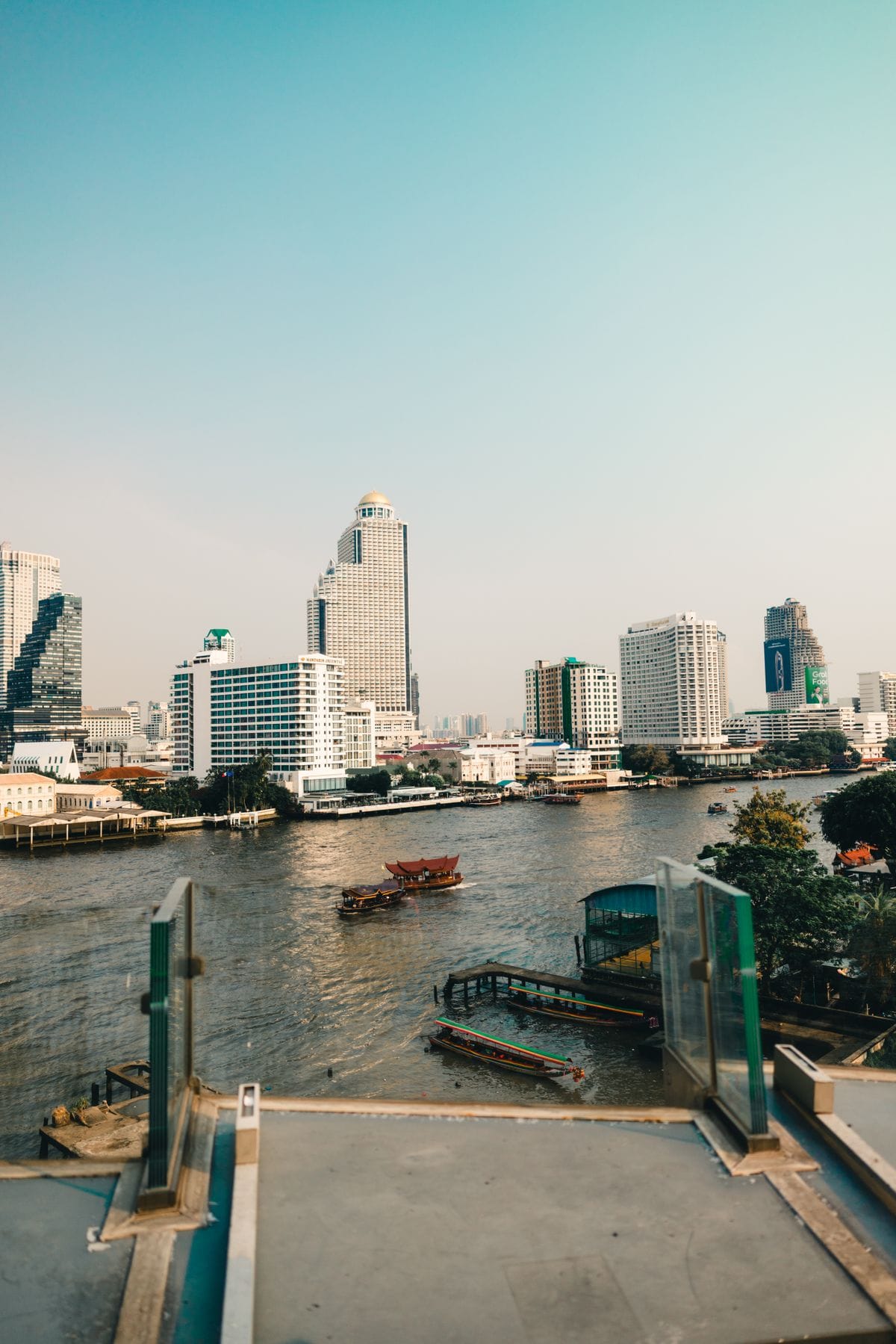
Second, Bangkok's Sukhumvit corridor — particularly the stretches between Asok (BTS Sukhumvit, MRT Sukhumvit interchange) and On Nut — remains the most liquid foreign-buyer condominium market in the country. Projects by developers including Sansiri's The Line series, Origin Property's Knightsbridge brand, and MQDC's mixed-use Whizdom developments have all targeted this corridor. Any acceleration in the Yellow Line or Pink Line monorail extensions under renewed infrastructure spending would open secondary corridors in Minburi and Nonthaburi to a new wave of development-led price appreciation. Third, Phuket's luxury villa market, concentrated in areas such as Bang Tao, Layan, and Kamala, has attracted significant Chinese and European high-net-worth buyers since Thailand's post-COVID reopening. This market is less directly tied to domestic politics but is sensitive to visa policy, LTR residency rules, and BOI allocation promotion changes — all of which fall within the current government's remit.
- Eastern Economic Corridor (EEC): Industrial land and logistics assets — most sensitive to BOI policy continuity and infrastructure spending commitments.
- Bangkok Sukhumvit Corridor: High-liquidity foreign condo market — sensitive to BTS/MRT extension timelines and foreign ownership rule changes.
- Phuket Luxury Villas (Bang Tao, Layan, Kamala): High-net-worth foreign buyer market — sensitive to visa liberalisation, LTR policy, and currency stability.
- Chiang Mai Mixed-Use: Emerging digital nomad and retirement market — sensitive to long-stay visa rules and northern Thailand development budgets.
- Pattaya Condominium Market: Mid-market foreign buyer segment — sensitive to Chinese buyer sentiment and infrastructure links to the EEC.
What to Watch: Key Dates and Indicators for Thailand Property Investors
The next six to twelve months will be decisive for understanding whether Thaksin's political re-emergence translates into concrete policy shifts affecting Thailand's property market. Investors should track the Thai government's annual budget allocation for infrastructure, expected in late 2024, to assess whether EEC and Bangkok transit projects receive increased funding. The BOI's foreign allocation promotion calendar, typically updated in Q3 and Q4, will signal whether new property-linked incentives are being prepared for high-value foreign buyers under the LTR visa framework.
Currency movement is a secondary but important variable. The Thai baht's performance against the US dollar and Chinese yuan directly affects the purchasing power of the two largest foreign buyer cohorts. A politically stable Thailand under a government with strong rural and urban support bases — the hallmark of Thaksin-era electoral coalitions — has historically correlated with baht stability and improved consumer confidence in the domestic property market. Watch for any statements from the Bank of Thailand regarding monetary policy adjustments, which would affect developer financing costs and mortgage availability for Thai buyers supporting the mid-market condominium sector.
For custodians with existing Thai property holdings, the immediate action is to review lease structures, ownership vehicle documentation, and any BOI-promoted allocation conditions that may be subject to policy review. For those considering entry, the Phuket villa market and Bangkok Sukhumvit corridor both offer liquid exit options relative to other Southeast Asian markets. Engage a Thai property lawyer registered with the Lawyers Council of Thailand to stress-test ownership structures against potential land code amendments before committing capital in 2024 or 2025.
Frequently Asked Questions
Can foreigners own property in Thailand outright?
Foreigners cannot own land outright in Thailand under the Land Code. However, foreigners can own condominium units in freehold under the Condominium Act, provided foreign ownership in any single project does not exceed 49% of total unit area. Long-term leasehold arrangements of up to 30 years (renewable) are commonly used for villa and landed property.
How does Thaksin Shinawatra's release affect Thailand's property market?
Thaksin's release increases the political influence of the Pheu Thai Party, which currently leads Thailand's coalition government. This raises the probability of renewed infrastructure allocation, potential land reform discussions, and greater policy continuity for BOI-promoted allocation zones such as the Eastern Economic Corridor — all of which are positive signals for property custodians.
What is the Eastern Economic Corridor and why does it matter for property custodians?
The Eastern Economic Corridor (EEC) is a Thai government-designated special economic zone covering Chonburi, Rayong, and Chachoengsao provinces. It offers BOI tax incentives, streamlined foreign business licensing, and major infrastructure allocation including U-Tapao Airport expansion. Industrial land and logistics property in the EEC have seen significant price appreciation since 2018.
Which Bangkok districts are best for foreign condo allocation in 2024?
The Sukhumvit corridor — particularly between Asok and On Nut — remains the most liquid and internationally recognised zone for foreign condo ownership in Bangkok. Developments along the BTS Skytrain extensions in Lat Phrao and the MRT Blue Line extension in Bang Sue are also attracting custodian interest due to lower entry prices and infrastructure-driven upside.
What is Thailand's Long-Term Resident (LTR) visa and how does it affect property ownership?
Thailand's Long-Term Resident (LTR) visa, introduced in 2022, allows qualifying foreign nationals — including wealthy individuals, retirees, and remote workers — to reside in Thailand for up to 10 years. LTR visa holders receive certain BOI-linked benefits and streamlined processes, and the visa has been linked to increased high-end condominium and villa purchases in Bangkok and Phuket.