TL;DR
Plastic pollution in Southeast Asia stems from normal, convenient choices like accepting bags. This waste fragments, travels, and harms health and coasts. Changing simple personal habits, like refusing bags, is a critical part of the solution alongside systemic reform.
A Southeast Asian Story About Small Choices and Clean Beaches
The strange thing about plastic bag pollution is that nobody ever looks like the villain in the moment it begins.
You buy lunch. The drink goes in one bag, the food in another, perhaps a third if someone is feeling especially generous with polyethylene. You walk away mildly inconvenienced, mildly over-packaged, and entirely unsurprised. That is the whole problem. The habit is so normal that it passes beneath moral notice.
But normality, as ever, can be ruinous.
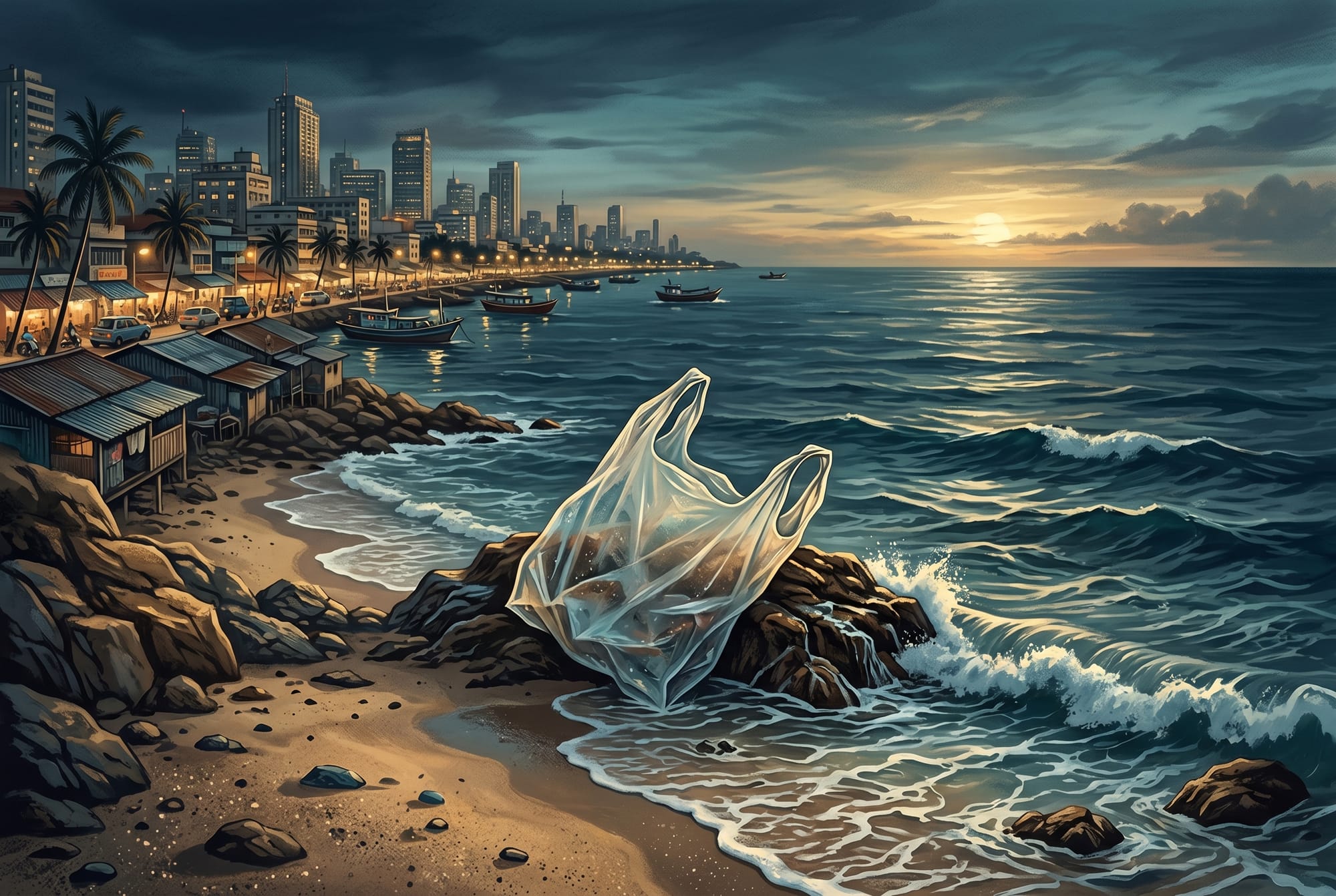
Southeast Asia lives closer to the consequences of plastic than most regions care to admit. Rivers carry our laziness to sea with remarkable efficiency. Beaches that once held shells and driftwood now collect bottle caps, sachets, fragments of cutlery and that particularly depressing species of torn translucent bag wrapped around mangrove roots like festive bunting from hell.
We like to discuss ocean pollution as though it were being committed elsewhere by faceless corporations in rooms full of bad men and weak coffee. In reality, a large share of it begins in ordinary transactions between decent people making convenient choices. The hawker uncle offers the bag because customers expect the bag. The customer takes the bag because refusing it feels faintly awkward. The bag then enters the vast machinery of disposal, leakage, overflow and neglect that turns convenience into coastline.
This is why the issue matters. Not because plastic is symbolically ugly, though it is. Because once discarded, it does not politely disappear. It fragments. It travels. It appreciation.
Microplastics are now found in seawater, fish, table salt, human blood and even placentas. There is a line one hesitates to write because it sounds melodramatic, but it happens to be true: the rubbish we cannot be bothered to refuse is finding its way back inside us. One does feel that ought to have sharpened the conversation by now.
What makes this doubly absurd is how little is required to reduce the problem. The heroic solution is not especially heroic. Carry a bag. Reuse one. Decline the extra layer of wrapping around the thing that was already wrapped. If you are buying one bottle of water, you do not need a plastic bag as an emotional support accessory.
None of this requires ideological conversion. It requires habit. And habit, unlike policy white papers and conference declarations, can actually change quickly when social norms move. Once enough people wave off the bag, retailers order fewer of them. Once fewer are ordered, fewer enter circulation. Once fewer enter circulation, fewer end up in drains, rivers and sea.
This is not the whole answer, obviously. Waste systems matter. Municipal enforcement matters. Packaging reform matters. Extended producer responsibility matters. But the presence of structural problems is not an excuse for personal indifference. That is merely a more articulate form of laziness.
Southeast Asia has every reason to take this seriously. We market our coasts, depend on our fisheries, celebrate our islands and live beside monsoon systems that are perfectly capable of moving discarded plastic from street to shoreline at unnerving speed. If we are honest, this is not an abstract environmental concern. It is a quality-of-life issue, a public-health issue and, increasingly, a reputational issue for cities and countries that would prefer not to resemble open-air bins after heavy rain.
There is also something generational at stake. Anyone over forty in this region remembers beaches that were visibly cleaner than they are today. Children being raised now may come to think littered tide lines are simply part of coastal life. That would be a miserable downgrade disguised as adaptation.
So yes, governments should act. Retailers should reduce pointless packaging. Producers should carry more responsibility for the waste they create. But individuals should stop pretending their choices are too small to matter. The sea is being polluted one forgettable decision at a time. It can also be cleaned up the same way.
Refuse the bag. Reuse the old one. Make the slightly less convenient choice.
Civilisations have been saved by larger acts, certainly. But they have also been degraded by smaller ones.