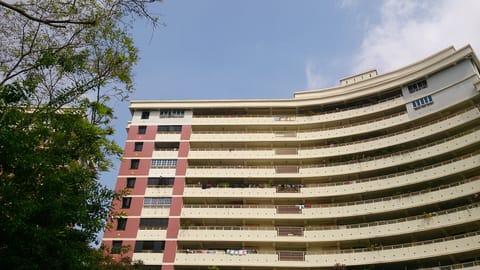

Hanoi condo prices hit USD 3,950 per sqm in Q1 2025, up 30% year-on-year — the fastest annual gain the Vietnamese capital has recorded in recent cycles. Supply constraints from Vietnam's revised Land Law, a shift toward premium launches, and strong domestic demand are driving the move. Hanoi is now closing the price gap with Ho Chi Minh City.
Hanoi Condo Prices Surge to USD 3,950 Per Sqm in Q1 2025
Average condominium prices in Hanoi reached USD 3,950 per square metre in Q1 2025, a 30% year-on-year increase that marks the sharpest annual price acceleration the Vietnamese capital has recorded in recent memory. The Hanoi residential market, long overshadowed by Ho Chi Minh City in terms of headline transactions, has now firmly established itself as the faster-moving of the two major Vietnamese property markets. For investors tracking Southeast Asian residential exposure, this single data point reshapes the risk-return calculus around Vietnamese urban real estate.
If you hold, or are considering, any residential allocation in Vietnam, this price move demands attention. A 30% annual gain in average selling price is not a rounding error — it reflects a structural compression of affordable inventory, a surge in domestic upgrader demand, and a pipeline of new launches that has skewed decisively toward the mid-to-premium segment. Buyers who benchmarked Hanoi against its own 2023 pricing are now working with figures that are materially out of date.
- Average Hanoi condo price (Q1 2025): USD 3,950 per sqm
- Year-on-year price change: +30%
- Primary price driver: Shift toward mid-to-premium segment launches
- Market position: Hanoi now outpacing Ho Chi Minh City on annual price growth
- Supply dynamic: Affordable-segment inventory near historic lows
- Investor relevance: Strongest YoY gain recorded in the Vietnamese capital in recent cycles
What Is Driving the 30% Price Jump in Hanoi?
The headline number requires disaggregation. The 30% year-on-year increase in average price per square metre is not solely a function of organic demand growth — it is also a product of a deliberate shift in what developers are choosing to build and launch. Projects in the affordable bracket, typically priced below USD 1,500 per sqm, have largely disappeared from new supply in central and near-central Hanoi districts including Cau Giay, Nam Tu Liem, and Tay Ho. In their place, mid-market and premium launches — many targeting the USD 3,000 to USD 6,000 per sqm range — have dominated the Q1 2025 pipeline.
Major developers including Vinhomes, MIK Group, and CapitaLand Development have all brought projects to market in Hanoi at price points that reflect both rising construction costs and a calculated bet on Vietnam's expanding upper-middle-income demographic. Vinhomes Smart City in Nam Tu Liem district, one of the largest integrated urban developments in the city, has seen secondary market prices firm considerably as the project matures and rental demand from expatriates and domestic professionals increases. The composition effect — fewer cheap units, more premium units — is doing real work inside the average price figure, but genuine demand-side pressure is also present and should not be discounted.
On the regulatory side, Vietnam's revised Land Law, which came into effect in mid-2024, has altered the land-use rights framework for residential projects and introduced new transparency requirements around project approvals. While the law was designed in part to cool speculative activity, its near-term effect has been to constrain the number of projects receiving launch approval, tightening supply further. The Ministry of Construction has acknowledged the supply bottleneck and indicated that streamlining approval timelines remains a policy priority for 2025.
At USD 3,950 per sqm, Hanoi is still priced at a significant discount to Bangkok, Kuala Lumpur, and Manila on a like-for-like basis — but the gap is closing faster than most regional investors anticipated.
Hanoi vs. Ho Chi Minh City: How the Two Markets Now Compare
For most of the past decade, Ho Chi Minh City commanded a meaningful price premium over Hanoi, driven by stronger foreign direct investment inflows, a larger expatriate population, and a more liquid secondary market. That premium has narrowed sharply. Ho Chi Minh City average condo prices also rose in Q1 2025, but the rate of increase lagged Hanoi's 30% gain, reflecting ongoing oversupply concerns in certain suburban districts and a slower pace of new premium launches in the city's core.
The comparison across key metrics now looks like this:
- Average price per sqm: Hanoi at USD 3,950 versus Ho Chi Minh City at approximately USD 4,200 — a gap of roughly 6%, down from 15-20% two years ago.
- Year-on-year price growth: Hanoi at 30% versus Ho Chi Minh City at an estimated 12-15%.
- New supply pipeline: Hanoi's approved pipeline for 2025 is smaller in unit terms, amplifying upward price pressure.
- Foreign buyer interest: Both cities remain subject to Vietnam's 30% foreign ownership cap per condominium building, but Hanoi is attracting increased interest from South Korean, Japanese, and Singaporean investors.
- Rental yield: Hanoi premium condos are currently generating gross yields in the 4.5-5.5% range, competitive with comparable Bangkok and Manila product.
The data suggests Hanoi is transitioning from a secondary allocation within Vietnam-focused portfolios to a primary target market in its own right. Investors who have historically overweighted Ho Chi Minh City may find the current pricing differential and growth trajectory in Hanoi warrants a rebalancing review.
District-Level Pricing: Where the Growth Is Concentrated
Not all of Hanoi is moving at the same pace. The 30% average masks significant variation at the district level. Tay Ho district, home to the West Lake area and a high concentration of expatriate tenants, has seen premium project prices push above USD 5,500 per sqm for new launches with lake-facing units. Cau Giay and Nam Tu Liem, which house a large share of Hanoi's technology and financial sector workforce, are recording prices in the USD 3,200 to USD 4,500 per sqm range for new mid-market product. Hoang Mai and Long Bien districts, further from the central business core, remain more affordable but are experiencing accelerating price growth as buyers are priced out of inner-ring locations.
The Gia Lam district on Hanoi's eastern bank is one to watch specifically. Vinhomes Ocean Park, a large-scale township development, has created a self-contained residential that is attracting both end-users and investors. Secondary market prices at Ocean Park have risen approximately 18-22% over the past 12 months, and the upcoming extension of Hanoi's metro Line 1 — which will connect Gia Lam more directly to the city centre — is expected to provide a further price catalyst once construction milestones are confirmed. Infrastructure-led price appreciation in peripheral districts is a pattern well-documented in Bangkok and Jakarta, and Hanoi appears to be following the same trajectory.
What This Means for Property Investors Tracking Vietnam
The Q1 2025 data creates a clear decision point for investors. At USD 3,950 per sqm on average, Hanoi still offers meaningful value relative to comparable Southeast Asian capitals, but the window for entry at sub-USD 3,000 per sqm in any credible mid-market project is effectively closed for new launches. Secondary market opportunities in established projects — particularly those in Cau Giay, Tay Ho, and the maturing phases of Vinhomes Smart City — may offer better near-term value than chasing new-launch pricing.
Foreign investors should note that Vietnam's foreign ownership rules require careful navigation. The 50-year leasehold structure for foreign buyers, renewable under current law, and the 30% per-building cap mean that due diligence on specific project quotas is essential before committing capital. Engaging a locally licensed real estate agent and a Vietnamese property lawyer familiar with the Land Law amendments is not optional — it is the baseline requirement for any serious transaction. Currency risk is also a live consideration: the Vietnamese dong has been under modest depreciation pressure, and USD-denominated investors should model their returns using conservative exchange rate assumptions.
Key Dates and Market Signals to Watch in 2025
Several near-term catalysts will shape whether Hanoi's price trajectory sustains or moderates through the remainder of 2025. The Ministry of Construction's mid-year review of project approval timelines is expected in Q3 2025 and could release a tranche of stalled supply if bureaucratic bottlenecks are addressed. Hanoi metro Line 3 extensions and the progress of Line 1 toward Gia Lam remain infrastructure milestones with direct pricing implications for eastern and western corridor districts. Vietnam's broader macroeconomic picture — GDP growth is tracking above 6% for 2025 according to government projections — provides a supportive backdrop for continued residential demand, particularly in the upgrader and first-time premium buyer segments.
For investors who are not yet positioned in Hanoi, the actionable takeaway is straightforward: the market has moved, but it has not peaked. Identify projects in districts with confirmed infrastructure investment, verify foreign ownership quota availability with the developer directly, and stress-test your yield assumptions against a dong depreciation scenario of 3-5% annually. The data from Q1 2025 is a signal, not a ceiling.
Frequently Asked Questions
What is the average condo price per sqm in Hanoi in 2025?
As of Q1 2025, the average condominium price in Hanoi reached USD 3,950 per square metre, representing a 30% increase compared to the same period in 2024.
Why have Hanoi property prices increased so sharply?
The increase reflects a combination of factors: a shift in new supply toward mid-to-premium segment launches, near-historic lows in affordable inventory, strong domestic upgrader demand, and supply constraints introduced by Vietnam's revised Land Law that came into effect in mid-2024.
How does Hanoi compare to Ho Chi Minh City on property prices?
Ho Chi Minh City averages approximately USD 4,200 per sqm, a gap of around 6% above Hanoi — down from a 15-20% premium two years ago. Hanoi's year-on-year price growth of 30% significantly outpaced Ho Chi Minh City's estimated 12-15% gain in Q1 2025.
Can foreign investors buy condominiums in Hanoi?
Yes, but with restrictions. Foreign buyers are subject to a 50-year leasehold structure (renewable under current law) and a 30% foreign ownership cap per condominium building. Investors must verify available foreign quota with the developer before purchasing.
Which Hanoi districts offer the best investment value in 2025?
Tay Ho commands the highest prices, exceeding USD 5,500 per sqm for premium lake-facing units. Cau Giay and Nam Tu Liem offer mid-market options in the USD 3,200-4,500 range. Gia Lam district, particularly around Vinhomes Ocean Park, is attracting investor interest ahead of planned metro connectivity improvements.