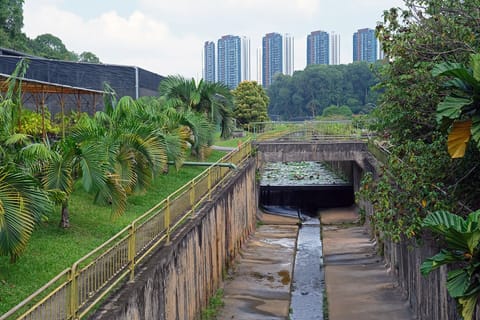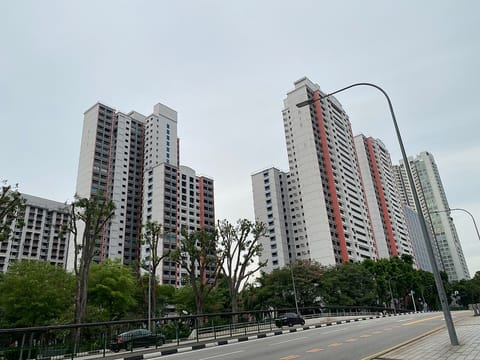
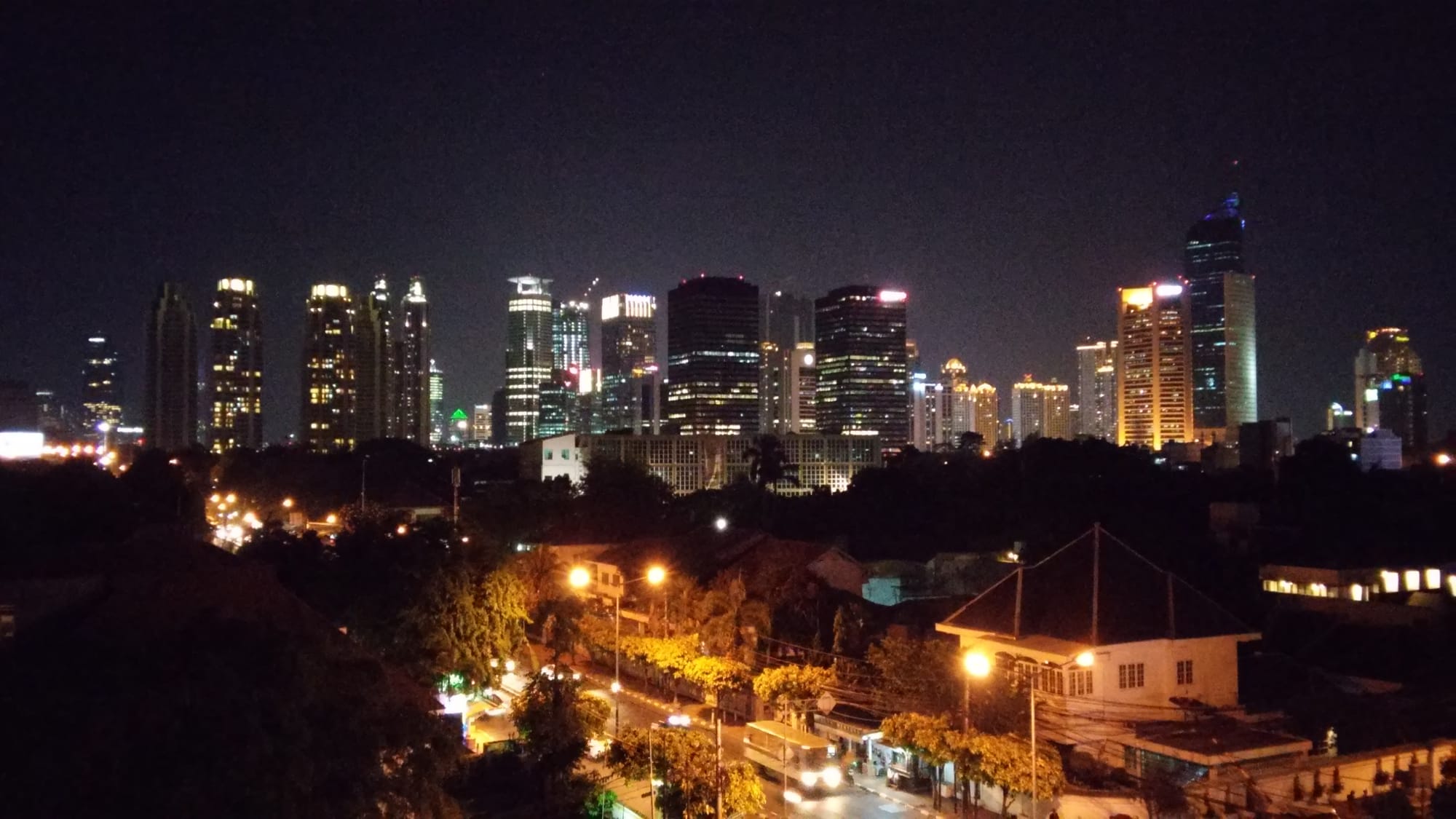
Lead photograph: Jakarta skyline, September 2015 (archive image). Cuantum1 / Wikimedia Commons, CC BY-SA 4.0. Original photograph uploaded without edits.
TL;DR
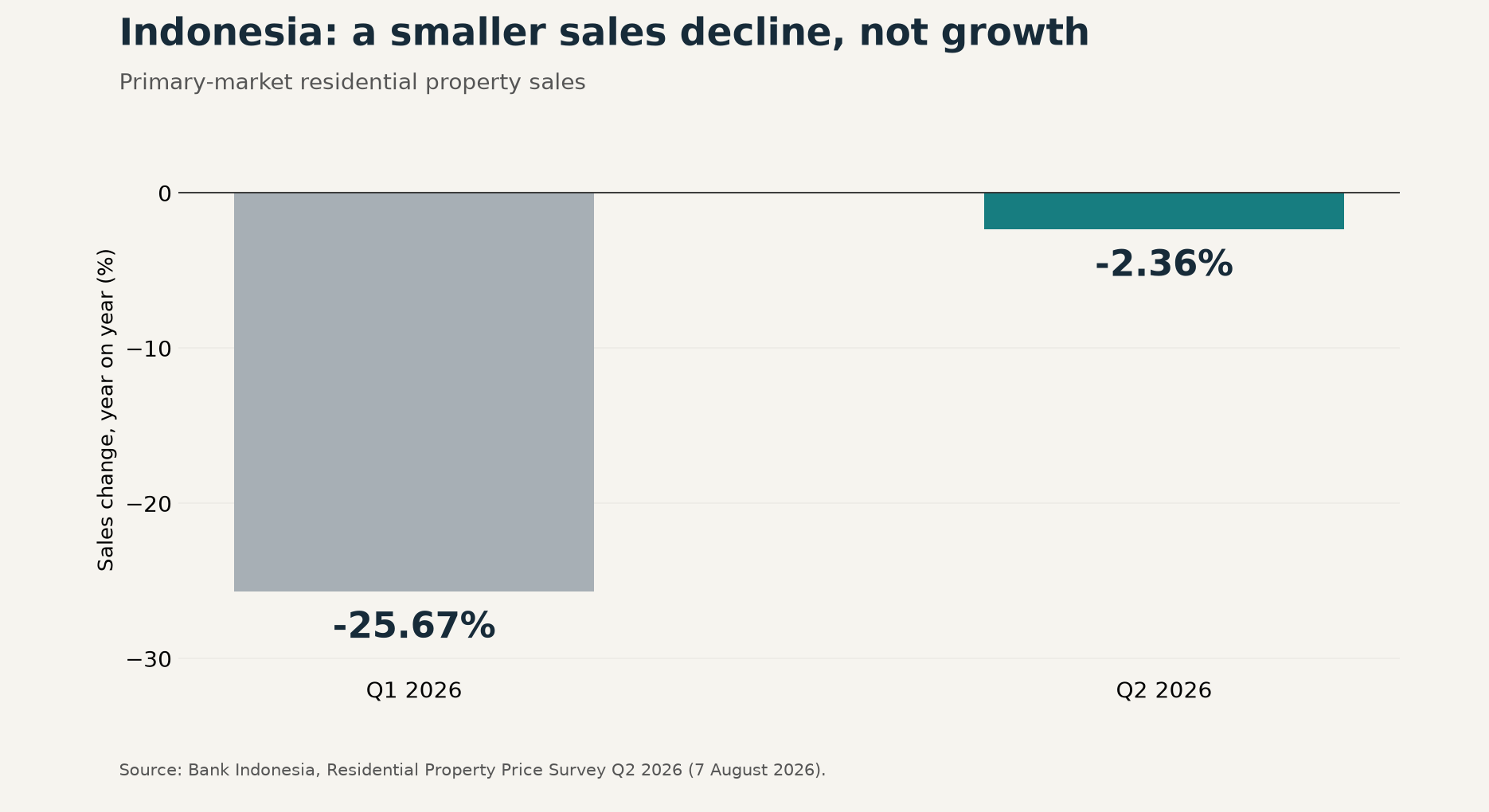
- Bank Indonesia reports that primary-market home sales fell 2.36% year on year in Q2 2026, a smaller decline than Q1’s 25.67% fall.
- A Third Bridge media briefing points to more selective buyers, flexible payment terms and cautious land acquisition.
- Rental economics, unsold stock and local demand matter more than a single Southeast Asian property narrative.
Indonesia’s housing market is showing signs of stabilisation, but improving sales momentum should not be mistaken for a broad-based boom. The more revealing question is how buyers and developers are adjusting when affordability remains stretched and financing still matters.
A media briefing circulated on 28 October by Rosely Group, drawing on a Third Bridge interview, describes developers focusing on existing stock, offering more flexible payment arrangements and taking a measured approach to new land purchases. The underlying interview and the expert’s identity were not supplied; these observations are attributed to the briefing, rather than presented as independently verified market-wide findings.
A smaller decline is not a recovery everywhere
Bank Indonesia’s residential property survey provides a firmer numerical foundation. In its release dated 7 August, the central bank reported that primary-market residential sales contracted 2.36% year on year in the second quarter, following a 25.67% decline in the first.
Residential property prices rose 0.69% year on year, compared with 0.62% in Q1. Sales performance also differed by size: the bank reported improvement in small and large units, while sales of medium units remained limited.
Those figures describe Indonesia’s surveyed primary residential market. They do not measure every apartment, holiday villa or commercial property, and they should not be treated as a forecast for Southeast Asia as a whole.
Developers are watching cash conversion
The briefing’s emphasis on selling existing homes is significant. Converting completed stock into cash can reduce the pressure to commit further capital before demand is established. Flexible instalments may help buyers, but they do not necessarily resolve the underlying affordability problem.
Bank Indonesia reported that developers’ internal funds supplied 73.28% of residential development financing in Q2. Bank housing loans accounted for 70.05% of consumer purchasing schemes. Both figures help explain why balance-sheet discipline and buyers’ financing capacity deserve close attention.
Buyers want rental economics to add up
According to the Third Bridge briefing, buyers are examining rental yields and projected returns more carefully, particularly for apartments and villas. It also highlights apartment oversupply in some areas alongside interest in strategically located developments, without identifying specific locations or providing vacancy figures.
The practical distinction is between advertised income and cash retained after vacancy, maintenance, management and financing costs. A favourable headline yield cannot establish whether a particular property meets an owner’s needs.
The regional lesson is selectivity
The briefing also points to interest in logistics warehouses and data-centre sites influencing development priorities. It does not quantify that activity, so it cannot establish a region-wide shift away from housing.
For Southeast Asian property readers, Indonesia offers questions to investigate rather than a universal investment signal: who can afford the product, how quickly can it sell or let, and what capital remains tied up if demand disappoints?
FAQs
Are Indonesian home sales growing again?
Not on the annual measure cited here. Q2 2026 primary-market sales still fell 2.36% year on year, although the decline was much smaller than in Q1.
Why are developers concentrating on existing homes?
The Third Bridge briefing describes a more selective market. Selling existing stock can release cash before developers commit to additional land or projects.
Does this prove apartments and villas are attractive investments?
No. The briefing provides no property-level rents, vacancy rates or verified returns. Individual locations, costs and legal conditions require separate assessment.
What should investors consider about holding periods and exits?
There is no universal holding period. Owners need to consider financing, potential rental interruptions and the time and costs involved in resale. Property values and income can fall, and finding a buyer may take time.
This is market reporting, not a recommendation to buy a property.
Sources
Rosely Group media briefing on a Third Bridge Indonesia property-sector interview, supplied to Dachex Media on 28 October 2026; Bank Indonesia Q2 2026 Residential Property Price Survey release. The media briefing supplied no interview transcript, named expert or underlying dataset.